
Video is the future of sales. So why aren’t sales teams using more of it?

Coming soon: our full Video for Sales study. In August we asked 21 sales leaders how they use video to sell. Now we've asked 100 more. This piece is my early read of what they told us, and where I think it goes in 2027.
Read the pilot results · Get the full report first
Before I started Motion The Agency back in 2019, I worked in sales. When I needed something visual to help close a deal, nobody on the marketing team could make it for me.
They were either tied up with the next campaign or had nobody who could animate. And when a video did come through, it landed weeks after the meeting it was meant for.
That gap is the main reason why Motion exists.
Seven years later, I watched the same problem land on someone else's desk.
Video for sales in less than a week
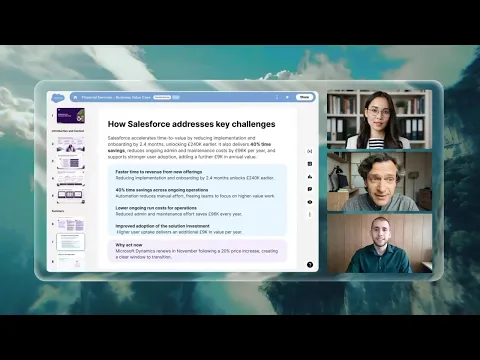
Symbe, a B2B software company that helps sales teams build business cases inside Salesforce and Slack, came to us for motion graphics on case study videos they were planning to record.
Suddenly, they reached out for something else entirely. They needed a product demo video for a sales meeting with a major software company just a week away.
The urgency was too familiar for me, so we took it on.
We didn't wait for a final script. Style samples went out first, three of our animators started that weekend, and the first cut ran on stand-in product visuals while Symbe prepared the real ones. After two rounds of feedback and one from the prospect's stakeholders, we delivered a full cut for leadership and a shorter one for everyone else.
We turned around a 2-minute video in four days, and that's with revisions included. Not long after, Symbe came back to us for a second video.
To put it into perspective, studios nowadays usually quote four to six weeks for a custom animated video, review rounds included.
That request told me a lot about sales video. After all these years, the same pressure still shows up: a sales opportunity moves faster than the team can produce the video it needs. A meeting appears, and a week later the video has to exist.
We asked 100 sales leaders
I wanted to know whether that was normal for sales teams or just Symbe, and one client can't really tell you that.
So after a 21-participant pilot survey we did back in August 2026, we asked 100 people who run B2B sales and account-management teams, from team managers to VPs and C-level executives, how their sales team use video and what stops them from using more.
Key findings from our survey of 100 B2B sales leaders
- 50% of sales leaders rate video 8 out of 10 or higher, yet 48% say it's under a quarter of what they send prospects.
- 84% say cost or time limits their video use. Only 3% say their reps don't use the videos they have.
- 65% say updating a sales video is slow (46%) or means a full remake (19%). We call this video debt.
- Among teams using each format, videos made for one prospect (84% say they help a lot) and customer stories (81%) rate highest. Quick recordings are the most used (73%) but rated lowest (45%).
- Only 22 of the 44 leaders who say video speeds up deals actually track it.
About the data: we surveyed 100 B2B sales and account-management leaders, from team managers to C-level, in the US, UK and Canada through Prolific in early November 2026, after removing six low-quality answers. Everyone in the sample already uses video, so these findings describe video-using sales teams, not all sales teams. The full report, with every question and scale, comes out by the end of November 2026.
Sales leaders do believe in video
When the answers came in, I started with the most basic question: do sales leaders think video works at all?
They do.
50% of the leaders rate video 8 out of 10 or higher for sales results. And nearly all of them (96%) named at least one benefit, and very few saw a downside.
79% say video helps prospects understand the product faster
What sales leaders have seen when their team uses video (% of 100 leaders)
Other research backs this up.
Vidyard's 2025 survey found 93% of leaders who use video report positive results. Wyzowl also found that 91% of businesses use video in marketing.
But leaders now want to see what it brings back in revenue.
Sales teams use less video than they believe in
64% use video in most or almost every deal. That sounds healthy until you look at the mix.
48% say video is less than a quarter of what their team sends prospects, and only 9% say it's more than half.
48% say video is under a quarter of what they send prospects
Share of what each team sends prospects that is video (% of 100 leaders)
My read is that a deal gets a video, and most of what surrounds it is still decks, PDFs and case studies .
Even the strongest believers work this way. Of the 50 leaders who rated video 8 or higher, a third (34%) say it's under a quarter of what they send, and 22% use it in half their deals or fewer.
Most teams also stick to just a few kinds of video. We asked about six: quick rep recordings, recorded demos, animated demos, explainers, customer stories and videos made for one prospect. The average team uses three, and 28% use two or fewer.
So what stops sales teams from using more video?
Cost and time
When I asked what limits their video use, cost came up for 63% of leaders and time for 60%, and 84% named at least one of the two. 39% named both. If you want to know what a sales video should cost, our video cost calculator gives you a starting figure.
46% said it's hard to tailor video to each prospect, and 25% said it's hard to prove the return.
Cost and time limit video use most
What limits video use for sales teams (% of 100 leaders)
Only 3% said their salespeople don't use the videos they have, and 12% said nothing limits them. Adoption isn't what stops these teams. That rings true to me. When I was selling, I'd have used a good video in a heartbeat. The problem was getting one made.
What teams would make without those limits
Ask what they'd make if money and time weren't an issue and the appetite shows up. 70% would want 16 or more sales videos a year, and 35% would want more than 30.
Only 3% would stop at five. Even among teams where video is under a quarter of what they send, 56% would want 16 or more.
70% would want 16 or more sales videos a year
Sales videos wanted per year if money and time were no issue (% of 100 leaders)
Prospect-specific videos are often needed within a week
Of the 86 teams that make videos for a single prospect, 71% need them within a week and 37% within a day or two. Symbe's one-week deadline turned out to be normal.
Urgent deadlines often collide with slow production. Of the 61 teams that need a video within a week, 59% say updating one is slow or means starting again, and 64% say video takes too long or nobody is free to make it.
Most sales video is made in-house
Most of this work stays inside the company. 82% say marketing or an in-house team makes their videos, 42% say reps make their own, and 26% bring in an agency or freelancer . Only 11% use an agency alone.
And that's where the capacity problem sits. Even with the work in-house, cost and time still hold these teams back.Among teams with an in-house maker, 87% name cost or time as a limit, and 63% say video takes too long or nobody is free to make it.
The in-house team is stretched. It can make video, but not as much, as fast or as tailored as sales needs.
The bigger problem: video debt
It sits under the cost and time numbers, and it needs a name.
Your product changes on a Monday. By Tuesday, every sales video that shows the old version is wrong.
Each fix means a remake, so unless someone owns the job, reps either send the wrong version or stop sending it.
What is video debt?
I call it video debt: the build-up of sales videos that no longer match your product, pricing or message, and the work it takes to bring them up to date, often a full remake. Like any debt, it costs more the longer you leave it.
How video debt shows up in the data
Nearly two in three leaders (65%) say updating a sales video is slow (46%) or means starting again (19%). It shows up in how much they use video.
Teams that update videos easily use video in far more deals
Share of teams using video in most or almost every deal
Meanwhile 31% say their library is hard to use or out of date, 9% don't have one, and 65% keep their videos in a shared drive. Only 8% use a sales enablement tool.
The link is clear, though it can run both ways: teams that use more video may also have built better creative systems.
Video debt pushes teams toward quick recordings
Video debt also decides which videos get made. When every update is slow and the team is stretched, reps reach for whatever they can make today, usually a quick screen recording. The videos leaders rate highest have to wait.
The videos leaders rate highest are videos made for one prospect and customer stories. The easiest to make is used most and rated lowest.
Teams use quick recordings most, but rate videos made for one prospect highest
Video types sales teams use, and how many of those teams say it helps a lot
- Teams using this type
- Say it helps a lot (of the teams using it)
Quick videos recorded by salespeople using tools like Loom are the most common type. 73% of teams use them, and only 45% of those teams say they help a lot.
Product demos are where most teams put their effort. 77% use a recorded or animated demo of some kind. Recorded demos are used by 66% of teams, and 71% of those teams say they help a lot. Animated demos are used by 42%, and 60% say they help a lot.
The top ratings go to customer story videos (81%) and videos made for one specific prospect, such as a tailored demo or a video proposal (84%).
The difference is striking, though these are leaders' own ratings rather than measured sales results.
Explainer videos land in the middle, at 65%. If you're choosing between the two, here's how product demos and explainers compare .
Loom recordings are fast, and they suit a first touch. The formats leaders rate highest take more time and skill, so they're the first to get dropped when teams are busy.
Your video has to sell without your rep
This is where the top-rated formats earn their place. Customer stories and one-prospect videos are both built to be passed on, and that matters more than ever.
Three in four leaders (75%) say video makes it easier to share with other decision makers. For me, that's the real job of a sales video.
Anyone who's carried a sales target knows your contact is rarely the only person deciding. The people they forward it to have never met your rep, so the video has to perform on its own.
Buyers want less time with sellers anyway. In research published in 2026, Gartner 's survey of 645 B2B buyers found 67% would prefer to buy without a sales rep, up from 61% the year before.
One leader in our pilot put it plainly: "It also helps a lot when our contact shares the video with their boss, so we can close deals faster."
Symbe played its video live in the meeting. The shorter cut we made was for the stakeholders who weren't in the room.
Which makes sales video hard to prove
When a video does its job without you in the room, you rarely see it happen. Everyone feels it works, but few can show it.
44 leaders told us video helps deals close faster or more often. But only 22 of them track deal speed or win rate.
Across all 100 leaders, 34% track deal results. Most watch softer signals instead, like feedback from prospects (72%), replies or meetings (71%) and views (54%).
Other surveys find the same gap. Wyzowl found that 32% of marketers use sales as a measure of video's success, and Vidyard found that 22% of leaders don't measure video at all.
So can AI close this gap?
The obvious answer to the cost and time problem is AI, of course we asked about that too.
14% of the leaders send AI-made videos to prospects. Another 32% use AI only for drafts or internal videos, 36% are thinking about it, 14% don't use it, and 4% tried it and stopped.
Only 14% send AI-made videos to prospects
How sales teams use AI video (% of 100 leaders)
One leader told us: "Prospect rejected a follow up meeting because of the use of AI avatar in a Synthesia video. This is usually not something people comment on, but is becoming noticeable in the feedback from prospects."
Using AI to help make a video is different from putting an AI avatar in front of a buyer. We are an AI-assisted video partner ourselves and AI does speed up most of what we make, but the face a buyer sees should still belong to a real person.
Three major shifts coming to sales video in 2027
Put it all together, and you can see where this is heading. Production is getting cheaper, buyers research without reps, and most teams already can't keep up with the videos they have. Three shifts follow from that.
Keeping videos accurate becomes harder than making them
AI is making video quick, cheap, and more accessible than ever. The hard part will be keeping 20 or 50 videos accurate while the product keeps changing.
Wyzowl says 63% of video marketers use AI tools, and Gartner expects 95% of sellers' research to start with AI by 2027.
Your next audience includes AI
Buyers will ask AI before they ask a rep. Gartner predicts AI agents will be involved in 90% of B2B purchases by 2028 .
Public videos like demos, customer stories will be read by AI as well as watched, so transcripts, clear titles and chapters will matter so much more.
Videos made for one prospect stay private and stay for people. A shared drive isn't public, so the videos meant for a wider audience need their own plan.
Expect more teams to put proof videos on public pages, with transcripts. Our audit of 1,019 SaaS homepages found only 21.7% have a video at all.
Forwards matter more than views
A view tells you someone pressed play. A forward tells you they thought the video was worth a colleague's time.
Forward rate (or how often a buyer sends a video on) becomes the number that matters.
G2 's finding that evaluation is now the longest stage of buying points the same way. Ask your reps whether the video got forwarded, and write the answer down for a month.
So how do you stay ahead of the curve in 2027?
The teams that take the lead in 2027 will be the ones with a system to keep up. If I were back in sales today, this is where I'd start:
- Build a modular sales video library. Make every video from parts you can swap and reuse, so a product update or a new prospect means combining bits of a library of videos instead of starting over from scratch. Give every piece an owner and a review date.
- Put more budget into customer stories. They're among the highest-rated videos in our survey (81% say they help a lot), yet only half of teams use them. Film one properly and cut it into short assets for every stage of the deal.
- Keep templates and a brand kit ready. Reps and marketers can then turn out on-brand videos in hours, without waiting on a designer for every change.
- Line up a reliable production partner before you need one. When a big meeting lands a week out, you get a team that already knows your product and brand, instead of a new brief and a six-week quote. For GotPhoto , that meant 20 animated videos, each turned around in under 48 hours. If nobody in-house can own it, that's what our video subscription is for.
- Make every video work for someone who's never met your rep. Two minutes, one point , nothing that needs explaining.
- Start tracking one result now, such as meetings booked, deal speed or win rate.
What we're building for sales teams
Sales teams already believe in video. The production model hasn't caught up. A prospect needs a tailored demo this week, marketing is committed to a campaign, and the existing video shows last quarter's product.
That's the gap the survey brings into focus. Making another video solves the immediate request. Building a library that can be adapted and updated solves the recurring problem.
That's what we now build for sales teams: a modular sales video library. One customer story becomes an interview, a headline number, a quote and an end card, and one product demo becomes versions for each industry or account.
The parts also mix across videos. Take the intro from one, the product walkthrough from another and a customer story from the prospect's own industry, then close on an end card with the rep's name. That's a new video, made for one account, without starting from scratch.
That matters because tailoring is where teams get stuck. 46% of the leaders we asked say it's hard to tailor video to each prospect, yet videos made for one prospect are the type they rate highest (84%). A modular sales video library helps reps create tailored videos with less production time.
It works as a creative system. Every piece has an owner and a review date, and a product update means swapping one part instead of remaking the lot, so updates stay manageable as the library grows.
We saw it with Symbe. Their second sales demo shared about 60% of the first one. Only the workflow changed: the first showed Symbe with Salesforce and Slack, the second with Salesforce, Claude and a CRM.
Because most of the parts already existed, the second video came together much faster than starting from scratch.
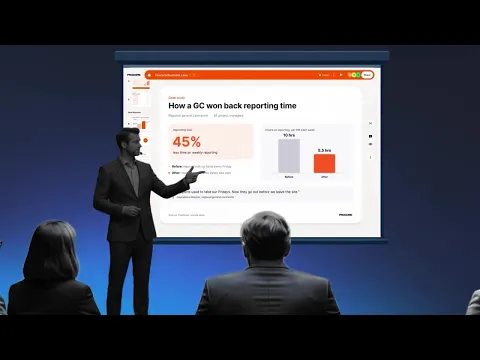
We've built these at scale. Planful got 100+ assets for four brands in 12 months, and Mirakl grew one explainer into more than 30 videos.
If a meeting is already on your calendar, book a call and we'll map out your library, or get a free sample made for your next deal.
FAQ

Sam Jupp
Sam Jupp is the founder of Motion The Agency, with over 11 years of experience in research and marketing. He specializes in leveraging creative animation and motion design to craft compelling brand narratives and writes insightful content on industry trends.


In just a few questions, get a tailored estimate for your next video project.







Contact Us
Ready to elevate your brand? Contact us for your
Free Custom Video Sample