

Get new starters productive faster with onboarding videos

Trusted by billion-dollar enterprises and YC startups on Demo Day









Selected
onboarding video productions



A proven partner
for onboarding video production
100+
1,500+
50,000+






“Motion's process is extremely transparent, and excellent communication. They have consistently delivered top quality videos, often to impressive and tight deadlines, and have proven to be a reliable and trusted partner.”




"Motion has been an incredibly reliable creative partner. They move fast, adapt to feedback, and bring ideas to life. Their collaborative approach feels like part of our team, and quick-turn video production makes them easy to work with."

" I've worked with the MTA team twice. The collaboration, output, and timeliness of delivery has been great both times. We'd definitely work with the team again and recommend anyone to do so too.”
Nobody remembers everything
from their first day



Every onboarding project
includes these stages and files



-
Day 1 to 3
Free sample
You send the concept you find hardest to explain. We create a sample to show how we'd approach it. -
week 1
Script
Starting with your ideas or existing script, we refine the story before moving into visuals. -
week 1
Storyboard
We map out every scene and visual direction, giving you a clear view of the final video from the get go. -
week 1
Storyboard revision
We refine the storyboard based on your feedback and lock the direction before animation starts. -
week 2
Animation
The approved visuals are animated, refined, and combined with voiceover and sound design. -
week 3
Video revision
You review the draft with timestamped feedback, and we refine the video until it’s ready. -
week 3
Delivery
We deliver the final video files, source files, and any versions needed for your platforms.

Choose the right partner
for your employee onboarding videos
| Comparison features |

|
NextThought |

|

|
|---|---|---|---|---|
| Starting price | From $3,480 Fixed price per video | Custom quote Price after a request | From $2,500 Per video | $29/mo You make the videos |
| Free custom sample | Yes Custom video in 48 hours | No Example videos only | No Quote after a kickoff call | No Free plan, you build it |
| Timeline | 10 working days For one video | 2 to 4 weeks Per onboarding video | About 6 weeks Start to finish | Same day Once you write the script |
| Script and animation done for you | Yes From your own materials | Yes Learning designers and animators | Yes Copywriters and animators | No You write and build each video |
| Best for | Teams that want a full onboarding series made for them | Large organisations building full training programmes | Teams that want one polished video | Teams happy to make videos in-house |
Choose the way of working
that fits your team
-
You need one welcome video
-
You know which videos you need
-
You want the cost agreed upfront

-
You hire new starters every month
-
Your tools and policies keep changing
-
You want one team that knows your brand

-
A full series built in stages
-
A team ready when hiring picks up
-
Large budget, flexible timing



Got questions?
We've got answers
We want to make sure you feel confident that our service is right for you. Here we’ve looked to address some commonly asked questions. If you have any more specific questions, don’t hesitate to get in touch with a member of the team.
An onboarding video introduces a new starter to the company, covering who you are, how you work, what they can expect and where they fit. A training video teaches a specific skill or process, which is a different job and usually comes after.
The split is worth getting right before you brief anyone, because it changes what you buy. Onboarding answers what kind of place is this and what happens to me in the first few weeks. Training answers how do I do this task, and it covers compliance, health and safety, systems and role-specific skills.
Most companies need both and should build onboarding first. It applies to every new starter regardless of role, so it's the piece that gets used the most and the piece HR repeats most often in person. Both sit inside the wider set of corporate video, which also covers internal communications and company announcements.
Start with why the company exists and how the new person's role fits into it, then move through how the work actually happens and what they can expect week by week. The four areas worth covering are the company and its values, the people they'll work with, the benefits and the growth path, and the policies and processes they can't avoid knowing.
Be specific in every one of them. "Growth opportunities" tells a new starter nothing, and "we run quarterly reviews and promote from within" tells them something they can check. The same goes for benefits, so name the health cover, the flexible working and the learning budget rather than gesturing at a package.
What you leave out matters as much. An onboarding video that tries to cover everything becomes the document nobody finishes, and the goal is to answer the questions a new starter is actually asking in week one. Our guide to what makes a great onboarding video goes through the structure with examples.
Orientation is the first day or two, covering the practical setup, the building, the systems, the policies and the paperwork. Onboarding is the whole first few months, covering the culture, the role, the relationships and getting someone to the point where they can do the job.
Video suits both and in different shapes. Orientation content is short, factual and repeatable, so it works as a set of two-minute pieces someone watches once. Onboarding content is broader and more about context, so it can run longer and gets revisited.
Companies that treat the two as one thing usually produce a single long video that does neither. Deciding which you're making is the first useful decision on this kind of project.
A series rather than one video, and most companies land somewhere between four and eight. A set of short, topic-specific pieces holds attention better than one long video and it's far easier to keep current.
The usual shape is a welcome from a founder or leader, a company and values piece, a how we work piece covering tools and ways of working, a benefits and growth piece, and then the role-specific or team-specific pieces. A personal welcome from leadership is the one most companies skip and the one new starters remember, and it works even when the rest is built as motion graphics.
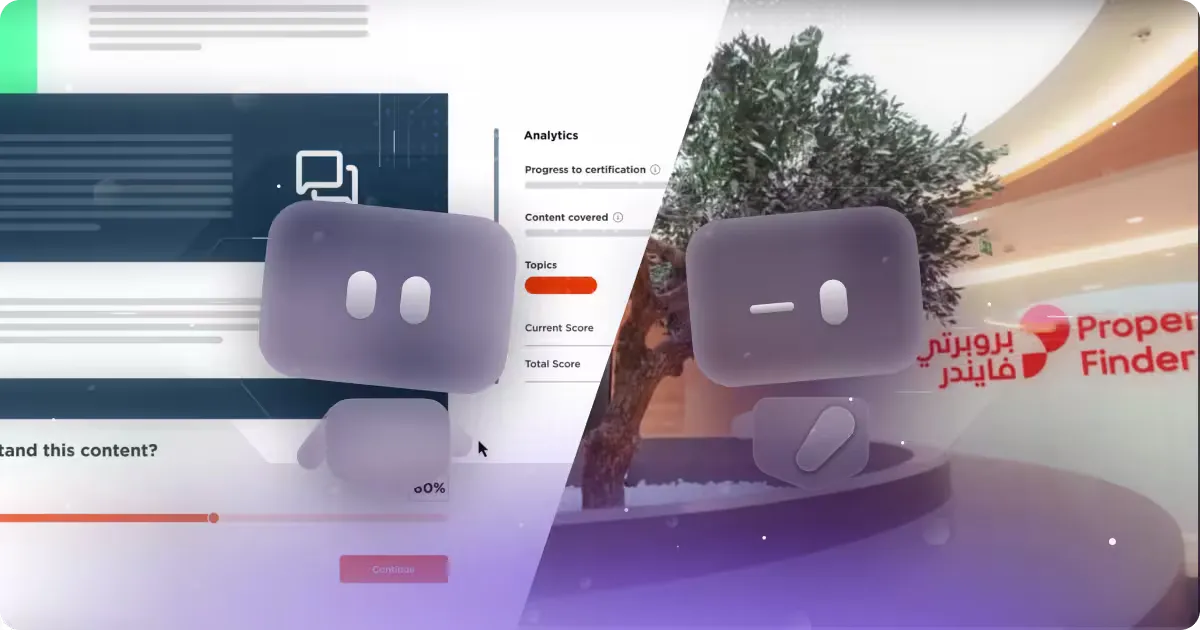
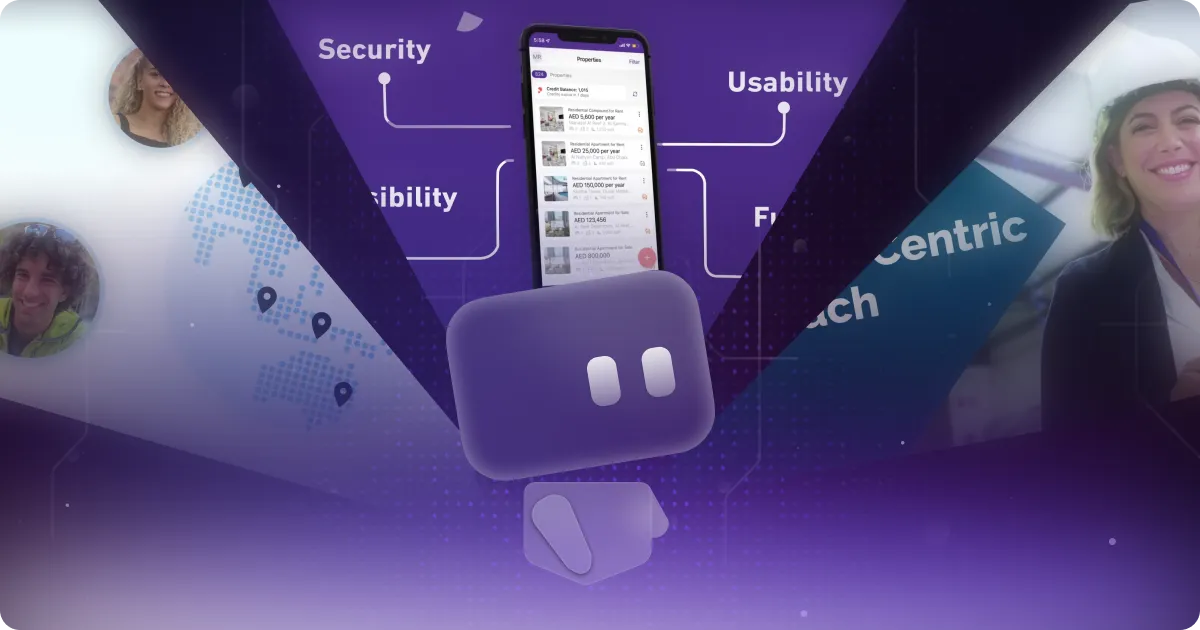
Building the set together costs less per video than ordering them one at a time, because the style and the assets are made once and reused. We delivered multiple onboarding videos for Property Finder across a partnership, and onboarding content for Obrizum alongside its other work.
Put anything you repeat to every new starter into video, and keep anything that needs a conversation live. The test is whether the person needs to ask questions back.
Video handles the company story, the values, the benefits, the tools, the policies, the org structure and the practical setup, because those are identical for everyone and nobody benefits from hearing them delivered live for the fortieth time. Live should keep the one-to-one with the manager, the role expectations and goals conversation, the team introductions that are really relationship building, and anything about this specific person's work.
That split is the actual argument for onboarding video, and it isn't about saving money. It's that HR and managers spend their onboarding hours on the parts only a person can do, instead of repeating the induction deck.
Three to six minutes for the culture and company pieces, and under two minutes for anything that explains a process or a system. Past six minutes, completion drops regardless of how good the video is.
The reason the short ones have to be short is that people watch them while trying to do something. Viewers get through a far higher share of a how-to video under a minute than one over five, so a process piece that runs long simply doesn't get finished.
If your content doesn't fit, split it rather than trimming it. Two four-minute videos get watched where one eight-minute video gets abandoned at three.
Start by writing down every question a new starter asks in their first two weeks, then group them. That list is the series structure and the script outline, and it's more useful than any template because it comes from your own company.
From there it runs script, storyboard, production, review. We can write the script or work from what you have, and most companies arrive with an induction deck, an employee handbook or a recorded induction session, all of which are usable source material. The part worth doing properly is deciding who each video is for, since a video made for everyone from a graduate to a senior hire usually lands with neither.
Settle sign-off early. Onboarding content sits between HR and whoever owns internal communications, and the most common cause of delay is a video approved by one and then reviewed from scratch by the other. Our training video production guide covers the production side in more depth, including delivery through an LMS.
No. We don't send camera crews or run shoots, so nobody from our team turns up at your office.
What we do is build the video as motion graphics, and we work with whatever footage you already have or can record yourselves. That's how the Property Finder onboarding work was made, combining the client's own footage with motion design rather than a talking head, and it's the usual shape when a company wants real faces in some of the series without booking a production.
If your whole concept depends on filming your office and interviewing your team, you want a live-action production company and we'll say so on the first call. If you want a series that can be updated without reshooting, animation is the better buy, which is the next question.
Video does more for a distributed team than for an office one, because a remote starter has none of the passive learning that comes from sitting near people. What they'd pick up in a week of overhearing has to be made explicit.
Three things matter more in a remote setup. Cover the unwritten rules, meaning response time expectations, which decisions need a meeting, how people ask for help and what the working hours actually are. Introduce people by what they do and when to contact them rather than by job title. And make the series available before day one, since a remote starter's first morning is often spent waiting for access to something.
Animation also solves the practical problem of a team spread across several countries, since there's no office to film and no way to get everyone in one room. One series covers the company wherever the new starter is.
We deliver standard video files that work anywhere, so your HR system, your LMS, your intranet, Notion, a shared drive or a day-one email sequence are all fine. Tell us what you use and we'll deliver to its specifications.
The practical answer is that most onboarding video doesn't need an LMS at all. An LMS matters when you have to prove someone completed something, which is a compliance requirement rather than an onboarding one, so if your training sits in an LMS and your onboarding sits in your HR platform, that's a normal setup rather than a problem.
What's worth deciding early is when each video is sent. The series works much better as a sequence timed across the first few weeks than as a folder of links handed over on day one.
We rebuild the affected section rather than the video. Because these are built as motion graphics, changing a benefit, a tool, a policy or an org structure is an edit to that part of the timeline, and the rest stays as it is.
This is the main reason animation suits onboarding. A filmed induction video dates the moment the office moves, the tools change or the people in it leave, and reshooting means another production. A company growing quickly will change something in its onboarding content every few months, and the cost of that is what decides whether the series survives its second year.
The same applies to languages. The voiceover and the on-screen text change while the animation stays, which matters if you're hiring across several markets from one program.
The main benefit is consistency. Every new starter gets the same version of the company instead of whichever parts their manager remembered that week, and HR stops repeating the same induction by hand.
Measure it on time to productivity rather than on views. The signals worth tracking are how long until a new starter is working independently, completion rate on each video, the volume of repeat questions reaching HR and managers in the first month, and retention through the first six months, which is where a weak onboarding experience shows up. Ask your managers whether new starters arrive at their first one-to-one already knowing the basics, since that's the clearest read you'll get.
The honest limit is that video can't fix a badly organized first week. If nobody has set up accounts, assigned a buddy or planned what the person does on day three, a polished welcome video makes the gap more obvious rather than less.
Our fixed price starts at $3,480 per video, and the main variables are length, complexity and how many videos are in the series. A set costs less per video than ordering them one at a time, because the style is built once.
For a full program, creative credits from $18,000 usually work out better than a sequence of fixed-price projects, since you commit a pool and draw it down across the series as each piece gets approved, which suits content that arrives in stages. The subscription is the third model and it fits companies producing internal content continuously rather than building one program.
Filmed onboarding video is priced differently, with crew, location and shoot days driving most of the budget, and the updating problem on top. Tell us how many videos the program needs and what you have to spend, and we'll shape it to fit.
Yes. We'll have a short call first to understand what you need, then make a free sample based on the messaging from your site, back within 48 hours, and you never pay for it.
You don't need a brief or a script ready for that call. Most teams use the sample to judge the style and the pacing on their own brand before taking an onboarding project to HR, and there's a 14-day money-back policy on the paid work that follows.