In-House vs. Outsourced Design, Motion Graphics, and Creative Teams: Which Is More Effective?
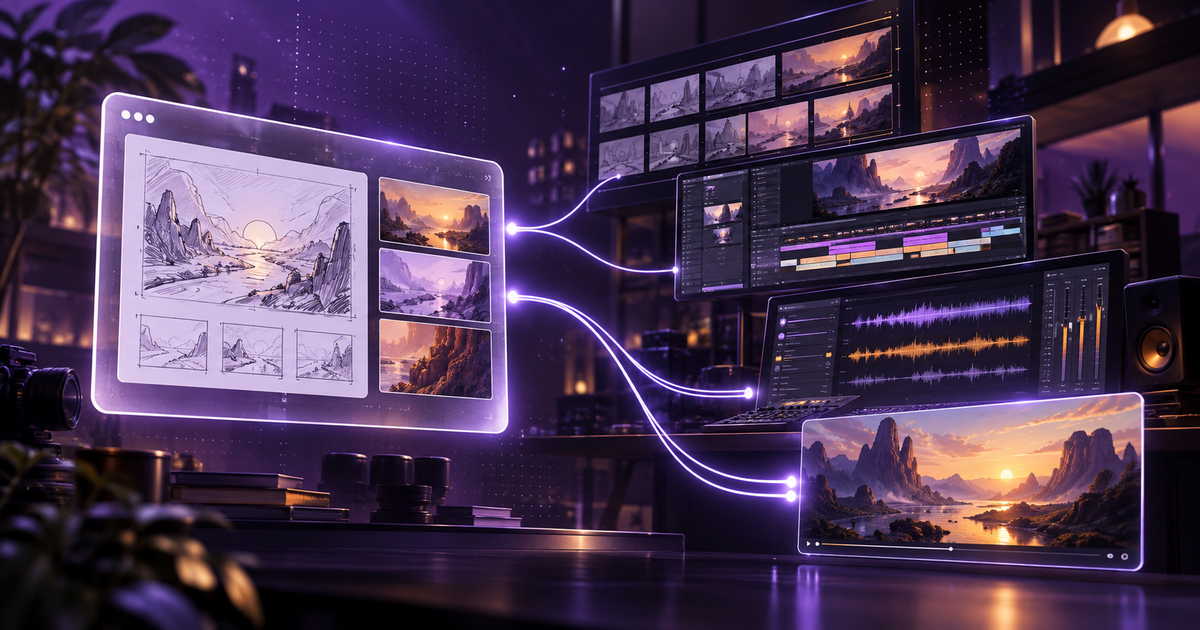
table of content
.png)
Outsourcing has become a way for growing companies to expand their capabilities without increasing internal headcount. This is especially true for creative work, where companies constantly need more content to support different parts of the business.
And if we’re being honest, this is exactly why many of our clients come to us. They outsource their creative needs not only for marketing campaigns but also for internal teams, sales enablement, product launches, and customer education.
Some common examples include:
- Product launches
- Marketing campaigns
- Sales enablement
- Customer education
The reason behind this is simple: creative production is not a single skill. Let’s take video production as an example. Even a 30-second animation can take weeks to produce and involve multiple specialists behind the scenes. From scriptwriting and storyboarding to design, animation, editing, sound, and project management, every stage requires different expertise that cannot be covered by one person alone.
For many companies, building this capability internally means hiring and managing multiple creative roles — even if they only need those skills for specific projects. This is where outsourcing becomes a practical way to access the expertise they need without building an entire team from scratch. So in this blog we will dig deeper.
Who actually outsources their creative needs?
To better understand how companies use external creative support, we looked into research around outsourcing specialised skills. In 2019, researchers from University College Cork published a study in the International Journal of Innovation Management analysing data from 3,245 firms through the Irish Community Innovation Survey.
The study found that many companies rely on external specialists for certain capabilities, including:
- 43.33% externally sourced web design skills
- 34.51% externally sourced graphic arts, layout, and advertising skills
- 23.11% externally sourced multimedia skills
This shows that companies often choose to access specialised creative capabilities externally rather than building every skill internally. We actually talk about this in more details on our blog "How does an unlimited graphic design subscription work"
When do you need to outsource your creative needs?
When you need specialised skills you don't have internally
We’ve touched on this earlier, but creative production is rarely something one person can handle from start to finish. Even a simple graphic usually requires a mix of skills — someone who understands the message, someone who can translate it visually, and someone who can bring the idea to life.
For video production, that gap becomes even bigger. A single animation or video project can involve multiple specialists working together, such as:
- Scriptwriter → develops the messaging and storytelling
- Illustrator → creates the visual style and assets
- Animator → brings visuals to life through motion
- Video editor → handles pacing and final assembly
- Sound designer → creates the audio experience
- Project manager → keeps timelines and feedback organised
- Creative director → oversees the overall creative direction
The challenge is that most companies don’t need all of these roles every day. You might need a full production team for a product launch or campaign, but not necessarily have enough ongoing work to justify hiring every specialist internally.
That’s where outsourcing becomes useful. Instead of building every capability from scratch, companies can work with external creative partners who already have the talent, workflows, and experience in place.
The value is not just getting extra hands — it’s gaining access to an entire creative ecosystem without the complexity of building one internally.
When companies should extend their capabilities instead of building everything internally
One thing that research makes clear is that there is no one-size-fits-all answer when it comes to building a team. The choice is not simply between doing everything in-house or outsourcing everything.
The better approach is understanding which capabilities are essential to your business and which ones can be supported by external specialists.
Companies should usually keep internally the things that directly shape their competitive advantage, such as:
- Product knowledge
- Customer understanding
- Business strategy
- Core company expertise
Meanwhile, specialised skills that are needed occasionally can often be supported externally, such as:
- Creative production
- Design and animation expertise
- Additional production capacity
- Specialist knowledge
The goal of outsourcing is not to replace your internal team. It is to extend what your team can achieve by giving them access to expertise and resources they do not need to maintain permanently.
When hiring internally creates too much overhead
The big question is not “Can we hire someone?” but “Do we need this capability in a longterm?’
Building an internal creative team requires more than just hiring talented people. There are many costs and responsibilities that come with maintaining a team, including:
- Full-time salaries
- Employee benefits
- Software subscriptions
- Hardware and equipment
- Training
- Recruitment
- Management time
- Keeping talent productive between projects
The challenge is that creative demand is not always consistent. A company might need several videos for a product launch, multiple assets for a marketing campaign, or a large volume of content during a busy period — but require much less support afterwards.
For some companies, building an internal team makes sense. However, for teams with changing creative needs, maintaining a full department during slower periods can create unnecessary overhead.
Outsourcing allows companies to turn creative production into a more flexible resource based on actual demand. Instead of carrying the cost of a full-time team year-round, they can access the expertise they need when projects require it.
When you need to scale production quickly
Hiring and nurturing in-house talent is not quick, let alone a whole team of creatives. not to mention creative needs tend to change quite fast, especialo the ones for marketing purposes. Companies may suddenly need:
- Product launch videos
- Campaign assets
- Social content
- Sales enablement videos
- Feature release animations
- Event content
And building an internal team would take months even years to make sure they have strong workflow. not only that Building an internal team requires:
- Recruitment
- Hiring process
- Training
- Onboarding
All of this takes time and resources. For companies that need to move quickly, outsourcing can be a practical way to access creative capabilities without going through the process of building an entire team internally. It allows companies to take on more projects, increase production capacity when needed, and reduce support when demand slows down.
Research on creative outsourcing highlights how distributed teams allow companies to access additional capabilities without creating permanent structures.
GieniABX
Let’s use our project with GieniABX as an example. They needed 14 videos within 6 weeks to support their GTM campaigns for new product launches. While they had an internal team, they needed additional animation expertise and production capacity that wasn’t available in-house.
GieniABX came to us with a clear objective, a tight deadline, and complex creative requirements. We supported their paid media campaigns by creating a series of videos while maintaining consistency across all assets and delivering within the required timeline.
The result was a scalable content system that helped support their wider marketing efforts, generating:
- 210K+ website visits driven to GieniABX’s website
- 14M+ YouTube cumulative views
- 56M+ campaign impressions
This is where outsourcing can become valuable — not because a company lacks internal capabilities, but because they sometimes need additional expertise and production capacity to move faster.
When the creative work is not your core competency
Every company has limited time and resources, so it makes sense to focus internal teams on the things that create the most value for the business.
For example, a SaaS company’s priority is usually building a better product, understanding customers, and developing its market strategy. While creative assets are important for supporting growth, building expertise in areas like animation pipelines, motion design workflows, and video production management may not always be the best use of internal resources.
Research suggests that companies benefit from keeping strategic capabilities in-house while using external specialists for skills that are expensive, complex, or inefficient to maintain internally.
Outsourcing allows teams to stay focused on what they do best while still accessing the creative expertise they need when the right projects come up.
Obrizum
Let’s look at Obrizum as an example. Obrizum is an L&D company that initially partnered with us to support the training content they created for their own clients, including onboarding videos and internal learning materials. Their team focused on building the right curriculum and learning experiences, while we handled the creative production behind those materials.
As the partnership grew, our work expanded beyond training content into marketing assets, including explainer videos, lower thirds, opening sequences, and closing bumpers.
By becoming an extension of their team, we helped Obrizum take creative production off their plate so they could stay focused on what they do best: developing their products, improving their learning platform, and creating better experiences for their customers.
Over the course of 24 months, around 70% of the work supported client-facing projects, while 30% supported Obrizum’s internal needs. With 108 videos delivered, Obrizum was able to save over $350,000 in creative production costs while scaling their content output without the need to build a larger in-house creative team.
When you need better quality without building expertise yourself
Creative quality does not come from a single person or tool. It comes from having the right combination of specialists, processes, and experience working together.
A professional creative workflow usually involves multiple stages, such as:
Script
→ Storyboard
→ Design
→ UI/Illustration
→ Animation
→ Editing
→ Sound design
Each stage requires different expertise, from storytelling and visual design to technical execution and quality control.
For companies that do not produce creative work regularly, building this level of expertise internally can take years. A specialised creative partner already has the people, workflows, and production systems in place to deliver quality work without companies needing to build an entire creative department from scratch.
Outsourcing is not about replacing your team
One thing we strongly believe is that an outsourced creative partner cannot and should not replace an in-house team. The goal of outsourcing is not to remove internal capabilities — it is to extend them.
Your internal team will always have the strongest understanding of what is happening within your business, from your:
- Product
- Customers
- Brand direction
- Business goals
That knowledge is what guides the creative process and ensures the work stays aligned with your vision.
Think of outsourcing as a way to add specialised support when you need it. It gives companies access to creative talent, proven workflows, and production capacity without the cost and complexity of building an entire team internally.
So, how do you decide when you should outsource?
There is no universal answer to whether a company should build a capability internally or work with an external partner. The right choice depends on how important that skill is to your business, how often you need it, and whether maintaining that capability internally makes sense long term.
A simple way to look at it is:
- Keep it in-house when the capability directly impacts your competitive advantage and requires deep internal knowledge.
- Outsource when you need specialised expertise, additional capacity, or skills that are difficult or inefficient to maintain internally.
The goal is not to choose one approach over the other. Many successful companies combine both — keeping strategic knowledge internally while using external specialists to expand their capabilities when needed.
Conclusion: Build your core, extend everything else
At the end of the day, there’s no right or wrong answer between building an in-house creative team or working with an external partner. It really comes down to understanding what makes sense for your business.
Your internal team should stay focused on the things they know best — your product, your customers, and your strategy. But when you need specialised skills, more production capacity, or simply need to move faster, having the right external support can make a big difference.
The point of outsourcing isn’t to replace the people already inside your company. It’s about giving your team more room to focus on the work that drives the business forward, while bringing in specialists when you need them.
That’s how we approach our partnerships. We don’t see ourselves as a replacement for your team, but as an extension of it — helping you handle creative production without needing to build and manage an entire department internally.
If you’re curious what that could look like for your team, get a free custom video sample and see what we can create around your brand before making a commitment. Or, if you’re looking for ongoing creative support, check out our subscription page to see how we help teams scale their output without adding more operational overhead.

Sam Jupp
Sam Jupp is the founder of Motion The Agency, with over 11 years of experience in research and marketing. He specializes in leveraging creative animation and motion design to craft compelling brand narratives and writes insightful content on industry trends.


In just a few questions, get a tailored estimate for your next video project.






Contact Us
Ready to elevate your brand? Contact us for your
Free Custom Video Sample