Which B2B Sales Videos Are Actually Worth Investing In?
When I speak with B2B sales teams, they know video can help them sell, but they're often not quite sure which format to use and when.
And our research reflects just how important video has become. In Motion The Agency's November 2026 survey of 99 qualified B2B sales leaders, 64% said they use video in most or almost every deal.
But using video regularly doesn't necessarily mean using it effectively.
For instance, you probably don't want to send a shaky webcam recording to a buying committee weighing a $60,000 contract.
It could undersell your product at the worst possible moment and hurt your chances of closing the deal.
At the same time, sending a polished animated product demo to a cold prospect isn't necessarily the right move either.
But here's the thing. There's no single correct way to approach a prospect, and not every buyer follows the same sales journey.
A personalized screen recording might work for one prospect, while another might respond better to a short GIF demonstrating a relevant product feature. As we explored in our guide to B2B video email marketing , what matters isn't simply adding video to your outreach. It's whether the content gives the recipient something relevant and useful.
That's why choosing the right video format matters.
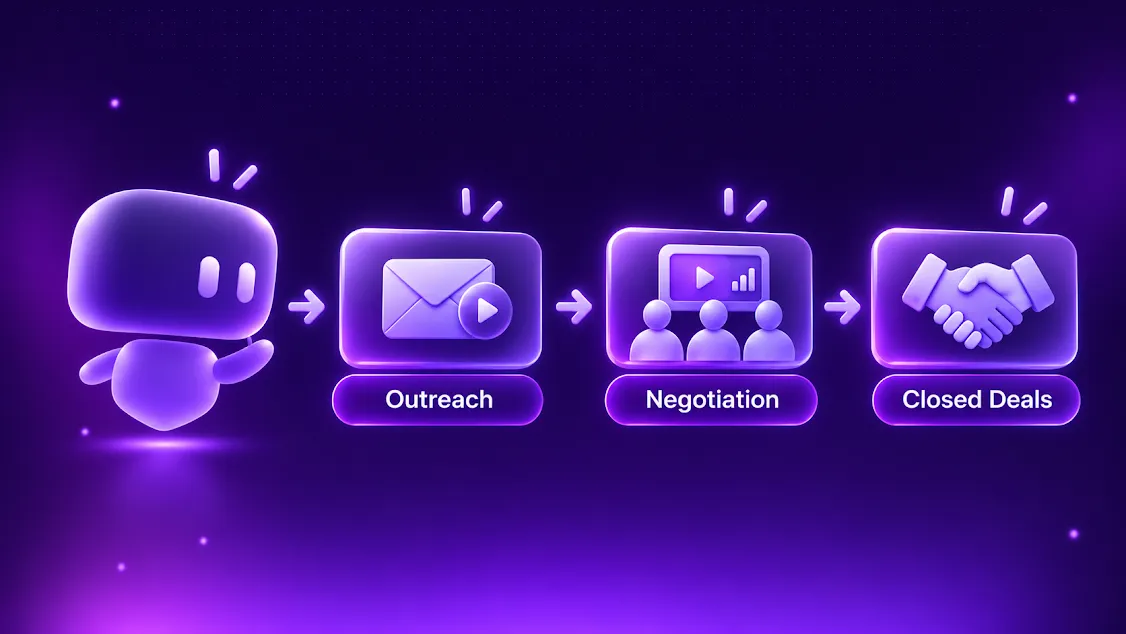
In this article, I want to look at how four video formats can support three common stages of the B2B sales process:
- Outreach
- Negotiation
- Closed deals
These stages are a guide, not a fixed sequence every prospect must follow.
And there's another factor I think sales teams overlook: deal value.
Our survey found that 66% of respondents cited cost as a barrier to using more sales videos, while 61% pointed to production time. So deciding where to invest your resources matters just as much as choosing the right format.
But one great video probably isn't going to fix your pipeline.
That's why my team and I focus on creating a series of video assets for clients, with each video serving a specific purpose across their sales process.
These Are The Top Video Formats Sales Teams Use
Before I start getting into the stages, I want you to have a good understanding of how each video format works and what you can expect from it.
So, I've pulled together this table below for you to scan through, based on the video formats we covered in our B2B sales survey.
Quick salesperson recordings and simple prospect-specific videos are usually fast and personal.
Even though explainers, customer stories, and professionally produced product demos take a little longer to create, they're capable of carrying your product story without a rep in the room and are therefore very valuable.
This is why we like animated product demos.
An animated product demo tells the same story every time it's played. It's also reusable across many deals, and you can adapt the original assets into shorter clips for different use cases.
The same can't always be said for personalized videos recorded by your sales reps.
They're impactful at certain stages, yes, but a video made specifically for one prospect isn't necessarily an enduring asset.
That's why I think it's worth investing in both: quick, personalized videos for individual conversations and professionally produced content that your whole sales team can keep using.
How Much Should You Invest in Sales Video?
Here's my general rule of thumb.
The bigger the opportunity, the more you can justify investing in video production.
If you're working on a $60,000 deal, spending more time on a polished product demo or pitch video might make sense. But for a smaller deal, a quick screen recording could be all you need.
I'm thinking about return on investment.
But deal value isn't the only thing I'd consider.
You also need to think about how often you're going to use the video.
An animated product demo isn't something you have to produce for every new prospect. Once it's made, your entire sales team can use it across multiple deals. You can even cut it into shorter clips for different industries, buyer roles, or use cases.
Our November 2026 B2B sales survey found that 66% of respondents cited cost as a barrier to using more video, while 61% pointed to production time.
So rather than investing in a new video for every opportunity, I'd recommend putting more of your budget toward content your team can reuse.
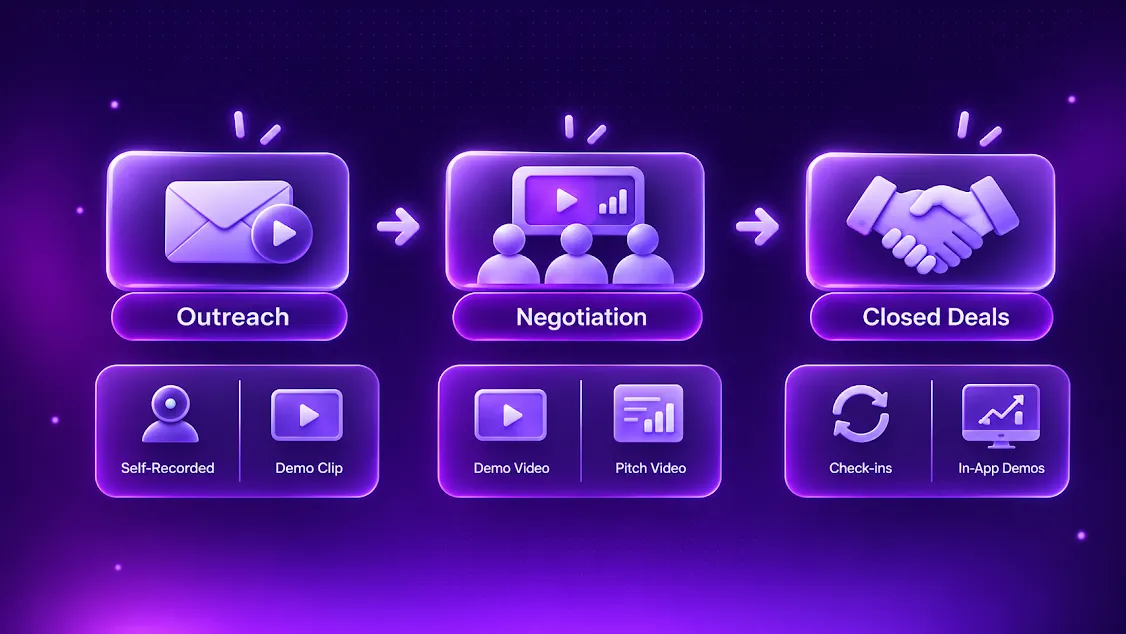
Here's how I'd approach video investment across the three sales stages.
You don't need professionally produced videos for every deal or every sales stage.
A quick recording might be the best way to answer one prospect's question, while an animated demo could be worth investing in if your whole sales team can reuse it.
The same applies to how you approach production. Our Fixed Price model works well for one-off projects, while the Subscription model suits teams that need a steady stream of content. For more flexible production needs, our Creative Credits model lets teams plan around launches, campaigns, or occasional bursts of work.
The question isn't just how much the deal is worth. It's how much value you can get from the video over time.
Stage 1: Outreach
Your main goal at the outreach stage is to earn a reply.
The prospect doesn't know you yet, so I'd usually start with something personal rather than a polished sales pitch.
A quick Loom or Recordly video can work well here. Mention something specific about the prospect's business, explain why you're reaching out, and keep it under a minute.
If you're reaching hundreds of prospects, tools like Sendspark can help create personalized videos at scale. Just be careful with AI-generated content that feels generic or artificial.
But what if you're selling a complicated product?
That's when I'd consider including a short clip from an animated product demo.
You don't need to send the whole video. Just show one workflow or feature that solves a problem relevant to that prospect.
The point isn't to impress someone with production quality. It's to give them a reason to continue the conversation.
Stage 2: Negotiation
Now the prospect is interested, and the question becomes: "Will this actually work for us?"
This is where I'd start thinking more seriously about professionally produced product demos.
A quick screen recording is still useful for answering specific questions. But when several stakeholders are involved, your sales rep won't always be there to explain everything.
Your champion might have to forward your video to the CTO, finance director, or someone else who hasn't attended a single meeting.
And whatever you send needs to make sense without you in the room.
Our B2B sales survey found that 72% of respondents said video made it easier to share information with other decision-makers.
That's exactly why we like animated product demos.
A well-produced demo can walk stakeholders through a specific workflow, explaining how the product solves a problem without getting lost in unnecessary features.
You might also want a pitch video alongside it.
The demo shows how your product works. The pitch video makes the business case, including the problem, the cost of doing nothing, and the potential return.
At Motion, our approach to sales video production is to keep these stories focused. Show the problem, demonstrate the solution, and make it easy for the buyer to understand why it matters.
Stage 3: Closed Deals
Just because the contract is signed doesn't mean your videos have finished their job.
In B2B SaaS, you've still got onboarding, product adoption, renewals, and upselling to think about.
And video can support all of them.
For simple questions, I'd encourage account managers to record quick walkthroughs or personalized check-ins.
But for features that hundreds or thousands of customers need to understand, professionally produced tutorials and product animations can be worth the investment.
Our work with ClickUp is a good example.
We've created short in-app Lottie animations that walk customers through product features. Because these animations are lightweight and reusable, we can also adapt the same visual assets for emails, social media, and other content.
During the first six months of ClickUp's 2026 subscription, our team delivered more than 30 projects, including onboarding tutorials, product animations, and social assets.
Rather than treating every request as a separate production, we're building on an established collection of creative assets.
And that's the bigger opportunity I see for B2B sales teams.
Don't just invest in videos that help you win customers. Invest in content you can keep using to educate, retain, and grow those relationships.
How We Think Sales Teams Should Plan Their Video Production
From our experience, most sales teams want a steady supply of video content.
They rarely need just one video.
What they're usually after are clips for new verticals, updated demos reflecting product changes, and onboarding content timed for every major release.
And not every team needs the same production setup.
At Motion, we offer three ways to work with us, depending on how often you need content and how you want to manage your budget.
Even though some sales teams come to us with one-off projects, others need ongoing support as their products and messaging evolve.
Our work with Mirakl is a good example. What started as a two-minute explainer grew into a long-term partnership, with our team producing more than 30 videos for product launches, customer interviews, events, and sales and marketing content. Rather than treating each request as a separate project, we've built a steady stream of content using reusable creative assets and an established visual direction.
And that's where planning ahead makes a difference.
Paying per project can get expensive at volume, especially when you need regular updates, new cuts, and different versions for your sales team.
But if you're just starting out and need one strong demo video for your sales team to share, fixed pricing might be the better option.
You can always move to a subscription once you've seen our work and know you'll need a steady flow of content.
The point isn't to commit to more video production than you need. It's to choose a setup that gives your sales team the right content when they need it.
Are You Matching The Effort To What’s At Stake?
In a nutshell, here's how I think sales teams should approach video.
Not every sales conversation needs a professionally produced video. Sometimes, a quick personalized recording is all you need to get a prospect's attention or answer a specific question.
But when you're explaining a complex product or trying to convince multiple decision-makers, a well-produced demo or pitch video can do a lot of the heavy lifting, even when your sales rep isn't in the room.
And the value doesn't stop once you've closed the deal. The same creative assets can support onboarding, product updates, and customer education, helping your team get more use out of what you've already produced.
That's what I want sales teams to think about: not just which video to create next, but how to build content they can keep using.
If you're considering a new product demo, we'd be happy to create a free custom video sample featuring your brand.
We'll share it within 48 hours, so you can see our approach before deciding which production option works best for your team.

Sam Jupp
Sam Jupp is the founder of Motion The Agency, with over 11 years of experience in research and marketing. He specializes in leveraging creative animation and motion design to craft compelling brand narratives and writes insightful content on industry trends.

In just a few questions, get a tailored estimate for your next video project.





Contact Us
Ready to elevate your brand? Contact us for your
Free Custom Video Sample