Video for Startups vs Scaleups: What Each Stage Really Needs
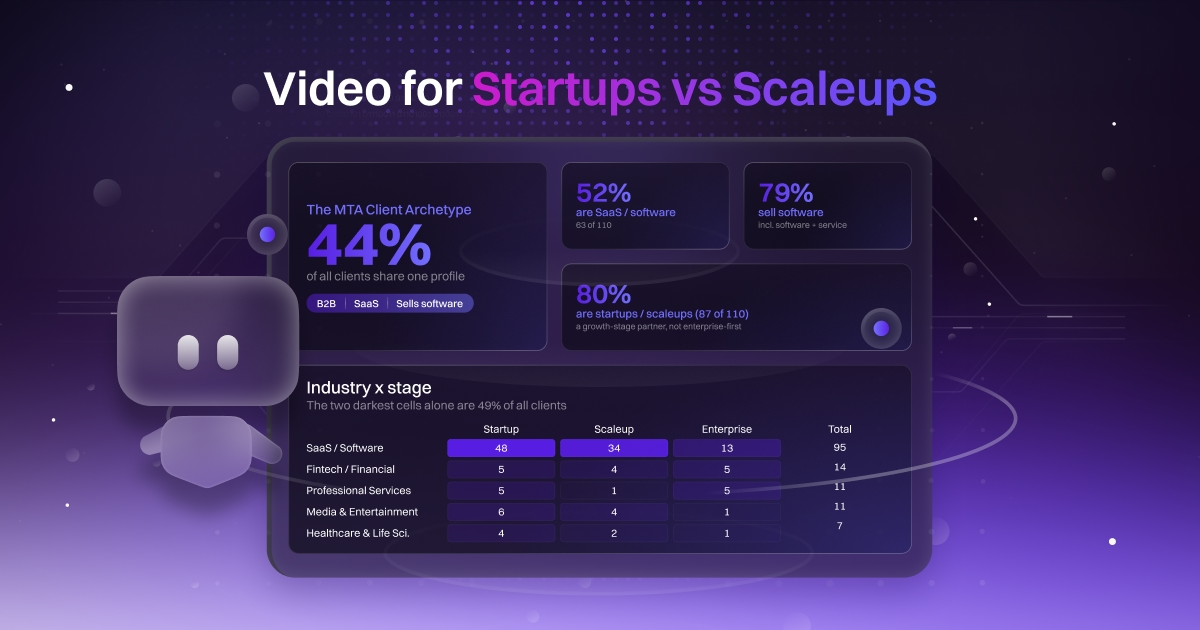
table of content
Here’s something we’ve realised after years of working in marketing: startups and scaleups may look similar from the outside, but they often need very different things.
When we first started, we probably saw them as fairly similar. Both were growing businesses, both needed to explain what they did, and both wanted to reach more customers. But the more companies we worked with, the clearer the difference became, especially in the kind of video support they needed.
So, we looked back at our own client data to understand how video for startups vs scaleups changes at each stage. We also know from speaking with founders and marketers that many are unsure which type of video makes the most sense for where their company is right now. In this article, we’ll share what we found, the videos each stage tends to need, and why those needs change as the company grows.
What is a startup and a scaleup?
There is no single definition that works for every company, but the clearest difference is where the business is in its growth journey.
A startup is usually still proving that its product, market, and business model work. The team may be launching for the first time, looking for product-market fit, raising investment, or showing customers why the product matters.
A scaleup has already shown that there is demand and is now focused on growing the business. That could mean reaching more customers, entering new markets, expanding the team, or scaling its sales, marketing, and operations.
Put simply, a startup is proving the product works, while a scaleup is proving the business can grow. This is the definition we’ll use throughout the article.
Where did we get the data?
We started this research with a simple question: what type of video does a company actually need at each stage of growth? Rather than relying on general assumptions, we looked back through our own CRM and reviewed 110 companies we had worked with over the past two years.
We grouped those clients by growth stage, then looked at the types of video projects they came to us for. Out of the 110 clients, 46 were startups and 41 were scaleups. That means 79% of the companies in our study fell into one of those two stages, giving us a useful view of how their needs change as they grow.
Not every project could be matched perfectly to a company stage and video type, so the patterns in this article should be read as what we have seen in our own experience, rather than a universal rule for every business. Even so, the difference was clear: startups tended to need a wider mix of launch and explainer videos, while scaleups were much more focused on helping larger audiences understand the product quickly.
What our client data showed
What startups usually need
Startups make up the largest company stage in our client base, at 47% of clients. And within SaaS/software specifically, startups are also the biggest group, with 48 SaaS/software clients compared with 34 scaleups and 13 enterprise clients.
That makes sense for the kind of work we do. Startups are often introducing something new, whether that is a product, a category, or simply a different way of solving an existing problem. Video at this stage needs to help people understand what the company is building, why it matters, and why they should pay attention.
This is also where explainer and product launch videos naturally fit. Across all 233 projects in our dataset, explainer videos are the most common format at 53%, while product launch videos account for 12%. We cannot say from this graphic exactly how many of those came from startups, but both formats make sense for the problems startups regularly bring to us: introducing the product, simplifying the idea, and building trust quickly.
We see this a lot with Y Combinator startups, where founders may only have a short window to explain the idea to investors, customers, or partners. At this stage, video is not just there to make the company look polished. It helps people understand what the startup is building and why they should believe in it.
What scaleups usually need
Scaleups are the second-largest group in our client base, making up 35% of clients. Within SaaS/software, we worked with 34 scaleups, so they are another major part of the companies coming to us.
By this point, the challenge is usually slightly different. The product has more traction, the company is running more campaigns, and more teams need to communicate the same product story consistently. Instead of simply introducing the idea, the focus starts shifting towards keeping the product clear as the business, audience, and marketing activity grow.
That growth also puts more pressure on internal marketing and creative teams. Scaleups may need videos for product updates, launches, sales, social campaigns, and different markets at the same time. This is where having reusable design, UI, and animation assets becomes especially useful because each new project does not have to start completely from scratch.
We saw this with clients like GotPhoto and Dext, where the work extended across multiple campaigns and product needs. For scaleups, the challenge is often not simply making more content. It is finding a reliable way to keep explaining the product clearly while producing consistently as the company grows.
Where enterprises fit
Although this article focuses on startups and scaleups, enterprise businesses are still worth mentioning. Across 2024 and 2025, we worked with around 23 clients we classified as enterprise businesses, ranging from Fortune 500 companies to businesses that had recently gone public.
They usually came to us for extra support rather than to replace their internal teams. That could mean helping when campaigns hit a bottleneck, creating internal communication content, or managing projects with longer feedback and approval chains. For enterprise teams, the value is having reliable creative backup when internal capacity starts to stretch.
A decision guide for each stage
The data gives us a useful pattern, but it will not perfectly represent every company. You know your product, audience, and goals better than anyone. Your company stage is a useful starting point, but the final decision should always come back to one question: what does your audience need to understand or do after watching the video?
A lot of our clients are not completely sure what type of video they need when they first come to us. And honestly, that makes sense. As the company grows, its marketing needs change too, making it difficult to know what will help the product most.
When you have spent so much time building the product, every feature, benefit, and message can feel important. But trying to fit everything into one video usually makes the decision even harder.
The easiest place to start is by looking at where your company is now and what the video needs to help you achieve.
Tick the statements that sound most like your situation. The stage with the most ticks should point you towards the right starting point.
Working with a video studio
Whether you are a startup or a scaleup, video should be treated as more than a one-off piece of content. It is an asset that helps your market understand the product, trust the company behind it, and take the next step. The difference is what that asset needs to achieve at your current stage.
For startups, that often means building engagement and proving that the idea or product works. For scaleups, it means making the message easier to scale, keeping communication transparent, and maintaining trust as more customers, markets, and teams become involved.
At Motion The Agency, the initial conversation is about understanding where your company is now, what the audience needs to hear, and how the video will support your next stage of growth. With animation as our biggest strength, we simplify complex information and shape it into a clear message that can keep working beyond a single campaign. Get a free video sample to see how your message could work as a stronger marketing asset.
FAQ

Sam Jupp
Sam Jupp is the founder of Motion The Agency, with over 11 years of experience in research and marketing. He specializes in leveraging creative animation and motion design to craft compelling brand narratives and writes insightful content on industry trends.

In just a few questions, get a tailored estimate for your next video project.







Contact Us
Ready to elevate your brand? Contact us for your
Free Custom Video Sample