Healthcare explainer video: what actually works
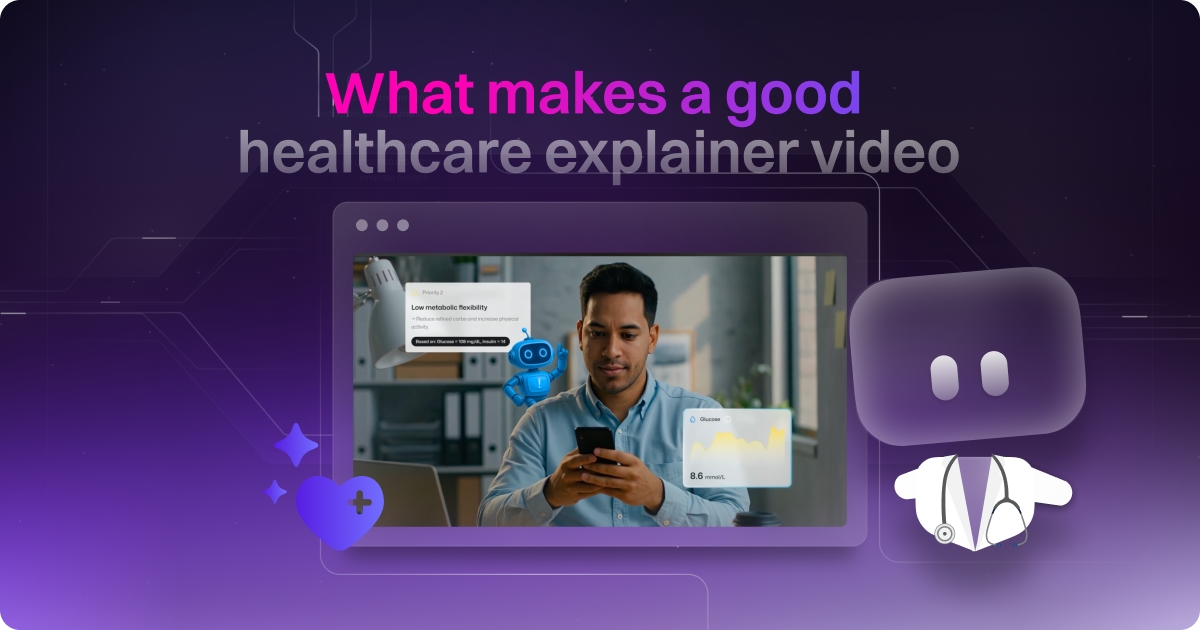
table of content
We talk a lot about the SaaS companies we work with, but healthcare and biotech are another big part of what we do. Brands in these industries often need to explain topics that are complex, sensitive, or difficult to show. At the same time, the message still needs to feel clear, trustworthy, and respectful. A good healthcare explainer video can make that information easier to understand without relying on graphic footage or overwhelming the audience.
What makes healthcare and biotech especially complex is that the message rarely speaks to just one group. A product may need to make sense to healthcare professionals, clinic owners, internal teams, patients, and even their families or caregivers. Each audience has different concerns and levels of knowledge, so the video needs to explain the product clearly while showing why it matters to everyone affected by it.
We saw this while creating a video for Elia AI. Within the first five seconds, we needed to establish who the product was for, what problem it solved, and why the audience should care. That constraint shaped everything else, and it is the same challenge most healthcare videos face.
In this article, we will break down the dos and don’ts of creating a healthcare explainer video, including what tends to work, what usually gets in the way, and how to keep the message clear without oversimplifying it. Think of it as a practical guide for planning your next healthcare or biotech video.
Why should healthcare and biotech brands use video?
Before we get into it, healthcare brands can use all kinds of video, from patient stories and educational content to testimonials and brand films. For this article, though, we are keeping things focused on explainer videos and product videos.
We also know that healthcare technology and biotech are not the same thing. But to keep this article easier to read, we will use healthtech as a broader term for both.
So, why should healthtech brands use video? Because these products are often niche, complex, and difficult to understand through text alone. Video gives people a much quicker way to see what the product does, who it is for, and why it matters.
- Make complex information easier to follow: Video can break down products, treatments, and processes into clear, manageable steps.
- Start with the audience’s problem: Instead of jumping straight into features, a good video focuses on what patients, clinicians, or healthcare teams are trying to solve.
- Build confidence and trust: Showing what happens, why it matters, and what comes next can make the experience feel less confusing and more reassuring.
- Answer common questions early: Explainer videos can cover things like preparation, appointments, product use, and next steps before someone needs to contact support.
- Make sensitive topics easier to explain: Animation can show symptoms, procedures, or internal processes without relying on footage that feels graphic or uncomfortable.
A good healthtech video does more than make people aware of the product. It helps them understand it well enough to see where it fits into their work, care, or decision-making.
What makes a healthcare video actually work?
A healthcare video needs to do more than look polished. It needs to make the information easy to follow, help the audience feel supported, and give them a clear idea of what to do next.
That usually comes down to simple language, purposeful visuals, accessible design, and a tone that feels helpful rather than overly sales-focused.
Make the message easy to understand
Healthcare information needs to make sense to people with very different levels of knowledge. Some viewers may already understand the terminology, while others may be hearing about the product, treatment, or procedure for the first time. That is why the script should use simple language, avoid unnecessary medical jargon, and explain one idea at a time.
The visuals should make the voiceover easier to follow rather than adding movement just for decoration. Each scene should guide the viewer towards the most important information and leave it on screen long enough to take in. The goal is not to remove useful detail, but to make sure the audience can understand it without feeling overwhelmed.
Make the video accessible
Accessibility should be considered from the beginning of the project, not added once the video is nearly finished. The script, design, voiceover, and animation all need to work together so the information is easy to hear, read, and follow.
That means using accurate captions, readable typography, strong contrast, a clear voiceover, and pacing that gives people enough time to process what is on screen. Important information should not rely on colour alone, and the video should end with a clear next step so the viewer knows exactly what to do after watching.
Build trust without sounding too sales-focused
People may use a healthcare video to make decisions about their own health or the wellbeing of someone they care about. That makes trust especially important.
Real patients, employees, or clinicians can help where appropriate, but trust also comes from clear explanations, credible visuals, and a calm, honest tone. The goal is to leave the audience feeling informed and supported, not pressured or sold to.
Keep the focus on the person, not just the technology
A healthcare platform, treatment, or medical device may be impressive, but that is rarely the part people care about most. What they really want to know is: how is this going to make things better for me?
That could mean getting answers faster, accessing care more easily, feeling better prepared, or simply dealing with less confusion. The technology still matters, but the video should always connect it back to the person using it and the difference it makes to their experience.
Use animation for sensitive or difficult topics
Some healthcare topics are hard to explain with live footage, especially when they involve procedures, symptoms, or what is happening inside the body. Animation gives you a way to show those ideas clearly without making the video feel graphic or uncomfortable.
It can make the subject easier to approach while still treating it with the right level of care. The goal is not to make the topic feel less serious, but to help people understand it without feeling overwhelmed.
What healthcare videos should avoid
Healthcare videos can lose people quickly when they try to say too much, move too fast, or rely on language only industry experts understand.
Too much medical jargon or too many messages in one video can make an already complex subject feel even more difficult. The same goes for overly sentimental storytelling, which can distract from the information people actually need.
The technology may be impressive, but it should never become the hero without explaining the benefit to the patient, clinician, or healthcare team using it. Generic stock footage can also make the video feel disconnected from the audience, especially when the visuals do not reflect the situation being discussed.
Fear needs to be handled carefully too. A video can acknowledge a genuine concern, but it should not leave the audience feeling anxious without offering support or a clear next step.
Most importantly, avoid unsupported or exaggerated claims. The video should not suggest that the product, treatment, or platform can deliver more than it actually can.
Before finishing the video, check that it:
- Focuses on one clear message
- Connects the technology to a clear audience benefit
- Gives viewers enough time to understand the information
- Ends with a useful next step
The best healthcare videos feel clear, useful, and respectful. They give people the information they need without making the subject feel more complicated than it already is.
Trust starts with the story.
Healthcare video should feel credible, not generic.
Send us your product and we’ll create something that respects the audience and the subject, free, before you spend anything.
Why animation can make compliance easier
Another thing healthtech brands need to think about is compliance. There are strict rules in place to protect patient information, keep claims accurate, and reduce the risk of showing anything sensitive or misleading.
The main reason many healthcare clients choose animation or carefully selected stock footage is control. Animation lets brands decide exactly who appears on screen, what information is shown, and how the product, treatment, or outcome is represented.
Fictional characters can replace identifiable patients, while recreated interfaces and invented information can be used instead of real patient records. This reduces the need to film real patients or clinical environments and makes it easier to manage privacy risks.
Animation also gives the brand more control over the message. Numbers, labels, interfaces, and outcomes can all be designed around approved information, making it easier to avoid unrealistic results or misleading transformations.
That does not automatically make a video compliant, though. The script and visuals still need to go through the right review process.
- Plan reviews early: Medical, legal, and compliance teams should review the script and storyboard before production moves too far ahead.
- Avoid guaranteed claims: Healthcare advertising should not promise outcomes that cannot be supported. Wording such as “may help” or “is designed to support” may be more appropriate than “will cure” or “guarantees results.”
- Check the final visuals: Compliance is not only about the script. Numbers, labels, interfaces, and the way outcomes are shown also need to be reviewed.
- Check with your legal team: Animation can make privacy and compliance easier to manage, but it does not automatically make a video compliant.
The main advantage is control. Animation lets healthtech brands decide exactly what the audience sees and hears, making it easier to keep the message clear, accurate, and ready for review.
How we approach healthcare video at Motion
A good healthcare video does not start with animation style, colour palettes, or transitions. It starts with the problem the video needs to solve.
Maybe the audience does not understand how the product works. Maybe patients need to feel more prepared before a procedure. Or maybe a clinical team needs a clearer way to explain a new platform. Whatever the challenge is, we need to understand that first before deciding what the video should look like.
That usually means asking a few simple questions:
- Who is the video for?
- What are they worried about or trying to understand?
- What is the one thing they really need to know?
- What outcome matters most to them?
- What tone will make the message feel clear and trustworthy?
- Which video format will explain it best?
- What medical, legal, or compliance approvals are needed?
- What should the viewer do next?
With Elia AI, that meant answering the biggest questions as early as possible. Within the first five seconds, the audience needed to understand who the product was for, what problem it solved, and why it mattered.
The visuals played an important role too. They were not there simply to make the video look polished. Each scene added information about the product, supported the voiceover, and made the explanation easier to follow.
Our earlier project for Gendius (a 3D animated project we had) needed a slightly different approach. The main focus was education and presenting healthcare data accurately, so every number, label, and visual explanation needed to be precise.
Rather than adding movement for decoration, the animation was used to organise the information and make the data easier to understand. That level of control also made the video easier for the client’s medical and compliance teams to review.
From there, we build every script around one clear message and use visuals to explain, not decorate. Sensitive information still needs to feel approachable, but never at the expense of accuracy or seriousness. We also leave enough room for medical, legal, and compliance reviews rather than trying to squeeze them in at the end.
One of the simplest checks we use is this: could someone outside the industry still understand the video?
Because the product might be complex, but the explanation should not be.
Conclusion
Healthcare and biotech products are often complicated. Your video does not need to be.
The real job is to work out what the audience needs to understand, then remove anything that gets in the way. That means one clear message, visuals that add useful information, and enough detail to stay accurate without overwhelming people. It should feel human and easy to follow, not clinical, vague, or overly sales-focused.
That can look different from one project to another. With Elia AI, it meant answering the biggest questions within the first few seconds. With Gendius, it meant making sure every figure, label, and visual explanation was precise. Different challenges, but the same principle: every second of the video should help the audience understand the product better.
Got a healthcare or biotech product that is difficult to explain? Request a free video sample and we’ll show you how we would turn it into something clear, accurate, and easy to understand.
FAQ

Sam Jupp
Sam Jupp is the founder of Motion The Agency, with over 11 years of experience in research and marketing. He specializes in leveraging creative animation and motion design to craft compelling brand narratives and writes insightful content on industry trends.


In just a few questions, get a tailored estimate for your next video project.




Contact Us
Ready to elevate your brand? Contact us for your
Free Custom Video Sample