B2B Event Video Production: Services, Formats, and What Actually Converts

table of content
B2B audiences are not just showing up to be entertained. They are there to understand your brand, evaluate your product, and decide whether it is worth exploring further.
That gives event video a bigger job than simply filling a screen. It needs to make complex ideas easier to understand, communicate value quickly, and give people something useful to take away from the event.
This matters even more for SaaS, AI, and technical companies, where the product is often difficult to demonstrate in a few seconds. We deal with this type of challenge every day. 80% of the companies we support are B2B businesses, 52% work in SaaS and software, and 58% of our projects are explainers.
For us, good B2B event video production is not just about creating something visually impressive. It is about helping audiences quickly understand what you do, why it matters, and what they should pay attention to next.
If you are still comparing partners, you can also check out our Top Event Video Agencies for 2026 list for a wider look at some of the agencies working in this space.
What makes B2B event video different?
B2B buying rarely comes down to one person.
A potential customer might have people from marketing, leadership, finance, operations, and technical teams involved in the decision. They can all be looking at the same product, but they are not necessarily looking for the same information.
That is what makes B2B event video production different. The video needs to communicate clearly across multiple stakeholders, while still keeping the message focused enough to work in a busy event environment.
Complex products need clearer communication
A lot of B2B products are difficult to show because the real value is happening behind the scenes.
With SaaS platforms, AI tools, and technical products, simply putting the interface on a large screen is rarely enough. Your audience needs context. What is happening? What problem does it solve? Why should they care?
This is where strong corporate event video production can make a real difference. Video gives you a way to make that invisible value visible, simplify workflows, show cause and effect, and highlight the parts of the product that matter most.
Different audiences need different messages
Even if your B2B audience is already quite niche, you still need to get more specific about who is watching.
A marketing team might care about brand impact or how the product supports a wider campaign. A decision-maker may be looking at revenue, efficiency, or cost. A technical buyer is more likely to care about how the product works and whether it fits into their existing setup.
Trying to answer all of those questions in one video can quickly make the message crowded.
Sometimes the better approach is not to make one video do everything. It is to create different pieces of content for different audiences and different moments in their journey.
Different moments need different types of event video
In our experience, there is rarely one “right” event video.
What you create depends on what the audience needs at that particular moment. Someone seeing your company for the first time needs something very different from someone who already understands the category and wants to see how the product works.
That is why a single event can involve several types of video.
Before the event, you might need content that creates interest and gives people a reason to attend. During the event, you may need a launch film, explainer, product demo, or stage visuals to help communicate the story. Afterwards, those same ideas can become recap videos, social content, sales assets, and follow-up material.
Our Event video production service is designed to support those different moments rather than treating the event as one standalone piece of content. We help B2B companies create video before, during, and after events, depending on what the audience needs at each stage.
Here are some of the formats we have produced for past clients.
Sizzle reels: build anticipation and set the tone
A sizzle reel is usually there to create momentum. It can open a keynote, introduce a new product, launch a brand story, or simply give the audience a reason to pay attention to what comes next. The goal is not necessarily to explain every detail, but to create energy, establish the message, and make the moment feel important.
A good sizzle reel can also continue working beyond the stage. The same film, or shorter edits from it, can often be reused across booth screens, social media, campaign content, and sales follow-ups, giving the asset a much longer life than the event itself.
Product launch and explainer videos: make the product easier to understand
For technical products, announcing a new feature is only part of the job. People also need to understand what changed, why it matters, and how it actually works, especially when the product itself is difficult to demonstrate in a live environment.
This is where product launch films and explainers become useful. They can simplify a complicated workflow, show the product in context, and help people understand the value without relying on a long live demonstration. This is particularly relevant for the SaaS, AI, and technical companies we work with. In fact, 58% of Motion projects are explainer videos.
Stage and LED content: make the whole event feel connected
Not every screen needs to play a hero video. Some of the most important event assets are the smaller motion pieces that tie everything together, including animated logos, countdowns, speaker graphics, lower thirds, transitions, and background screen content.
For Planful, for example, our work has included opening trailers alongside motion assets used throughout their yearly events. Each asset may have a different job, but together they help create one consistent visual experience across the event rather than a collection of disconnected screens.
Event recap videos: keep the event working afterwards
The value of an event should not disappear when everyone goes home. A recap can turn what happened during the event into content that continues supporting LinkedIn, your website, sales conversations, internal communications, and promotion for future events.
It also does not have to stop with the finished recap. Animations, product sequences, graphics, transitions, and individual shots created for the event can all be repurposed for future marketing content. When those assets share the same visual language, the next campaign feels like a continuation of the brand rather than something that has been created from scratch.
That is the bigger opportunity with event video. Instead of producing isolated assets for one day, you can build a library of content that keeps creating value before, during, and after the event.
I’d use this paragraph density for the rest of the article too: generally 3–4 sentences per paragraph, with shorter paragraphs only when you deliberately want to emphasise a point.
Content should work beyond the event
One of the best things about a well-made event video is that its value does not have to stop when the event ends. If you plan it properly from the start, the content can keep supporting your marketing long after the screens come down and the venue clears out.
The finished video itself can often be reused in different ways. A launch film can become a social cutdown, a sales follow-up asset, a website video, or part of a paid campaign. A keynote opener might later be adapted for LinkedIn, a product page, or a future launch. Instead of creating something that only works for one day, you are creating an asset with a much longer shelf life.
The same is true for the individual parts inside the video. Product animations, UI sequences, transitions, graphic systems, title treatments, and even short sections of the edit can all be reused across future content. That gives you more mileage from the original production and also helps keep the brand feeling consistent across different channels.
It also creates a stronger sense of continuity. If the visual language from your event starts appearing in social content, sales materials, website assets, and future campaigns, those pieces feel like they belong to the same brand story rather than being created in isolation.
That is why we think about repurposing early in the production process. When you know which assets may need to live beyond the event, you can design and build them in a way that makes future use much easier. The result is not just one event video, but a broader content system that can keep supporting your marketing before, during, and after the event.
Benefits of Corporate Event Video
Extended Reach & Engagement
Your event shouldn’t be limited to the people in the room. Video lets you extend your reach, connecting with a wider audience through social media, email marketing, and internal platforms. Whether it’s a conference, product launch, or company announcement, your content stays relevant long after the event wraps.
Want real-time interaction? Live streaming takes engagement to the next level, allowing remote attendees to participate, react, and be part of the experience—no matter where they are.
Content That Keeps Working for You
One event can fuel endless content opportunities—it’s all about making the most of it. Instead of letting great footage go to waste, repurpose it to keep your brand top of mind.
Turn standout moments into scroll-stopping social media clips, transform key insights into training materials, or create internal recaps to keep teams aligned. Need fresh marketing content? Use event footage in promotional campaigns to keep the momentum going long after the event ends.
Stronger Employee & Stakeholder Engagement
Event videos aren’t just about capturing moments, they’re about building company culture. Celebrating milestones, recognizing teams, and showcasing big wins through video creates a sense of pride and connection across your organization.
For investors and stakeholders, a well-produced event video delivers a clear, compelling recap of major initiatives. It’s more than just a report—it’s a powerful way to highlight progress, impact, and future vision in a way that sticks.
Better Sponsorship & Brand Positioning
Event videos don’t just showcase your brand, they’re a game-changer for sponsor visibility. Branded video content gives sponsors the exposure they need, whether through on-screen features, dedicated shoutouts, or post-event marketing. It’s a win-win: your event gets high-quality content, and sponsors get the reach they’re looking for.
A well-produced event video also makes securing future sponsorships easier. When potential sponsors see the value and engagement past partners have received, they’ll be more likely to invest. Strong visuals, strategic placements, and compelling storytelling turn your event into an opportunity brands want to be part of.
How We Help Brands Create High-Impact Corporate Event Videos
Corporate event videos may be a little different from our usual projects, but that’s exactly why we love them. They challenge our designers to think differently, adapt their skills, and push creative boundaries in new ways. It’s the perfect opportunity to blend storytelling, motion design, and brand impact into something bold, engaging, and unforgettable.
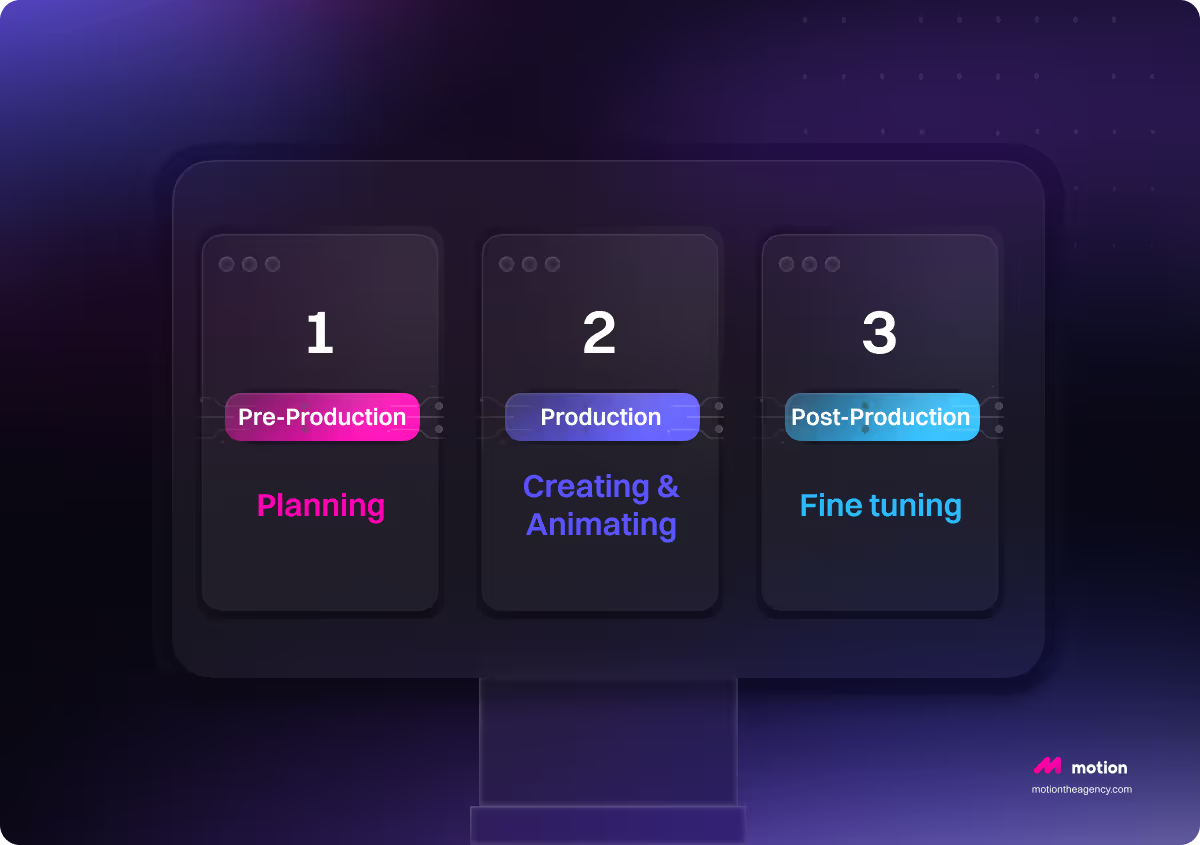
Pre-production
This is the stage where we define key objectives, pinpoint the target audience, and outline deliverables. Having a clear plan from the start ensures that every video is purpose-driven, engaging, and aligned with the brand’s goals.
Next, we determine the best format for the project. Is it a highlight reel, a behind-the-scenes feature, or an interview-driven piece? In one of our recent projects—covered later in this blog—we not only built custom assets for a live-streamed event but also created a polished corporate event video afterward. This stage is all about understanding what the client needs and finding the best way to bring their vision to life.
To stay ahead, we use AI-generated images to visualize and refine concepts early on, ensuring smoother execution. We also apply SMART planning to keep every step focused, strategic, and aligned with the project’s goals. With structured workflows and a results-driven approach, we make sure editing is faster, costs stay optimized, and the final product meets the highest creative standards, without compromise.
Production
This is where corporate event videos differ slightly from our usual projects. Unlike other motion-driven content, the production phase for event videos can be divided into two key sections:
- Videography During the Event – In most cases, our clients handle the filming themselves, capturing cinematic-quality shots with minimal on-site disruption. We guide them on best practices to ensure the footage is high quality and works seamlessly with our post-production process.
- Animation & Editing – This is where we shine. Once the footage is gathered, our team takes over to stitch the content together, enhance it with dynamic motion graphics, and integrate branded elements for maximum impact. This stage transforms raw footage into a polished, engaging video that tells a compelling story and elevates the brand’s presence.
Post-production & delivery
The post-production phase is where the project finally takes shape. This is where we fine-tune every detail to ensure the animation is polished, engaging, and ready for its audience.
We start by focusing on sound design and voiceover integration, adding music and enhancing storytelling elements to maximize engagement. A strong audio-visual experience is key to making the animation more immersive and impactful.
This stage is also where clients get to review the project and request minor adjustments or revisions to ensure the final product meets their expectations. Our goal is to deliver high-quality, brand-aligned content that meets both creative and strategic needs.
Finally, we render and optimize the animation in multiple formats and resolutions, ensuring it’s ready for various platforms—whether it’s for social media, presentations, or broadcast.
Cost considerations: what to know before producing an event video
Before setting a budget, start with the scope. What does the video need to achieve, who is it for, and where will it be used? A keynote opener, social cutdown, product explainer, and internal training video all have different requirements. Knowing the purpose and distribution channels early helps determine the right format, length, and level of production.
From there, consider the production complexity. Motion graphics, 3D animation, multiple aspect ratios, live streaming, on-site filming, or a large number of deliverables can all increase the amount of production time involved. Tight deadlines can also affect the scope, especially when several assets need to be created in parallel before an event date that cannot move.
It is also worth thinking beyond the hero video. If you know you will need social cutdowns, stage visuals, product animations, or recap content afterwards, planning those deliverables together can be more efficient than commissioning each asset separately. It also makes it easier to reuse visual elements across the wider campaign.
Finally, consider whether the event is a one-off or part of an ongoing calendar. For companies producing content across several events each year, an ongoing production model can make more sense than starting a new project from scratch every time. Our subscription model is designed for this kind of continuous need, giving teams access to consistent production capacity, faster turnarounds, and a creative team that already understands the brand.
Planning the scope, complexity, deliverables, and long-term content needs upfront makes it much easier to build a realistic budget and get more value from the production.
Case study: AI Engineer Summit
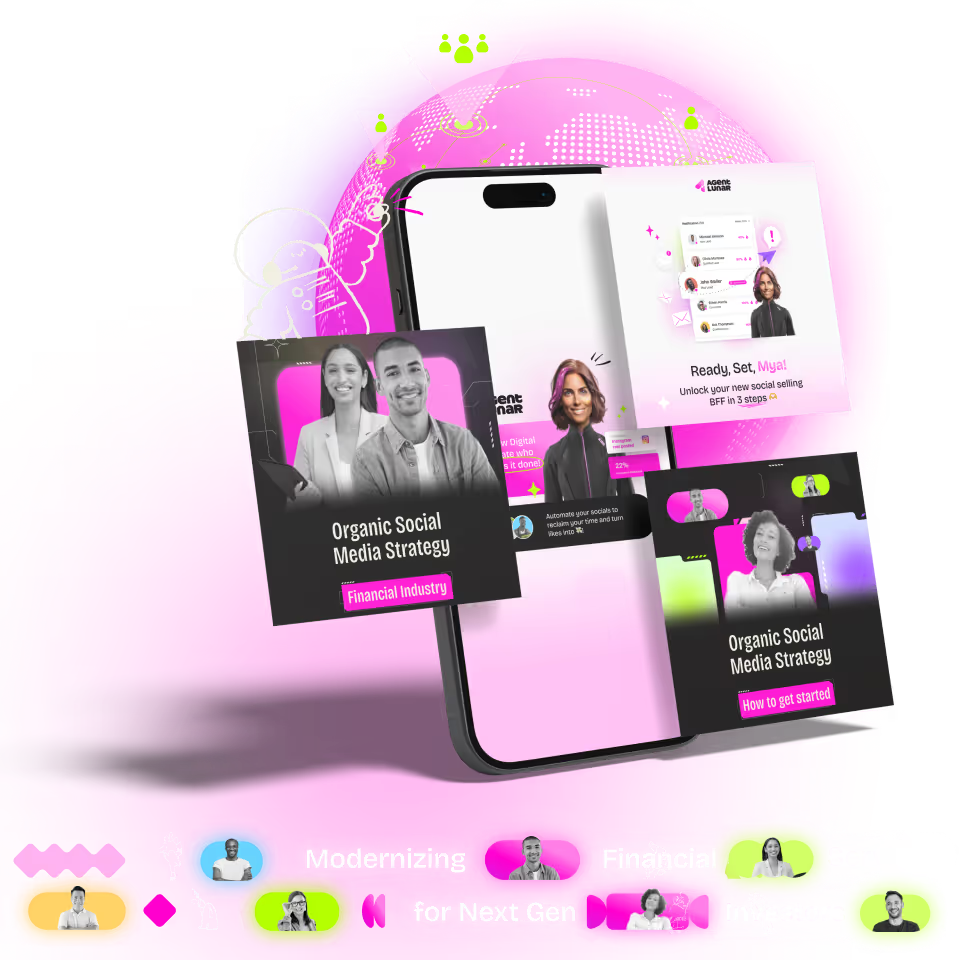
Since 2024, we’ve supported AI Engineer World's Fair as a subscription partner, working across 2–3 events each year and helping their team create motion content before, during, and after each event.
That support starts well before the doors open, with pre-event assets designed to build anticipation and set the visual direction. During the event, we create the graphics, speaker content, screen visuals, and other motion assets needed across the venue. Once the event is over, we also help turn what happened on the day into recap content that can continue working across social, marketing, and future event promotion.
Across the partnership, we’ve created 200+ motion assets, all designed to feel consistent even when they are being used across different stages, screens, and moments in the event journey. For a technical audience, that consistency matters because the content itself can already be complex.
Motion helps make those ideas easier to follow without oversimplifying them, while giving the event one clear visual language from the first piece of pre-event content through to the final recap.
We also have a dedicated AI Engineer World's Fair case study that goes deeper into the partnership, the volume of work involved, and how we support the event team across multiple touchpoints throughout the year.
Our approach
When tackling a project of this scale, having a clear game plan was essential. We worked closely with AI Engineer to make sure we were all on the same page from the start. Think of it as a creative brief—laying the groundwork so everything runs smoothly, revisions are minimal, and we stay on track.
To keep things structured, we nailed down six key details before diving in:
- How long the video should be
- Deadlines and turnaround times
- Aspect ratio and format requirements
- Whether audio was needed
- If the asset would be reusable
- The final delivery format
Once these were locked in, we used Figma for planning, giving us a clear visual roadmap and seamless asset organization. To speed up production without losing quality, we built scalable templates for event visuals, speaker intros, and sponsorship animations.
Throughout the process, we relied on Slack and project management tools to keep everything moving. Real-time collaboration made it easy to adapt, optimize, and deliver a final product that checked all the boxes—both creatively and technically.
Production & animation
Once planning was complete in Figma, we moved into the animation phase, where our team took over to bring the visuals to life. While the animation team handled the creative execution, the same project manager remained responsible for quality control, ensuring consistency across all assets.
At this stage, our focus was on creating dynamic, high-quality content optimized for multiple platforms to meet AI Engineering Summit’s needs. Every asset was designed to be visually engaging and seamlessly integrated across event screens, live streams, and social media promotions.
To streamline production and maintain efficiency, we implemented a structured workflow that included:
- Designing custom visuals for event screens, live streams, and social media content.
- Creating template documentation and securing approval before moving into full production.
- Using scalable templates to speed up workflow—especially for repetitive content like 100+ speaker introductions.
- Leveraging Google Sheets & Frame.io for efficient tracking, real-time feedback, and quick approvals.
- Managing seamless collaboration through Slack and project management tools, keeping teams aligned and production on track.
- Ensuring brand consistency by maintaining a cohesive visual style across all assets.
By following this structured approach, we ensured that every asset was delivered on time, optimized for different platforms, and met the highest creative standards.
Results
Our structured workflow and efficient collaboration led to 50% faster post-production, allowing us to meet tight deadlines without compromising quality. By optimizing our processes, we ensured a smooth transition from animation to final delivery, keeping everything on track.
In the end, we successfully delivered 200+ videos on schedule, providing AI Engineer Summit with high-quality content ready for immediate use. Each asset was carefully refined to align with the event’s branding and engagement goals.
By maximizing content across multiple platforms, the event’s reach extended far beyond the live experience. From on-screen visuals and live streams to post-event promotions and social media campaigns, every piece of content played a role in amplifying the summit’s impact.
Conclusion and final thought
A well-coordinated event is a powerful way to showcase your company and products. But hosting events continuously isn’t always feasible—or the most effective way to communicate your message. That’s where a well-executed corporate event video steps in. It amplifies your brand, extends your reach, and delivers long-term value by turning a single event into a lasting marketing asset.
Whether you need a one-time project or ongoing content support, we’ve got a solution that fits. Choose our project-based pricing for standalone videos or opt for our subscription model to keep your brand’s content fresh, consistent, and efficient.
Let’s create something great together. Get your free sample today and explore our corporate video service page!

Sam Jupp
Sam Jupp is the founder of Motion The Agency, with over 11 years of experience in research and marketing. He specializes in leveraging creative animation and motion design to craft compelling brand narratives and writes insightful content on industry trends.

In just a few questions, get a tailored estimate for your next video project.



Contact Us
Ready to elevate your brand? Contact us for your
Free Custom Video Sample