How to Slash Creative Costs by 50% While Doubling Your Video Content Output

table of content
Key takeaways
- Content demand has exploded, but marketing budgets and team sizes haven’t scaled at the same pace. Teams are expected to produce always-on, multi-format, and often multilingual content.
- Modern marketing has shifted from campaigns to constant production. Permission marketing still matters, but today it requires sustained output across many platforms, not just occasional emails or ads.
- Most marketing budgets severely underfund content creation. Even with six-figure or seven-figure budgets, only a small percentage is typically allocated to video and media production.
- Traditional production models don’t scale efficiently. In-house teams are expensive, agencies lose time and budget to admin, and freelancers create coordination overhead and inconsistency.
Remember when a 'big marketing campaign' meant a few print ads, a TV spot, and maybe a direct mailer? Fast forward to today, and your marketing team is expected to be an unstoppable content machine. Social media posts, blog articles, email campaigns, video testimonials, explainer animations, product demos, case studies... and often, all of it needs to be localized for multiple languages.
The demand for fresh, engaging, and high-quality content has exploded. But here's the catch: your budget hasn't necessarily exploded with it, and your team is likely stretched thin trying to keep up. This creates a critical challenge for any growing business: how do you consistently feed the content beast without draining your resources or compromising your brand?
From traditional campaigns to the age of permission
Seth Godin's seminal 'Permission Marketing,' published in 1999, offered a revolutionary idea: instead of interrupting customers, earn their permission to market to them. It preached respect, relevance, and building long-term relationships through opt-in engagement.
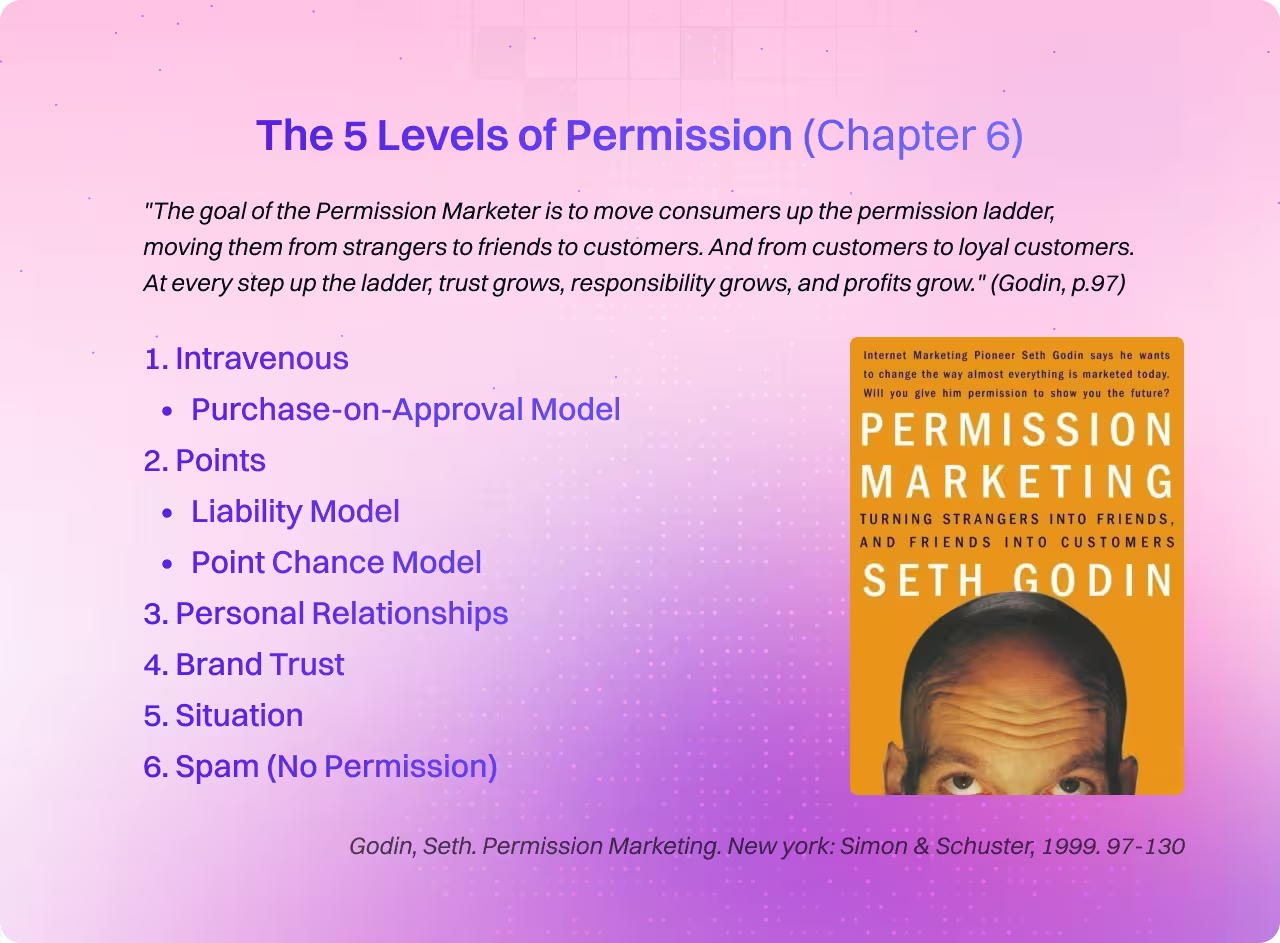
Godin's core principles of permission and value are more critical than ever. But the how has fundamentally changed. We're no longer just asking for permission to send an email; we're vying for attention across dozens of platforms, demanding a constant stream of high-quality, personalized, and often multilingual content. This isn't just permission; it's perpetual motion marketing.
What does it mean and why should I care?
In the year 2000, a marketing department might strategize a few key campaigns a year, carefully crafted and distributed. Today? Brands need to be always-on, always relevant, and always producing. The velocity of content demand is huge, but budgets and teams don’t scale as easily.
Recent data from CMO Alliance shows:
- Over 47.6% of North American companies spend $250k+ on marketing each year
- 26.3% of marketers manage $1M+ annual budgets
- Yet only 1.4% of that budget typically goes to video and media creation
So marketers are under pressure to produce more content than ever, with a surprisingly small slice of the budget.
Here’s where it usually breaks down:
Hiring headache
Building an in‑house content team is slow and expensive. Even a lean pod of 1 marketer, 1 designer, 1 video editor can easily reach £180k - £250k per year once you add salaries, benefits, software, and management time.
Agency treadmill
Project by project agency work means new briefs, bids, scopes, and revision cycles every time. It’s common for 20 - 40% of a project budget to disappear into meetings, change requests, and admin instead of actual content.
Band‑aid freelancers
A patchwork of freelancers looks cheap on paper, but coordination isn’t. Teams can lose 10 - 15 hours a month just on briefing, chasing timelines, and aligning styles, almost two full working days that should be spent on strategy.
Global gaps
Going international multiplies the problem. Ad‑hoc localization for 2–3 markets can push a single video to 2-3× the original cost once you factor in new edits, subtitles, and cultural adaptation.
Now compare that with a fixed creative subscription at £4,880/month (≈ £58,560/year).
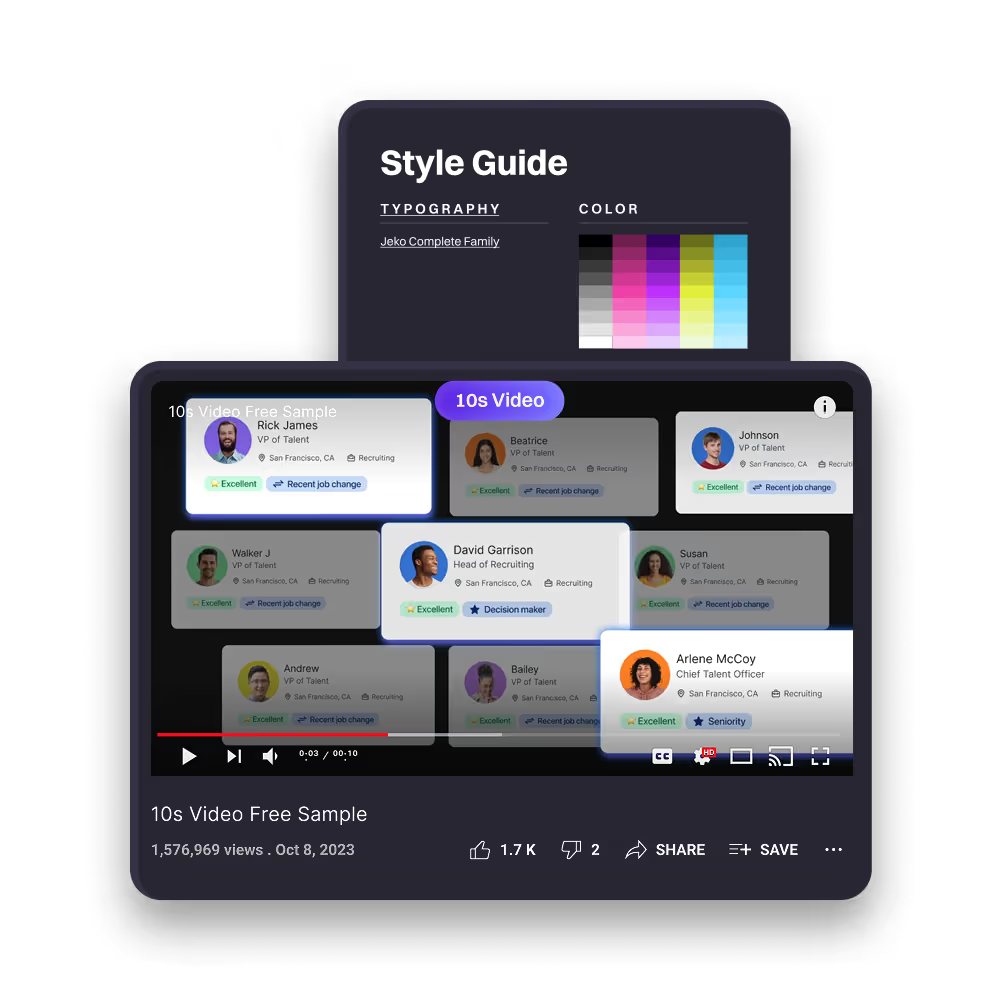
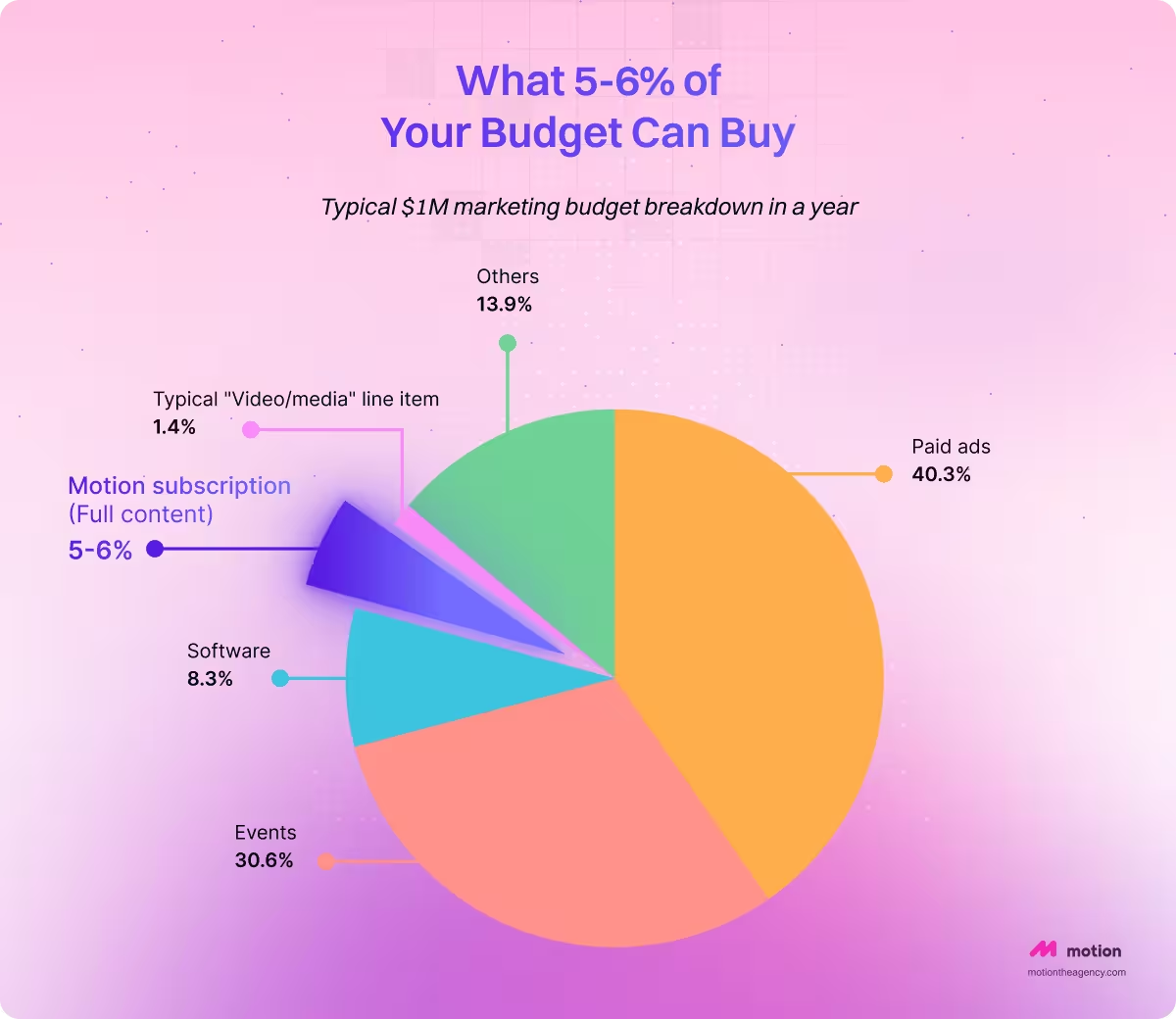
Even though Motion sits at 5-6% of a $1M budget, it’s not “extra” video/media spend on top of everything else. That slice replaces a lot of what usually gets burned on fragmented production – agency projects, scattered freelancers, and even parts of in‑house roles. By consolidating production into a single subscription, brands can increase output while cutting overall creative costs by up to 50%, instead of constantly stitching together one‑off projects.
GotPhoto's breakthrough: Bridging the gap with a new creative model
GotPhoto realized they needed a partner built for the modern marketing landscape. They found it in Motion The Agency, which offered a flexible, subscription-based creative model (also known as Design as a Service). This wasn't just about outsourcing tasks; it was about integrating a dedicated, scalable creative engine into their workflow.
They gained the ability to produce high volumes of consistent, on-brand content rapidly, effectively breaking through the 'bottleneck battle' and fueling their growth.
The outcome was nothing short of transformational. In just nine months, Motion The Agency produced over 20 high-quality, multilingual videos. Most impressively, this partnership led to a 50% reduction in GotPhoto's creative costs.
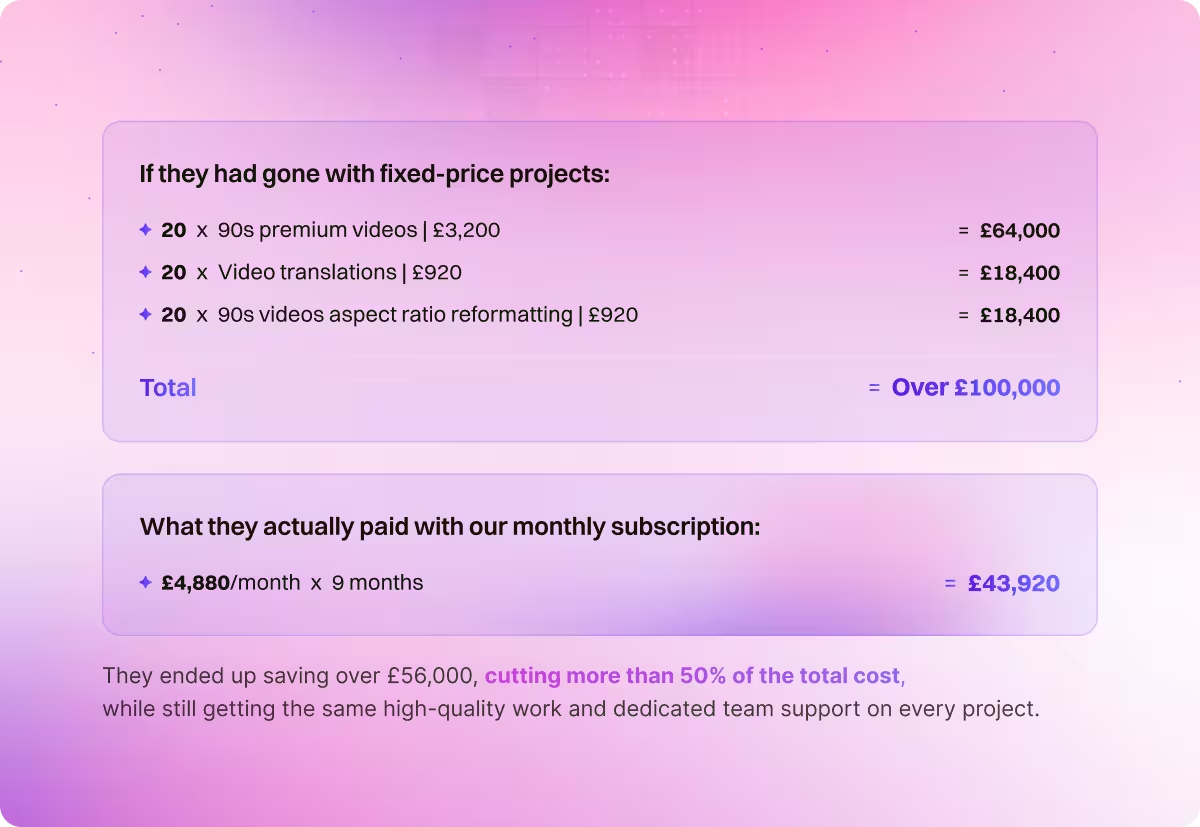
Read full Gotphoto case study here
Is your business ready for a modern content solution?
If your growing business is struggling to keep pace with content demands, facing bottlenecks, unpredictable costs, or brand consistency issues it's time to rethink your creative strategy. The traditional models simply aren't built for the speed and scale required by modern growth. As the GotPhoto case study demonstrates, a flexible, subscription-based creative partnership can be the key to unlocking your content potential, accelerating your growth, and optimizing your marketing spend.
Discover how a modern, flexible creative partnership can help your brand move beyond permission to perpetual value creation, driving growth with efficiency. Learn how Motion The Agency's subscription model can transform your content strategy.
Frequently Asked Questions

Widi Setyowati
Widi is a content marketing specialist with experience in video marketing, email marketing, and content creation. At Motion The Agency, she specializes in crafting engaging video campaigns, impactful email outreach, and insightful written content.


In just a few questions, get a tailored estimate for your next video project.




Contact Us
Ready to elevate your brand? Contact us for your
Free Custom Video Sample