
Cybersecurity Training Videos: What They Are & How to Create Them?


table of content
Key Takeaways
- Cybersecurity training videos are an essential tool for educating employees on best practices for protecting an organization's digital assets.
- Best Practice for creating effective cybersecurity training videos include the following
- Understanding the target audience and tailoring content accordingly
- Keeping videos concise, engaging, and visually appealing with animations and real-world scenarios
- Ensuring accessibility and inclusivity for all employees
- Regularly updating the content to reflect the evolving cybersecurity landscape
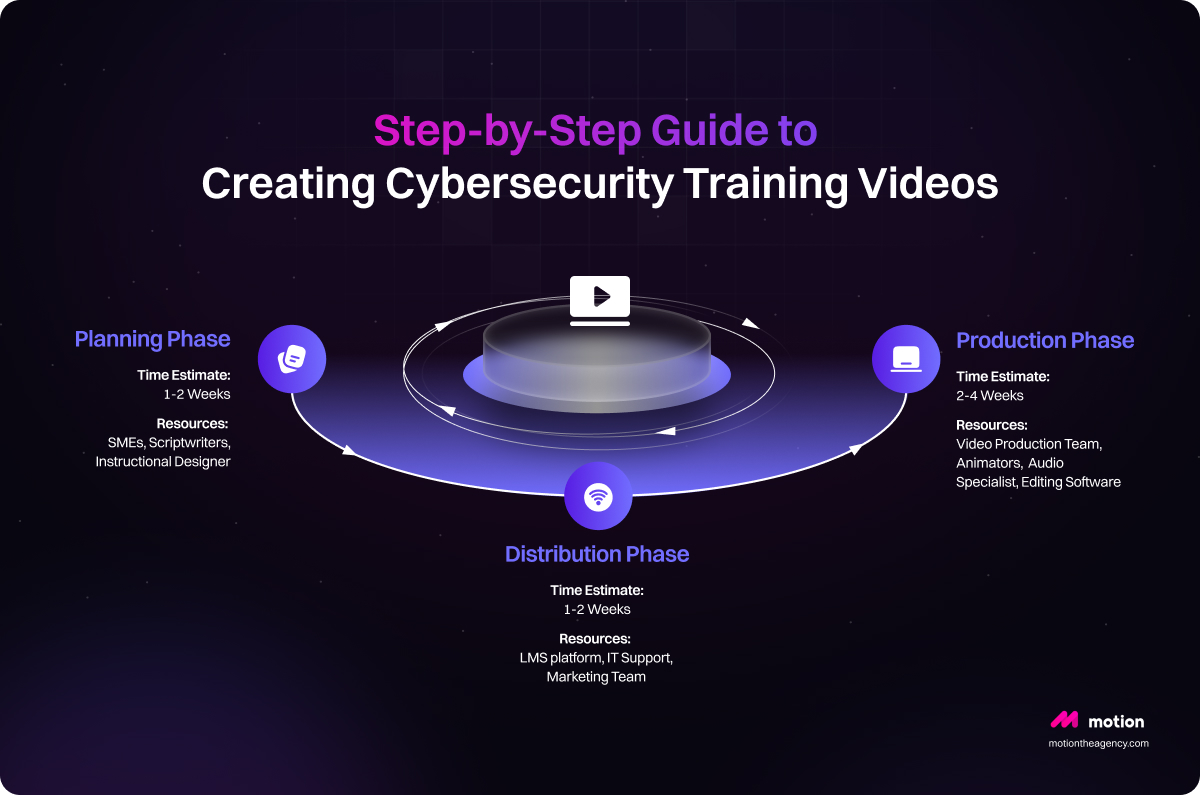
- The process of producing cybersecurity training videos involves three phases: planning, production, and distribution while also tracking engagement and completion rates.
- Measuring the effectiveness of cybersecurity training videos involves tracking key performance indicators such as completion rates, engagement, knowledge retention, and behavioral changes.
- Case studies highlight the challenges of keeping content engaging and up-to-date, as well as making technical content accessible to non-technical employees.

Cybersecurity training videos are multimedia tools designed to educate employees about the risks associated with cyber threats and the best practices for protecting sensitive information. These videos offer visual and interactive learning experiences that enhance employee understanding and retention of crucial cybersecurity protocols.
Industry experts emphasize the importance of these programs.
“Companies spend millions of dollars on firewalls, encryption, and secure access devices, but if hackers can’t bypass these defenses, they will go after the human element - the weakest link.” -Kevin Mitnick
This highlights the need for comprehensive training that not only informs but also actively engages employees, preparing them to recognize and respond to threats proactively.
Adding to this perspective, cybersecurity expert Bruce Schneier states, “Security is not a product, but a process.” This quote underscores the evolving nature of cybersecurity, reinforcing that training should be an ongoing, adaptable practice to keep pace with new threats.
Understanding Cybersecurity Training Videos
Cybersecurity training has evolved significantly over the years. Traditionally, companies relied on in-person workshops, lengthy manuals, and static presentations to train employees about cybersecurity protocols. These methods, while informative, often struggled with engagement and retention rates as they lacked interactive elements and flexibility.
With the rise of digital transformation and online threats, companies began shifting towards more dynamic and engaging formats - primarily video-based training. Video offers several advantages over traditional methods: it combines visual, auditory, and interactive elements that enhance learning and retention. Employees can visualize real-life scenarios, understand threats like phishing or malware, and learn appropriate responses in an immersive environment.
Today, cybersecurity training videos often include animations, real-life simulations, and interactive modules, making them more engaging and accessible. Companies now use these videos in their Learning Management Systems (LMS) or internal company network, enabling employees to learn at their own pace and revisit content as needed. This shift not only improves knowledge retention but also ensures that training remains consistent and scalable across the organization.
What are Cybersecurity Training Videos?
Cybersecurity training videos are multimedia tools designed to educate employees on best practices for protecting an organization’s digital assets. They serve as a proactive approach to cybersecurity, teaching staff how to identify and respond to potential threats like phishing, ransomware, social engineering, and data breaches. These videos often include animations, real-world simulations, and interactive elements to create engaging and informative learning experiences.
5 Benefits of Using Video in Cybersecurity Training
Benefits of Using Video in Cybersecurity Training. The use of video in cybersecurity training has become increasingly popular due to its effectiveness in enhancing learner engagement and retention. Here are some key benefits:
1. Higher Information Retention
Research shows that people retain 95% of a message when they watch it in a video compared to only 10% when reading text. Studies also highlight that video-based training boosts retention by 75% versus traditional methods, such as lectures or reading. A Wainhouse Research study revealed that learners engaging with video had 50% higher retention rates compared to other methods.
2. Engagement and Motivation
Video training can be more engaging than written materials. Incorporating visuals, animations, and real-world scenarios helps maintain learner interest and motivation.
3. Flexibility and Accessibility
Video training can be accessed anytime, anywhere, allowing learners to consume content at their own pace, which is crucial in a fast-evolving field like cybersecurity. Additionally, video training can reduce training time by up to 60%, further boosting employee productivity and cost savings.
4. Visual Learning
A significant part of the population are visual learners, and video caters to this demographic, facilitating better understanding through visual demonstrations.
Cost-Effectiveness
Research shows that video training is significantly more cost-effective than traditional classroom methods, reducing training costs by 50-70% by eliminating repeated instructor-led sessions and printed materials (Comparative Study of Classroom Training Vs. Virtual Training). Once created, training videos can be easily reused and updated, saving time and money. Organizations can save approximately $1,000 to $2,000 per employee by switching to video training, including savings on travel, venue, and instructor fees. A study found companies can cut overall training costs by up to $11,000 for every 100 employees trained via video instead of classroom settings (The Vidgroup). Video training also scales easily, reducing costs as more employees undergo training without requiring additional resources.
The Importance of Cybersecurity Training Videos
Cybersecurity training videos are essential tools for onboarding and employee training, providing an engaging and effective way to educate staff about cyber threats and best practices. Unlike traditional PDF documents, which are inexpensive and quick to produce, animated corporate training videos offer a medium-cost solution that is easy to update and can be tailored with company branding. In contrast, filming live-action videos is more expensive and time-consuming, making it less practical for frequent updates.
Comparison of Training Methods
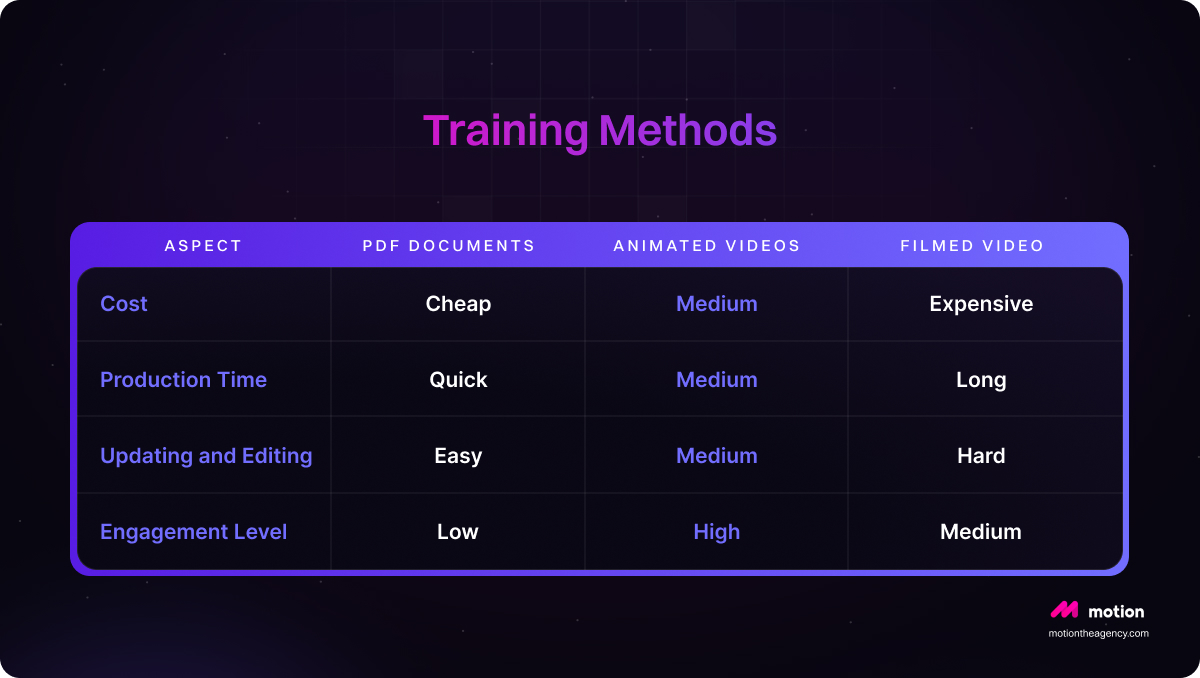
This comparison underscores the advantages of using animated videos for training. They not only provide a visually engaging experience but also allow for easy updates to reflect new threats or changes in company policy. This flexibility is crucial in the rapidly evolving field of cybersecurity.
Step-by-Step Guide to Creating Cybersecurity Training Videos
A well-structured approach is essential for producing effective cybersecurity training videos. The process involves three primary phases: Planning, Production, and Distribution.
The Role of Professional Video Production in Cybersecurity Training
When considering the production of video content, it's crucial to evaluate the costs associated with both in-house and professional production services.
In-House Production
Typically, setting up an in-house team involves upfront costs for equipment, software, and staffing. These can range from $5,000-$10,000 just for basic equipment (cameras, lighting, editing software), not to mention ongoing salaries for videographers, editors, and other production staff. While in-house production provides more control and quicker response times, it often lacks the specialized expertise and may lead to hidden costs like additional training and resource management (Lean Labs)
Professional Production
Hiring a professional video agency generally costs between $10,000 and $40,000 per project, depending on factors like video length, complexity, and animation needs. Outsourcing allows you to tap into a team of experts, providing higher-quality videos with less effort from your end. Agencies handle everything from concept creation to post-production, ensuring polished content that boosts engagement and retention.
Return on Investment (ROI) of High-Quality Videos
Professionally produced videos often deliver 50-70% higher retention rates, especially in e-learning or training settings. This leads to cost savings in the long run, as employees retain more information, reducing the need for retraining. Additionally, using a professional agency can save costs associated with scaling video production as your business grows.
In conclusion, while in-house production may seem cost-effective at first glance, the value derived from professional video production often justifies the investment through enhanced engagement, brand perception, and ultimately, improved ROI.
How Motion The Agency Can Elevate Your Cybersecurity Training Videos
Motion The Agency is all about making awesome cybersecurity videos that really stand out. These videos are super engaging, so viewers stay interested and can easily get the info they need. They focus a lot on creating educational content that's not just fun to watch but also easy to update. This flexibility is super important because it helps keep the content fresh and in tune with the constantly changing world of cyber threats. By doing this, Motion The Agency makes sure their educational stuff stays relevant and helps people tackle the latest challenges in cybersecurity.
Conclusion
Cybersecurity training videos are a vital component of modern workplace security. By using engaging, professional content, businesses can enhance retention, improve compliance, and protect themselves from cyber threats. Motion The Agency can help you achieve all this with custom, scalable solutions tailored to your needs.
Frequently Asked Questions

Widi Setyowati
Widi is a content marketing specialist with experience in video marketing, email marketing, and content creation. At Motion The Agency, she specializes in crafting engaging video campaigns, impactful email outreach, and insightful written content.


In just a few questions, get a tailored estimate for your next video project.





Contact Us
Ready to elevate your brand? Contact us for your
Free Custom Video Sample