3D Animation Freelancer vs Agency: Pros, Cons, and Risks
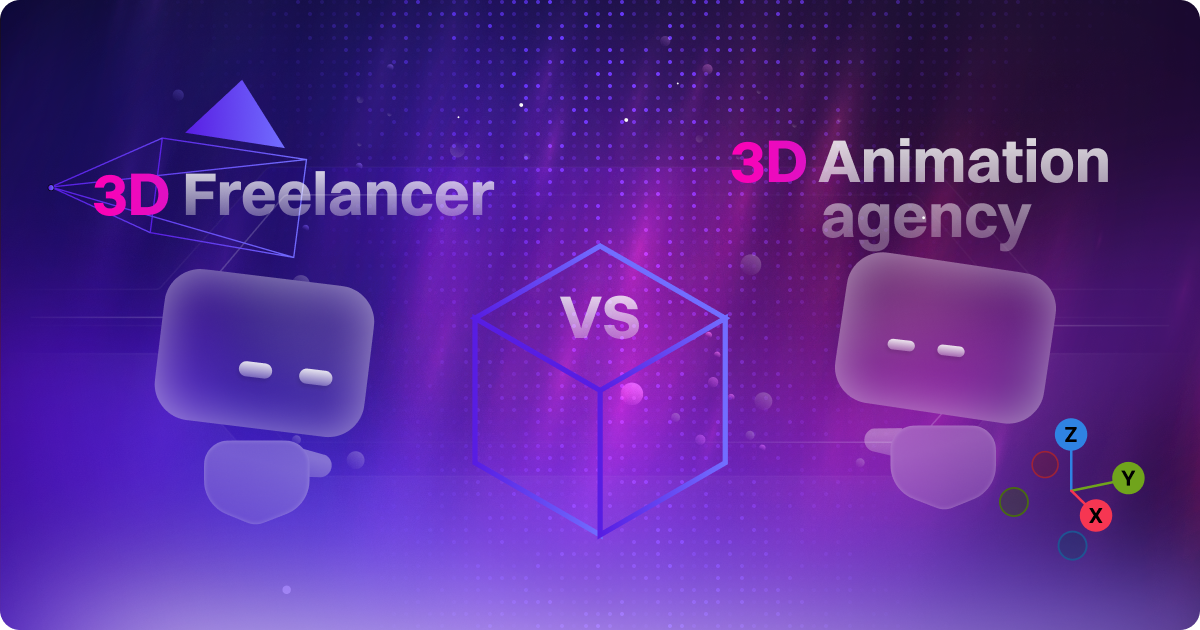
table of content
Key takeaways
- 3D animation is complex by nature: With modeling, texturing, lighting, animation, and rendering all tightly connected, even small mistakes can affect the final result. That’s why choosing the right creative partner matters more in 3D than in many other video styles.
- Freelancers are great for small, focused 3D tasks: When the scope is clear, the risk is low, and you only need one specific skill, freelancers can be fast, flexible, and cost-effective.
- Agencies are built for complexity and consistency: If your 3D project involves multiple stages, tight deadlines, or high visibility, agencies offer structure, backup, and quality control that reduce risk.
- Risk looks different in 3D animation: Because the pipeline is interconnected, delays, quality issues, or availability problems can snowball quickly, especially when relying on a single person.
- Workflow matters just as much as skill: A partner’s workflow can either support your project or slow it down. Understanding how freelancers and agencies actually work day to day helps avoid surprises later.
3D animation looks fun from the outside, but it’s honestly one of the hardest styles of animation to get right. We dive deeper into this in our blog, “What Is 3D Animation”. There are so many moving parts, like modeling, texturing, lighting, rigging, animation, simulation, and rendering, and each one needs to be dialed in. If one piece is off, you’ll feel it in the final video. That’s why finding a reliable creative partner for a 3D project isn’t always straightforward. You’re not just hiring “a 3D person,” you’re trusting someone to run a complex pipeline without anything slipping.
If you’re planning a 3D video, you’ll probably hit this question pretty quickly: do you hire a freelancer, or go with a 3D animation agency? A freelance 3D video service usually means working with one person who might handle a specific part of the pipeline, like modeling or animation, or the entire project if they’re a full-stack 3D artist. An agency, on the other hand, is more of a team setup, with a clearer process and specialists covering everything from creative direction to final delivery.
And yeah, there’s no single “best” option. It really comes down to your project size, your timeline, and how much risk you’re comfortable taking on. Freelancers are great for smaller, simpler, lower-risk work. Agencies usually make more sense when you need consistency, speed, and the ability to handle a bigger scope without things getting messy. In this blog, we’ll break down these two types of creative partners (freelancers and 3D animation agencies) so you can choose the option that fits your project now and still works as your 3D needs grow.
Differences between a freelance partner and an agency partner (for 3D animation)
When you work with a 3D animation freelancer, you’re usually dealing with a single person who handles most or all parts of the production pipeline. That keeps costs lower and makes things flexible, especially for smaller or clearly defined projects. For simple animations, this setup can move fast and feel very efficient. The trade-off is capacity and consistency. Everything depends on one person’s availability, experience, and workload, so timelines can stretch as scope grows, quality can fluctuate under pressure, and replacing them mid-project is difficult if something goes wrong. You’ll also tend to play a more hands-on role, managing feedback, priorities, and coordination yourself.
A 3D animation agency works very differently. You’re paying for a team structure, with specialists across modeling, animation, lighting, rendering, and project management, plus defined workflows that keep things moving. That means higher upfront cost and a more structured process, which can feel slower at the start or heavy for small changes. The upside is reliability and scale. Agencies handle complex, high-stakes projects more comfortably, keep quality consistent through internal reviews, and reduce risk by having backup resources if someone becomes unavailable. This setup works best when 3D animation is brand-critical, deadline-sensitive, or part of an ongoing production plan where consistency and predictability matter more than flexibility.
The risk of hiring a freelancer or an agency
Okay, let’s now talk about risk. Before we even get into freelancers vs agencies, it’s worth acknowledging one thing upfront: every third-party creative partnership comes with both benefits and risks. That’s true whether you’re working with a freelancer, an agency, or any external creative team. In 3D animation especially, those risks tend to be more noticeable because the work is technical, interconnected, and highly dependent on a clean production pipeline. When modeling, animation, lighting, and rendering are all tied together, a small issue in one stage can ripple through the entire project.
The real question isn’t whether risk exists, it’s whether that risk is worth it for the 3D project you have in mind. Depending on the partner you choose and the complexity of the animation, those risks can be easy to manage or quickly turn into delays, rework, and quality issues. That’s why it’s important to understand what you’re trading off before committing, and how different creative partners handle things like tight timelines, technical complexity, revisions, and last-minute changes in a 3D production environment.
Freelance risk
- Timeline slips when priorities change or availability drops: When you work with a freelancer, you’re usually relying on one person’s availability. If they take on another client, get sick, go on leave, or suddenly reprioritise their workload, your timeline can shift fast. In 3D animation, where tasks are often sequential, one delay can push everything else back. Even small changes can snowball if the person responsible for the next step isn’t available when you need them.
- Harder to replace mid-project: If a freelancer drops off halfway through a 3D project, replacing them isn’t as simple as finding “another 3D artist.” Every artist has their own workflow, file structure, naming conventions, and creative decisions baked into the project. A new freelancer often needs time to understand the setup before they can move forward, which means lost time, rework, or even restarting parts of the animation from scratch.
- Quality can vary under pressure: Most freelancers are capable of great work, but quality can fluctuate when timelines get tight or feedback rounds increase. Because one person is handling everything, creative decisions, technical execution, revisions, and delivery, corners can get cut when pressure ramps up. This doesn’t mean the freelancer isn’t skilled, it just means there’s less buffer when things get intense.
Agency risk
- You can end up paying for scale you don’t actually use: Agencies are built for bigger scopes and recurring work, which means their pricing often reflects team size, process, and overhead. If your project is relatively small or very straightforward, you might feel like you’re paying for capacity or structure you don’t fully need. That extra scale is valuable when things get complex, but it can feel inefficient for simpler deliverables.
- Slower for small changes: Agencies usually rely on structured workflows, handoffs, and approval stages to keep quality consistent. The trade-off is speed for small tweaks. What could be a quick change with a freelancer might need to go through project management, internal review, and scheduling on the agency side. It’s not a flaw, it’s a side effect of running a controlled production pipeline. As an agency ourselves, this is something we’re very aware of, which is why we assign a dedicated project manager who runs the project internally and also acts as the main point of contact for the client. This keeps communication clear, reduces back-and-forth, and helps small changes move faster without breaking the overall process, something we explain in more detail in our Tasknet case study.
- The process can feel heavy for simple tasks: For lightweight requests, like minor edits or quick 3D adjustments, an agency process can feel like overkill. Briefs, tickets, reviews, and internal coordination can add friction when the task itself is simple. Agencies shine when there’s enough complexity to justify the structure, but for very small jobs, that structure can feel heavier than necessary.
So, when is the best time to go with a freelancer or a 3D animation agency?
The simple answer is that it really depends on your own circumstances and your project goals. There isn’t a one-size-fits-all choice. Even if you’re creating a 3D animation for a specific product, the right partner can change over time. Your first video might be small and clearly defined, making a freelancer the better fit, while follow-up work or future iterations could benefit more from an agency-style workflow.
Overall, the decision comes down to what your project needs at each stage. Scope, timeline, risk, and long-term plans all play a role. That’s why it’s important to stay flexible and choose the setup that best supports your goals, rather than locking yourself into one option too early.
3D freelancers (best when)
- The task is small and clearly defined: Freelancers shine when the scope is tight and the goal is obvious. Think short product shots, simple 3D loops, static renders with light animation, or small updates to an existing scene. When there’s little ambiguity and not many moving parts, a freelancer can jump in, execute, and deliver without needing a lot of setup or coordination.
- You want lower cost and direct collaboration: Because there’s no team or overhead, freelancers are usually more budget-friendly. You’re also working directly with the person doing the work, which can feel faster and more personal. Feedback loops are short, conversations are straightforward, and decisions happen quickly. This works well when you’re comfortable being hands-on and don’t need layers of review or management.
- You do not need a full production pipeline: If you already have assets, references, or a clear creative direction, and just need someone to execute a specific part of the job, a freelancer is often enough. There’s less need for storyboarding, creative direction, or structured reviews. You’re essentially plugging a skilled individual into a defined task rather than running a full production from start to finish.
3D agencies (best when)
- The project is complex or high-stakes: 3D agencies are the safer choice when the project has a lot riding on it. This could be a major product launch, a brand-defining video, a sales-critical asset, or anything with a hard deadline and little room for error. Complex 3D projects often involve many interdependent steps, so if one stage slips, the whole timeline can be affected. Agencies are built to manage that complexity through planning, internal reviews, and backup resources, which helps reduce risk when things don’t go exactly as planned.
- You need multiple specialists (modeling, animation, lighting, rendering): High-quality 3D animation usually isn’t the result of one person doing everything. Modeling, texturing, animation, lighting, simulation, and rendering all require different strengths. Agencies break the work across specialists instead of forcing one artist to handle the entire pipeline. This usually leads to stronger visuals, fewer technical compromises, and a smoother production flow.
- You want process, accountability, and consistency: Agencies bring structure to the production. You’re not just paying for execution, you’re paying for a system that includes project management, clear timelines, defined feedback loops, and quality control. There’s always someone accountable for delivery, and the work doesn’t stall if one person becomes unavailable. Over time, this consistency really matters, especially if 3D animation is part of an ongoing strategy and you want every video to meet the same quality bar.
Workflow differences: Freelancer vs Agency
This is another area where freelancers and agencies differ quite a lot: workflow. Each one follows a different setup, and depending on your project, that workflow can either feel like a perfect fit or a constant source of friction. That’s why, before deciding who to work with on your next project, it’s worth understanding how each option actually operates day to day, not just what they promise on paper.
When you work with a freelancer, the workflow is usually very direct and informal. You’re dealing with one person, so everything flows through them. This can feel fast and straightforward at the beginning, especially for small or clearly defined tasks.
Typical freelancer workflow:
- You send a brief directly to the freelancer
- They plan the work, produce it, and deliver it themselves
- Feedback goes straight back to the same person
- Revisions depend on their availability and current workload
This setup works well when the scope is clear and unlikely to change. The downside usually shows up once things get more complex, timelines tighten, or multiple rounds of feedback are involved.
An agency workflow is more structured and built around a team. Instead of one person doing everything, the work is broken into stages and handled by specialists, with a producer or account manager coordinating the process from start to finish.
Typical agency workflow:
- You submit a brief through a defined intake process
- A producer scopes the project and sets timelines
- Specialists handle different stages like scripting, design, animation, editing, and sound
- Internal reviews happen before anything is shared with you
- Feedback is collected and applied in clear revision rounds
This usually means the project can take a little longer to get started, but once it’s moving, the process is far more reliable and easier to scale, especially for complex or high-stakes 3D animation work.
So, which one should you choose for your next 3D animation
Choose a freelancer when the scope is small, clearly defined, and unlikely to change much once work starts. This works well if your budget is tighter and you mainly need one specific skill, like modeling a product, animating an existing scene, or handling edits on footage or 3D files you already have. Freelancers are also a good fit when the project is low-risk, deadlines are flexible, and you’re happy to be more hands-on. You get direct communication with the person doing the work, which can speed things up and make collaboration feel more personal, as long as expectations are clear from the start.
Choose an agency when the project is more complex, more visible, or simply has more riding on it. If you need multiple skills involved, like creative direction, scripting, design, animation, sound, and delivery, an agency setup usually handles that better. Agencies bring structure, project management, and internal quality checks, which helps keep things consistent even when timelines are tight or scope grows. This option makes the most sense when video is part of an ongoing strategy, not just a one-off, and when you want the ability to scale output without everything depending on one person’s availability. If you’re still unsure which option fits your needs, feel free to book a call and check our 3D animation service page
FAQ

Syarafina Kuswahyuni
Syarafina Kuswahyuni is a content marketer at Motion The Agency, where she covers explainer video production, motion design trends, and video marketing strategy for SaaS brands. She has worked alongside Motion's animation team on projects for clients including ClickUp, Apollo.io, and HackerRank


Waladun Sabiq
As Senior 3D Animator, Waladun combines expert 3D product and UI animation with solid 2D craft. His visual insight and precision produce polished, impactful work
In just a few questions, get a tailored estimate for your next video project.
Related articles

Contact Us
Ready to elevate your brand? Contact us for your
Free Custom Video Sample