Top 10 Video Production Subscription Services to Consider in 2026
table of content
Key takeaways
- Video production subscriptions are built for consistency, not one-offs: They work best for teams that need video regularly across marketing, sales, product, and internal communication, not just one big campaign per year.
- B2B teams benefit the most from subscriptions: Predictable pricing, clear workflows, and shared accountability make subscriptions easier to approve, manage, and scale in complex B2B environments.
- Subscriptions reduce friction and risk: You avoid constant re-briefing, renegotiating budgets, and relying on a single freelancer’s availability. Output stays steady as demand grows.
- Our top 10 video production subscriptions are:
- Motion The Agency
- NinjaPromo
- Hilo Motion Pictures
- Wyzowl
- LimeLite Videos
- BlueSky Video Marketing
- Association Studios
- True Film Productions
- Vidpros
- Shootsta
So, what exactly is a video production subscription, and why should it even be on your radar for 2026 if your company has big, ongoing video needs? In simple terms, it’s a retainer-style model where you pay a monthly fee and get a steady stream of video content without having to restart the process every time a new request pops up. See how our subscription plans are structured here.
This fits B2B especially well because B2B marketing is rarely “one big video and done.” You’re usually supporting long sales cycles with a lot of touchpoints, like explainers, product updates, feature launches, customer stories, paid ads, event promos, and internal enablement. Consistency and speed matter, and having predictable creative capacity makes it easier to plan campaigns, keep messaging aligned, and ship content without delays.
And that’s exactly what this blog will break down. We’ll dive into how video production subscriptions work, what makes them different from freelancers, in-house teams, or one-off projects, and what agencies to look at in 2026.
Why is video production company fit for B2B?
In B2B, getting creative approved usually comes down to a few things: budget clarity, timelines, risk, and accountability. Decision-makers want to know what they’re paying for, what the process looks like, and who owns what if something slips. A subscription model makes that way simpler because the rules stay consistent. Your team can understand the “how it works” quickly, and it’s easier to keep everyone aligned month to month.
If your B2B team is using video regularly, subscriptions also make the whole thing easier to run. It’s easier to get approved internally, easier to manage day-to-day, and easier to scale when demand picks up. Instead of treating every video like a brand new project, you get a repeatable system that reduces risk, keeps output predictable, and supports ongoing communication across the full buyer journey.
So, what makes a video production subscription different from a regular agency or freelancer?
This is probably one of the questions that comes up when teams start thinking about what video production services they actually need. This is especially true for B2B companies, where requirements tend to be more specific, and the decision-making process involves more people. Because of that, teams need to clearly understand why they do or don’t need a video production subscription.
Here are a few key differences we’ve noticed between video production subscriptions, traditional video production agencies, and freelancers.
Predictable monthly pricing
Instead of getting a new quote every time you need a video, you’re working with one consistent monthly cost. That makes budgeting way less stressful, and it’s easier to plan campaigns without worrying the price will suddenly jump because the scope changed. It also helps you justify spending internally, because the cost stays stable
To see what’s included and how monthly plans work, check our subscription plans and pricing.
Made for ongoing video needs
This model isn’t really built for “one big hero video once a year.” It’s built for teams that need video regularly, like product updates, ads, onboarding videos, sales clips, and website content. You’re not restarting the relationship every time. It’s more like building a content engine than running one-off projects.
Everything moves faster once you’re set up
After the initial onboarding, the team already knows your brand, your product, and how you like feedback handled. So you spend less time explaining context and more time shipping content. The process gets smoother over time because it’s the same workflow, just repeated. And because everyone knows the system, fewer things get stuck in the “waiting for approval” zone.
More reliable than relying on one freelancer
Freelancers can be awesome, but if they get busy, sick, or disappear for a week, your whole content plan pauses. With a subscription, you’re usually getting more consistency and coverage, so output doesn’t suddenly drop when your needs ramp up. It’s simply a safer setup when video becomes a regular part of your marketing machine.
Different types of video production subscription models
When you start researching video production subscriptions, you’ll quickly notice that not all models work the same way. Different providers structure their subscriptions around different balances of flexibility, predictability, and output. As a subscription-model agency ourselves, we’ve seen which workflows make retainers genuinely valuable, and which ones quietly burn through credits without delivering enough in return.
- Credit-based subscriptions: Work is priced using a credit system, which gives teams flexibility to allocate effort across different types of video tasks. This works well if your needs change month to month, but it does require a bit of planning to manage credit usage efficiently.
- Output-based subscriptions: You receive a fixed number of deliverables each month, which makes budgeting simple and predictable. The trade-off is flexibility, since changing priorities mid-month can be harder if your deliverables are already locked in.
- “Unlimited” subscriptions: You can submit as many requests as you like, but work is completed sequentially or within a set capacity. This means the speed of delivery matters more than how many requests you submit at once.
- Hybrid subscriptions: These combine elements from multiple models, offering flexibility within defined limits. They tend to work best for teams with evolving needs that want structure without feeling locked into a single approach.
10 best video production subscription agencies (2026 list)
Just like with our other listing articles, it’s important for us to add a disclaimer that this is not a ranking. This is simply a list of some of our competitors, both direct and indirect, that we’ve noticed doing great work in 2025 and are definitely worth watching in 2026.
1. Motion The Agency
Motion The Agency helps B2B, SaaS, tech, and AI brands communicate complex ideas through motion-first storytelling, from 2D and 3D animation to UI animation, product demos, explainers, and social content. Our goal is simple: make the message land fast and clearly. We also keep pricing straightforward, with fixed-price projects for one-off videos and subscription packages for teams that need ongoing creative output.
As a subscription-model agency ourselves, we’ve seen which workflows actually make retainers worth it. Our subscription model is designed to feel like a true extension of your internal team, with a dedicated setup built for consistency, speed, and fewer repeated briefs. It gives teams predictable monthly costs, a smoother workflow, and the flexibility to support recurring content needs at scale.
2. NinjaPromo
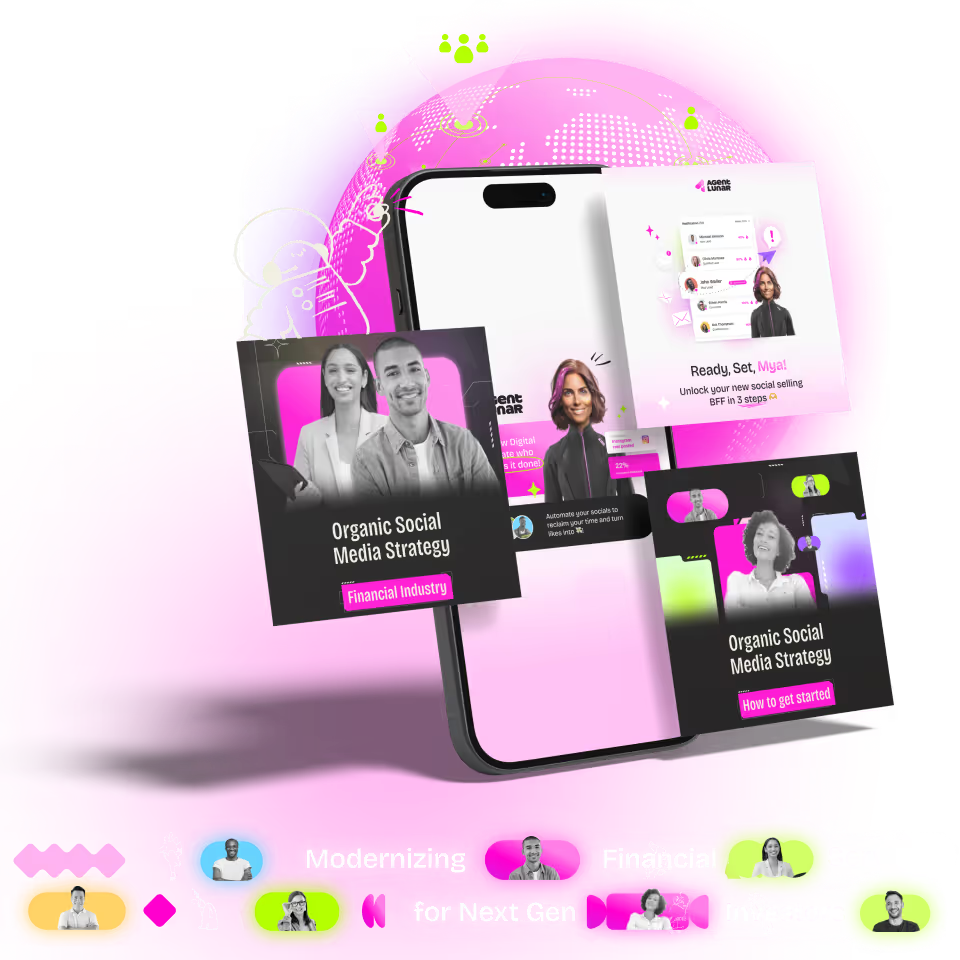
NinjaPromo’s video production offering sits inside an hours-based subscription model. So instead of paying “per video,” you’re basically buying a monthly block of creative time that can be used for video work like edits, motion graphics, ad creatives, and social content. Their plans are presented as monthly packages (for example, 40 hours per month), which makes it easier to budget because you know what capacity you’re getting each month.
From a video subscription angle, the main benefit is flexibility. If one month you need a bunch of short social clips and ad variations, you can lean into that. If the next month is more about polishing a product video or creating a set of campaign assets, you can shift the hours accordingly. It’s a good fit for teams that want steady video output as part of a wider marketing machine, not just standalone video production.
3. Hilo Motion Production
Hilo Motion Pictures is a solid option for US-based brands that need regular on-site filming. They offer subscription-style plans with names like Basic, Production+, and Production Pro, and pricing is usually customized depending on what you need and how often you’re filming.
The subscription is really built for teams who want a steady flow of live-action content week to week or month to month. You’re getting proper production support too, like 4K filming, pro lighting and sound, and a full setup that works well if you’re constantly posting on social, updating your website, or running ongoing campaigns.
4. Wyzowl
Wyzowl is best known for animated explainer and demo videos, and their whole thing is turning complex ideas into simple, easy-to-follow stories. On their site, they position the service as fully all-inclusive, covering scriptwriting, custom graphics, voiceover, music, and animation in one package. They also emphasize unlimited revisions until you’re happy with the result, which makes them a safe pick for teams that want a clear process and fewer surprises.
They also have a big track record, claiming 4,000+ custom videos made for 2,000+ clients across 40 countries. While they often sell videos as packaged deliverables, their structured, repeatable workflow makes them a good fit for companies that need multiple explainers or demos over time and want consistency more than experimentation.
5. LimeLite Video
.png)
LimeLite Videos stands out mainly because of how straightforward their subscription model is. Pricing is tied directly to the number of videos produced each month, with clearly defined packages that spell out exactly what you’re getting. There’s very little guesswork involved, which makes costs easy to understand, compare, and approve internally, especially for teams working with procurement or fixed marketing budgets.
This model works best for teams that value simplicity over flexibility. If you know roughly how many videos you need each month and want predictable output without constantly adjusting scope or priorities, LimeLite’s approach makes sense. It is less about custom workflows or evolving creative direction and more about reliable, repeatable video production at a steady pace.
6. BlueSky Video Marketing
BlueSky Video Marketing positions its Video as a Service model as a way to embed video into everyday marketing, instead of treating it like a one-off production job. Their packages are built around 12-month content plans, aiming to help companies build awareness, generate opportunities, and win new business through consistent video output.
What stands out is that they lean heavily into the marketing side, not just production. They talk about content planning aligned to business objectives, campaign execution as an extension of your team, and regular refinement through monthly reviews so the plan can adapt over time. That makes them a solid fit for B2B teams that want video tied to measurable outcomes, with a longer-term structure that keeps content and strategy moving together.
7. Association Studio
.png)
Association Studios is built specifically for associations, nonprofits, and membership-based organizations, and their messaging leans into that niche hard. On their site, they talk about helping associations produce videos consistently all year, almost like having a production department on standby rather than hiring for one-off projects.
Their subscription model is hours-based, with public tiers that include set monthly hours (like up to 40, 60, or 80 hours per month) and a list of what those hours can cover, including scripting, voiceovers, on-camera talent, animation, videography, and editing. They also highlight operational details like being able to scale plans up or down, unused time rolling forward while the subscription stays active, and cancellation with 30 days’ notice.
8. True Film Production
.png)
True Film Productions runs subscription packages that are built around monthly production capacity, not random one-off projects. On their subscription page, they break it into three options: Social Campaign Content, Corporate & B2B Video Production, and Live Streaming Services. Each package includes a set amount of filming days, Zoom recording sessions, and editing days per month, plus review and storage tools like Frame.io, royalty-free music or stock, and dedicated server storage.
What’s nice about the way they structure it is that you can basically pick the plan based on what your team needs most. If you’re pushing frequent social content, the Social Campaign plan is lighter and faster. If you’re doing recurring corporate content, interviews, or internal comms, the Corporate & B2B plan adds more production time.
9. Vidpros
.png)
Vidpros is best for teams that already have footage and mainly need editing support. Their subscription model gives you a dedicated editor, with part-time plans around $1,000 per month and full-time options closer to $4,000. It’s editing-first, so you’re paying for ongoing capacity instead of pricing per video.
They also skew more B2C than most agencies on this list. Their core audience is content creators and social-first brands, and they’re not really an A-to-Z production partner. Think of Vidpros more as an editing and repurposing support layer when filming and strategy are handled elsewhere.
10. Shootsta
Shootsta targets APAC brands that want a hybrid setup, where filming happens in-house and post-production is handled through a subscription-style service. Pricing is usually packaged and custom, depending on how much support you need and how often content is produced. The goal is to give teams more control over filming while keeping production efficient.
What makes the subscription appealing is how it supports scale. By reducing the need for constant on-site production, teams can publish more content consistently. The subscription typically covers post-production, brand-aligned edits, revisions, and turnaround timelines, so video becomes part of the weekly or monthly workflow instead of a one-off project.
How the subscription workflow usually works
Every agency runs subscriptions a little differently. Some wait until the start of the month for clients to submit requests. Others allow unlimited requests, but cap how many projects can be in production at the same time. In this section, we’ll focus on how Motion The Agency handles production for subscription clients, so you know exactly what to expect.
At a high level, the workflow is simple: you submit requests, we help you prioritize, we produce in a steady rhythm, and you review and approve. The key is that we keep things moving through a clear queue system, so projects do not get stuck or compete for attention. we explain about this more in our subscription plans and pricing.
Priority projects
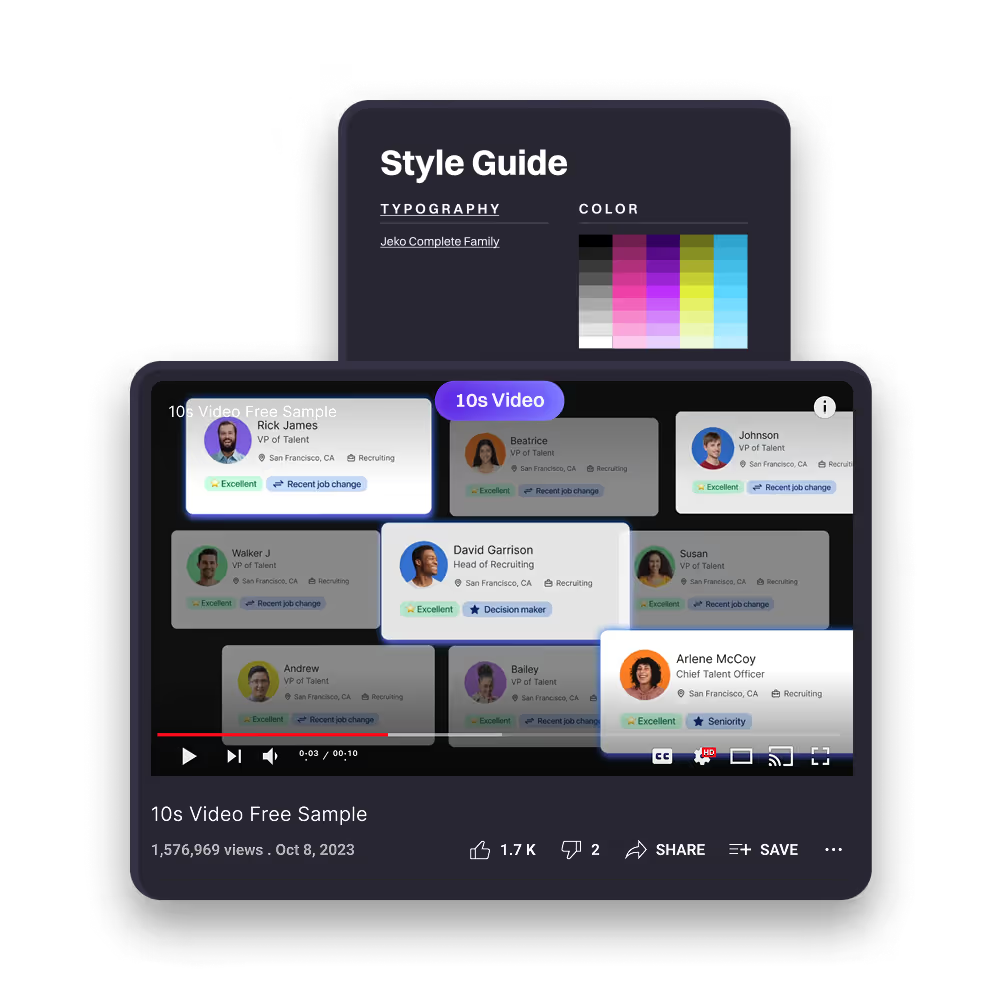
We treat every project with the same level of care and professionalism, and we aim for that to show in the final result. That said, we do offer an “extra fast delivery” option for subscription clients, and fixed-price clients can also add this as a paid upgrade. This option comes with a stricter deadline and a 24-hour turnaround, which is why we treat it as a priority project.
Priority delivery works best for things like urgent ad variations, time-sensitive announcements, sales enablement updates, or quick campaign edits. To keep the turnaround realistic, these requests typically need a clear brief and fast feedback on your side. The faster approvals come in, the faster we can ship.
Unlimited requests with a project cap
To make sure every project gets the attention it deserves, we set a cap on how many projects can be in production at the same time. Clients can submit unlimited requests, but we typically work on up to two projects concurrently. This helps our team stay focused and maintain quality without spreading effort too thin.
In practice, this means you can queue up as many tasks as you want, then we pull the next items into production based on priority. When one project is approved or delivered, the next one moves up automatically. It is a simple system, but it is what makes subscriptions feel reliable, because you always know what is in motion, what is next, and what is waiting for feedback. We currently have 2 case study that explore how clients utilizes our subscription model: Planful & GotPhoto
How to choose the right video production subscription agency
Choosing a subscription partner is less about “who has the coolest reel” and more about finding a model that actually fits how your team works. If you get this part right, video becomes a reliable system. If you get it wrong, you end up paying monthly for a workflow that constantly feels stuck.
- Start with the type of work you need most:
Be clear on your core need. Is it motion design, 3D, UI animation, editing, or live-action filming? The best subscription is the one built around your most frequent requests, not the one that does everything “kind of.”
- Check how the subscription is structured:
Figure out what model they run: credit-based, output-based, hours-based, or “unlimited.” Each one changes how flexible you can be and how fast work gets delivered when priorities shift.
- Look for pricing transparency:
You should be able to understand what you’re paying for without decoding fine print. Clear pricing usually signals a clear process, which makes internal approvals and planning much easier.
- Understand the revision rules upfront:
Revisions can be where subscriptions either feel smooth or painful. Check what counts as a revision, how many rounds you get, and whether scope changes are treated as “new work.”
- Assess risk and exit options:
Know what happens if you need to pause, downgrade, or leave. Look for reasonable cancellation terms, clear ownership of final files, and a clean handover process if you ever switch providers.
- Evaluate communication and collaboration:
Ask how requests are submitted, how feedback is handled, and who you’ll work with day-to-day. The best agencies feel like an extension of your team, with fast communication, clear timelines, and minimal back-and-forth.
Now that we have pretty much talk about everything you need to know about video marketing production subscription, what do you think? Does this model fit with your company's needs, or you might need a one time needs. if you are interested in video production subscription, please feel free to check our subscription page and get our free sample with us, let’s partner up together to create something wonderful!
Book a call
FAQ

Syarafina Kuswahyuni
Syarafina Kuswahyuni is a content marketer at Motion The Agency, where she covers explainer video production, motion design trends, and video marketing strategy for SaaS brands. She has worked alongside Motion's animation team on projects for clients including ClickUp, Apollo.io, and HackerRank


In just a few questions, get a tailored estimate for your next video project.






Contact Us
Ready to elevate your brand? Contact us for your
Free Custom Video Sample