Social Media Marketing Trends 2026: Content That Actually Works
table of content
Key takeaways
- Social media is no longer awareness-only: In 2026, social influences discovery, trust, traffic, and decision-making in the same scroll. Content needs to support the full funnel, not just visibility.
- Posting more isn’t the solution. Posting smarter is: Strong visuals, clear messaging, and a defined next step matter more than frequency.
- Short-form video is still the strongest performer: It captures attention fastest, communicates value quickly, and creates retargetable audiences for future campaigns.
- Mobile-first doesn’t mean vertical-only: Content should feel native in-feed but still hold up on landing pages, websites, and sales decks.
- Social content should be built to scale: The best-performing content works organically and is ready for paid amplification without being rebuilt.
Why Social Media Marketing Is Changing in 2026
As we head into 2026, it’s pretty clear social media doesn’t work the way it used to. Stuff that used to get decent reach now gets buried, and people scroll past content in a split second.
That’s why understanding the social media marketing trends shaping 2026 matters. They are not about posting more — they are about posting smarter. Whether you are B2B or B2C, social media is still one of the most direct ways to talk to your audience, build trust, stay top of mind, and show people what your brand stands for. But with shorter attention spans, platform-first formats, and organic reach getting tighter, brands need to be more intentional with what they post and why.
But also, let’s be real. Social isn’t the only thing influencing how people connect with your brand. Your positioning, your product experience, your community, your sales process, even how fast you reply to customers all play a part. And it’s always going to depend on the kind of audience you have.
Plus, industry changes everything. A SaaS brand isn’t going to play the same game as a restaurant, a real estate developer, or an e-commerce store. Different platforms, different formats, different expectations. What works for one can feel totally wrong for another.
So, the move isn’t to post more just to stay “active.” It’s to post smarter. Better visuals, clearer messaging, real engagement, and a distribution plan or social media video guide that helps the right people actually see it.
In this blog, we’ll break down the types of social media content that work in 2026.
2026 Audience behavior: What’s changed
So before we jump in, there’s one thing we’ve got to agree on: internet behaviour shifts every single year. What worked last year can feel outdated fast. Before we get into the social media marketing trends for 2026, let’s look at the behaviour shifts behind them — what we saw throughout 2025, and why they matter heading into 2026.
First, let’s talk about how people actually interact with brands. In 2026, AdAge found that the top 3 ways audiences engage with a brand are:
- Visiting brand websites
- Watching brand-made videos
- Following brands on social media
Now here’s the big shift that became impossible to ignore in 2025: the internet and social media audience is massive, and it’s still growing. Around 68% of the global population is now on social media, and a huge portion of that audience sits in the 18–29 range.
And this is where the “how” changes. People aren’t experiencing brands on desktop-first timelines anymore. 96% of online audiences access the internet via mobile devices, which means you’re competing in a scroll-first environment by default. Add the fact that social media users are now a supermajority, with roughly twice as many people using social each month as those who don’t, and the takeaway is pretty simple: attention is earned fast, or it’s lost.
But here’s the important part. Mobile-first doesn’t mean 9:16-only.
It means thinking like a modern product team. Apps and websites ship mobile and desktop versions because context changes. Social content needs the same mindset. Build visuals and messaging that feel native in the feed, then make sure they still land when someone sees them on a wider screen, a landing page, or a sales deck. Same story, same clarity, just designed to perform everywhere it shows up.
What this means for social media marketing
Now that we’ve seen the data, what does that mean for social media marketing trends in 2026, and how will it change the content brands use to communicate with their audience? In this section, we’ll break down how the behaviour shifts throughout 2025 are shaping social media marketing in 2026.
Social media is no longer awareness-only
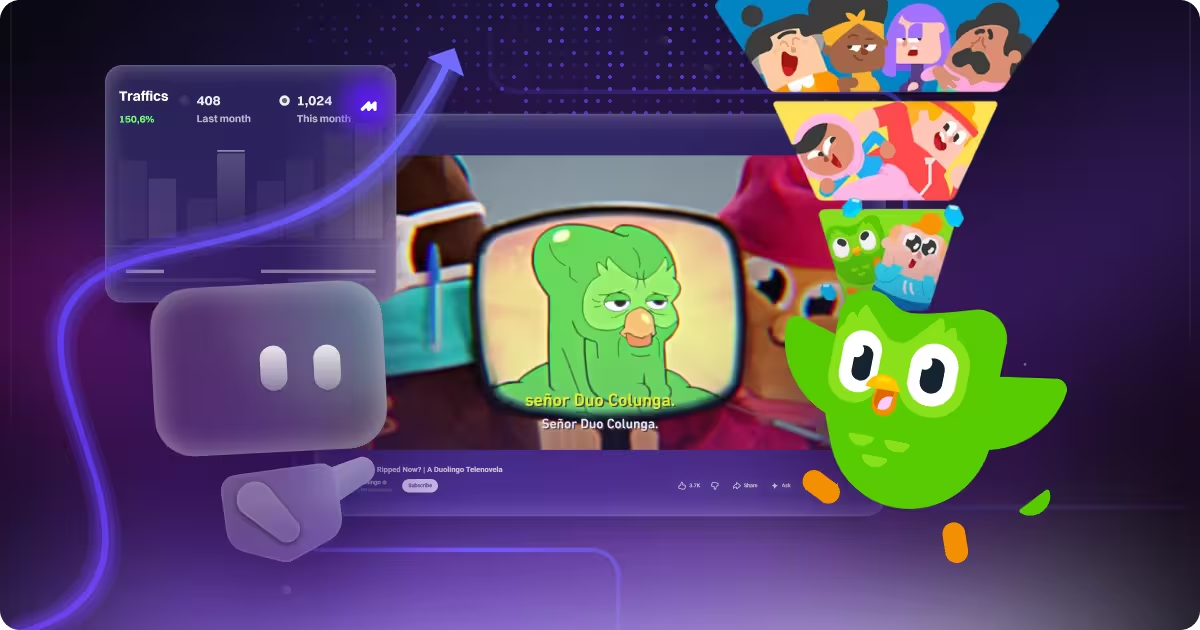
One thing’s for sure: a lot of brands still treat social media like an awareness tool, or just something they “need to have” for presence. But social media isn’t just a top-of-funnel channel anymore. Yes, it still builds awareness, but in 2026 it’s also directly shaping traffic, engagement, and brand relationships. For a lot of brands, social is where people discover you, judge you, and decide whether you’re worth a click all in the same scroll.
That’s why social now plays a role across the entire funnel, not just the top. It’s not only for awareness anymore. Your content shouldn’t be designed to chase likes. It should be built to drive outcomes like clicks, video views, saves, shares, and follows. And the good news is, most platforms make this easier now. You can attach links directly to products, add links that redirect people to your website, and track what happens next, which posts drive traffic, who engaged, and which audiences are worth retargeting for your next campaign.
So the real goal isn’t vanity metrics. It’s making social work like a real marketing channel. Strong visuals, clear messaging, and an obvious next step turn attention into action, and action into something you can measure and build on.
Video is the strongest bridge between social and conversion
One of the clearest video content trends going into 2026 is the dominance of short-form. This is actually a shift we’ve been watching for a while now, ever since TikTok, Instagram Reels, and YouTube Shorts became the default way people consume content. We’ve already broken down why short-form video works, and how to think about length strategically, in our blog: “How Long Should Your 2D Animation Video Be? (Real Data to Guide You)”
Video is still the most effective format for turning passive scrollers into active brand participants. It grabs attention faster, communicates value in seconds, and gives people enough context to actually care, which is exactly what you need if social is meant to drive more than awareness.
Right now, short-form video is the go-to. And it’s not just because attention spans are declining. It’s also because audiences are dealing with a constant flood of content every day. When people are overloaded, they default to what’s easiest to consume, and short, clear videos win that battle more often than static posts.
That’s why short-form and mid-length videos should be a core content investment in 2026. Brands that don’t prioritise video aren’t just missing engagement. They’re leaving conversions, re-targetable audiences, and momentum on the table.
Social media is the default
Social media is where audiences already are (we covered that in the previous section), which makes it the default digital environment for discovery, trust-building, and decision-making. That also means brands that deprioritise social aren’t just “posting less” they risk becoming invisible in the places their audience spends time every day.
At the same time, social isn’t one platform with one job. Different platforms serve different purposes. Some are better for awareness and reach, others are stronger for education, community, or conversion. The smart move is choosing the channels that match your niche, your audience behaviour, and what you’re actually trying to achieve, instead of trying to be everywhere.
And once you’re showing up in the right places, social marketing in 2026 has to be outcome-driven. Strategy should be tied to measurable results, not just posting frequency. This is also where using a business account matters. You can track the performance of every post, so it’s not a guessing game anymore why certain content works and why others don’t. Over time, that data helps marketers understand what style, format, and messaging actually lands with their audience.
What brands should avoid?
Don't treat social as visual decoration
First up: don’t treat social media like it’s just visual decoration. A lot of brands post just to look “active” or to keep the feed looking pretty, but that’s wasting the biggest advantage social gives you. Social is one of the only places where you can get instant feedback from your actual audience. You can see straight away what people click, what they ignore, what they save, and what makes them comment. So if you’re using it only for branding or aesthetics, you’re missing the point and ignoring the data your audience is literally handing you.
Don't overcrowd your content
Another big one: don’t make your content too busy. Yes, detailed posts can look nice, but if people need to squint or work to understand the message, they’ll just keep scrolling. In 2026, clarity wins. One strong idea, one clear takeaway, and a layout that’s easy to absorb will usually outperform something that’s crammed with too much information.
Don't treat every platform the same
Also, don’t treat every platform the same. Each channel has its own vibe and its own rules. What works on Instagram Reels won’t automatically work on LinkedIn. What feels natural on TikTok can look weird on YouTube Shorts. If you ignore platform specs, you end up with cropped visuals, cut-off captions, awkward safe areas, and content that just feels “reposted.” And people can tell. Platforms reward content that feels native, not content that looks like it was copied and pasted everywhere.
Don't let your branding drift
Lastly, avoid inconsistent branding across posts. It’s not just a “design issue” it’s a trust issue. If your fonts, colours, tone, and style keep changing, it becomes harder for people to recognise you in the feed. And recognition matters more than people think. When your content feels consistent, your audience starts to spot you instantly, and that’s when they’re more likely to stop scrolling and actually pay attention.
So, what brands should do in 2026?
A strong social media video strategy in 2026 starts with one question: what action do you want the viewer to take? Once that goal is clear, it becomes easier to create content that can be reused, repurposed, and scaled. In our experience, the most effective approach is to have evergreen content ready at any moment — content you can cut down, reframe, and adapt across platforms instead of starting from scratch every time.
A great example is our case study with GotPhoto. We helped them prepare months’ worth of content by reusing existing assets and giving them new life in different formats. The result? Content that works harder for them without having to start from scratch every time.
At Motion The Agency, we help brands move beyond just posting content to building a performance-driven visual system. Social media shouldn’t feel like a constant scramble to “put something out.” Every post should have a purpose, support a goal, and feed into the bigger picture of how your brand shows up online.
Our subscription model lets us create repeatable and scalable content systems rather than one-off posts. We design content that works organically but is also ready for paid amplification, so nothing has to be rebuilt when it’s time to scale. Strong visuals are paired with clear, social-first copy, ensuring the message lands quickly and stays consistent across platforms.
In 2026, social media success comes down to consistency and quality, not just activity. That’s where our model really makes a difference. We help brands maintain a high creative standard, show up regularly, and keep momentum without burning out internal teams or sacrificing performance.
Want to see how we can help your brand? Visit our Social Media Services page to learn more and get started.
FAQ

Syarafina Kuswahyuni
Syarafina Kuswahyuni is a content marketer at Motion The Agency, where she covers explainer video production, motion design trends, and video marketing strategy for SaaS brands. She has worked alongside Motion's animation team on projects for clients including ClickUp, Apollo.io, and HackerRank


In just a few questions, get a tailored estimate for your next video project.





Contact Us
Ready to elevate your brand? Contact us for your
Free Custom Video Sample