How Duolingo’s Video Marketing Funnel Evolved: A Deep Dive Into Their Top 50 Videos & Campaigns
table of content
Key takeaways
- Chaos works when It’s structured: Duolingo’s content feels random, but it’s not. Every video fits within defined content pillars and consistently reinforces the same brand character.
- Short form is the engine, not the add on: Their growth accelerated when they leaned into short-form, social-first formats. Quick hooks. Fast pacing. Native platform energy. For B2C brands especially, short-form isn’t just awareness content. It’s the top layer of the B2C marketing video funnel.
- Brand anchor = Brand memory: That repetition builds recognition. Recognition builds recall. Recall drives future conversion. Without an anchor, trend content disappears. With one, it compounds.
- Community is a growth multiplier: Duolingo doesn’t just publish. They respond, escalate, and integrate audience reactions into new content.
If you're reading this, chances are you've come across Duolingo’s video marketing and thought, “This is pretty out of the box. Does it actually work?” That’s exactly what our content marketer said when we were discussing which company video marketing strategies are actually worth studying. As a video marketing agency, Duolingo’s almost video-exclusive approach immediately stood out to us. It’s rare to see a global brand lean so heavily into short-form, social-first video and turn it into a consistent growth engine, so we decided to break down what’s really going on behind the scenes.
Duolingo actually went through a major persona rebranding in the digital space. It all started with a big shift in how they approached content marketing, especially their video marketing strategy. Back in early 2021, they started using their mascot; a green owl as their persona across all social media. This change turned the company image from a language learning app into more of a quirky bestie who just happens to teach languages.
To give you the best insight into how Duolingo drives its rapid growth, we analyzed 50 of Duolingo’s top videos and compared them with their pre-social-first content to see how their approach evolved. After days of research, here’s what we found:
.png)
Throughout this blog, we’ll refer to this graphic and walk you through the key insights we uncovered from our research.
Duolingo’s growth narrative: what worked & what didn’t
Content pillars
In this section, we’re not just listing what Duolingo did. We’re breaking down the structure behind it.
Because when you zoom out, Duolingo’s chaos isn’t random. It’s built on a system. 5+1 content pillars.
Every piece of content they publish can be grouped into five core pillars:
- Unhinged Content
- Branded Narrative
- Educational
- English Test (DET)
- Cultural Stunts / Riding the Wave
No matter the format, short-form, campaign video, animation, or trend remix, it fits into one of these buckets.
And then there’s the +1.
Duo.
The mascot appears in almost everything. It’s the connective tissue. The recognisable face. The consistency engine. That’s why even their most chaotic posts still feel unmistakably Duolingo.
That’s the real “that’s Duolingo” factor.
Analysis of Duolingo’s top 50 videos & campaigns since 2021
Alright, let’s get into the actual data.
We didn’t just scroll for five minutes and form an opinion. We analyzed 50 of Duolingo’s top-performing short-form videos across TikTok and Instagram, looking at content types, hook styles, length, views, engagement patterns, and CTA behavior.
On top of that, we took a deeper look at some of their most notable campaigns, including:
- “Duo is Dead”
- “Legal Steve vs Duo”
- “Duo on Ice”
- “Duo Superbowl 2024”
- “Duo Anime”
These campaigns helped us understand not just their daily social strategy, but how they scale the same DNA into bigger brand moments.
Method (So You Can Trust This)
We sampled 50 short-form videos across TikTok and Instagram and logged:
- Views and engagement patterns
- Video type (skit, animation, trend remix, promo, etc.)
- Hook style (shock, absurdity, cultural reference, direct address) and their timestamp
- Presence of Duo (character usage)
- Level of product context/core premis
- CTA behavior
Each video was evaluated using four core criteria:
- Hook clarity
- Brand character usage
- Product presence
- Shareability
We then mapped each video loosely to a funnel stage based on intent. Awareness, engagement, or product reinforcement.
This isn’t a full academic dataset, but it’s structured enough to move beyond gut feeling.
Now, here’s what stood out.
Current strategy (what is actually working)
.png)
Duolingo’s success with humor, authenticity, and social-first content is evident in their video performance. Around mid-2021, they shifted their video marketing approach, starting on TikTok with simpler, more laid-back videos that tapped into memes and inside jokes their audience already loved. The spike in interest was hard to ignore, leading them to gradually focus more on social media. This shift is clearly reflected in the way they've created content over the past 4-5 years. In this section, we’ll dive into what has worked for Duolingo and what hasn’t.
What worked
Duolingo’s success in video marketing is largely due to their ability to leverage humor, authenticity, and a social-first approach in their content. This has been particularly evident in their video performance, where they’ve managed to build a strong connection with their audience by using memes, inside jokes, and a more relaxed tone that resonates with viewers. By analyzing the raw average views across their videos, it’s clear that this strategy has paid off, driving higher engagement and increased visibility.
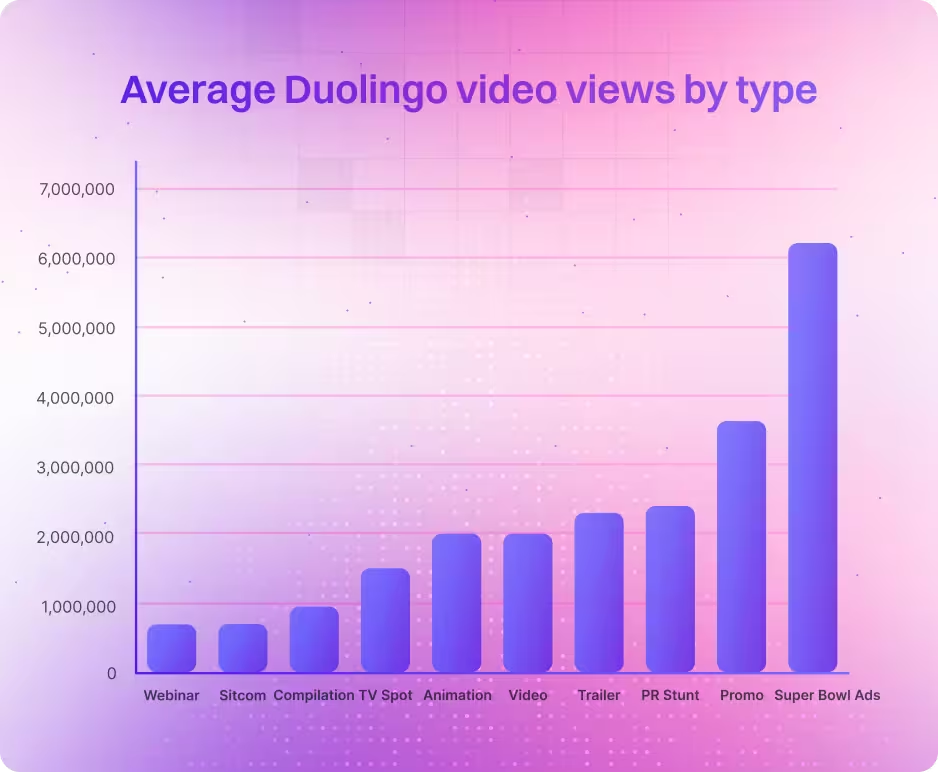
What’s cool about Duolingo’s approach is how their unhinged, playful vibe shows up in almost everything they do. The five content pillars we mentioned aren’t always clear-cut—they mix at least two in each video. That’s why, while their most viewed content is usually product or promo-related, their highest views come from these videos, thanks to their “unhinged bestie” branding combined with product-focused content.
Even their TV spot content does well, but a lot of that success comes from one major hit—their 2024 Super Bowl ad, which gained over 100 million impressions and 10 million views on average across social media. This shows that Duolingo’s branding and content presentation are still key to their success.
Just a quick note: the way we’ve classified these content types is our professional take, so Duolingo might categorize them differently. Plus, some videos fit into more than one category, like the Super Bowl ad, which could be both a TV spot and a PR stunt, or some product videos that could also be seen as educational. Okay, let’s now talk on why their content works:
Humor & authenticity
Duolingo’s success is largely driven by humor and authenticity, and this shows most clearly in their Narrative Animations and PR Stunts.
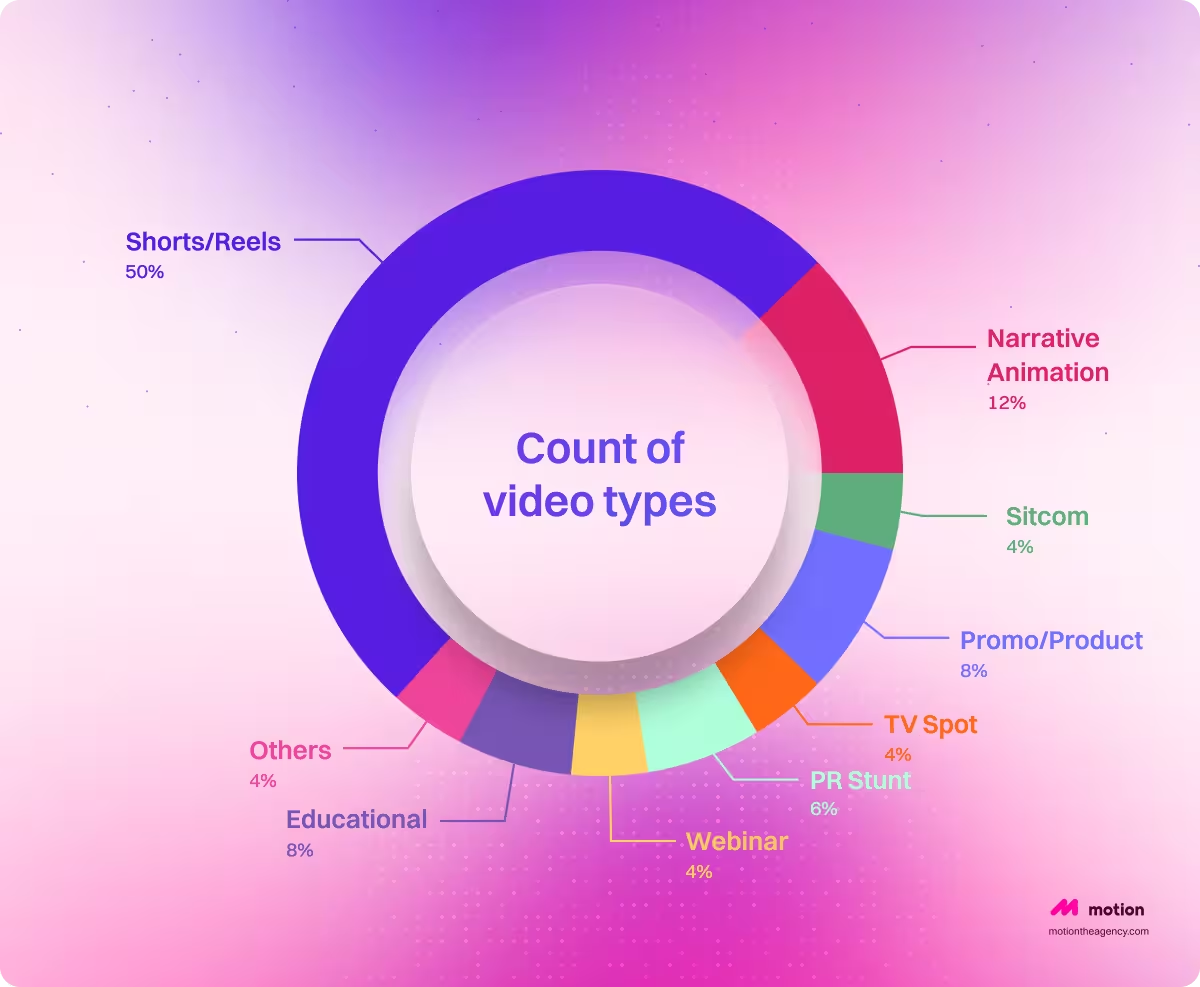
These formats lean into Duolingo’s unhinged, playful personality — and the data backs it up. Narrative Animations average 1.87M views, while PR Stunts average 1.17M views, with some Narrative pieces reaching up to 3M views.
What makes them work isn’t just the format. It’s the tone.
Duolingo doesn’t try to look polished or corporate. Their content feels chaotic, self-aware, and intentionally absurd. That makes it highly relatable and incredibly shareable.
Here’s what stands out:
- Humor and authenticity are central to their strategy.
- Narrative Animations and PR Stunts amplify their “unhinged best friend” positioning.
- Higher engagement correlates with personality-driven storytelling.
- The more they lean into brand character, the stronger the reach.
Authenticity is a double-edged sword.
It is not about being loud. It is about being consistent.
When authenticity feels forced or disconnected, it backfires. It creates noise, not trust.
Duolingo avoids that because their humor aligns perfectly with their positioning. PR stunts like “Duo is Dead” or “Duo on Ice” do not feel random. They feel on brand.
That alignment is what turns attention into real brand equity.
UGC & memes
.png)
Duolingo has mastered the use of User-Generated Content (UGC) and memes, especially on Shorts and Reels. These platforms are ideal for meme-driven, experimental content that resonates with younger, social-first audiences. Duolingo taps into trends and humor, creating content that feels spontaneous and authentic. Much of their meme content comes from user comments or inside jokes shared on social media, making it even more relatable. UGC is so key that Duolingo’s current CMO treats their content like a video/content brief, developing it around what users are already sharing. This approach builds community and encourages organic sharing, leading to higher engagement and views. Here’s how they use it:
- Shorts and Reels focus on meme-driven, trend-based content.
- Many memes come from user comments or inside jokes on social media.
- Memes and interactive content help build community and drive organic sharing.
This strategy works especially well on TikTok, where trends spread fast and boost Duolingo's reach.
Social first content
.png)
Duolingo’s social-first success is built on short-form content like Shorts and Reels.
These formats are designed for fast, digestible content that fits naturally on platforms like TikTok and Instagram. While individual videos may not generate massive view counts compared to longer formats, the strength lies in volume and consistency.
Duolingo moves quickly. They experiment with trends, memes, and cultural moments, often producing reactive content that feels native to the platform.
This constant testing keeps them relevant in a fast-moving digital environment and allows them to generate repeated spikes of attention.
It is not about one viral hit. It is about sustained visibility through speed, experimentation, and cultural awareness.
Past strategy (what didn’t work)
Traditional ads
Before their shift in 2021, Duolingo’s traditional video marketing strategy focused heavily on polished, offline ads, like TV placements, billboards, and other traditional media. These ads were all about showcasing product features but lacked the authenticity and emotional connection that really resonates with audiences. The “perfect” polished look didn’t fit the fun, down-to-earth vibe Duolingo wanted to project, so they didn’t get the same level of engagement or loyalty. Plus, they weren’t really leveraging social media as part of their strategy, missing the chance to engage more naturally with their audience.
Overly polished videos
In the early days, Duolingo’s videos were more feature-driven, focusing on explaining what the app did and how it worked. While this was informative, it lacked the spontaneity and raw energy that works so well on social media. Audiences on platforms like TikTok and Instagram expect content that’s quick, real, and relatable, not something that feels like a commercial. Duolingo eventually realized they needed to loosen up and inject more personality into their videos to really connect with their audience.
Hard selling CTAs
Duolingo’s early campaigns also had sales-focused CTAs, pushing viewers to download the app or make a purchase. But the audience wasn’t looking for a hard sell. They wanted humor and fun. Instead of focusing on selling, Duolingo shifted to creating engaging, entertaining content that invited interaction. They moved away from just asking for a sale and started focusing more on creating moments that people wanted to share and engage with.
Duolingo’s Funnel Strategy
Duolingo shifted from feature-driven content to engagement-driven content. That shift helped them humanize the brand and connect with younger, social-first audiences.
Like any strong marketing engine, their video strategy maps across the full funnel. Each stage plays a different role in moving viewers from awareness to action.
Let’s break down how Duolingo uses video at each stage to capture attention, build connection, and drive conversion.
TOFU (awareness)
At the top of the funnel, Duolingo uses viral shorts and humor to grab attention fast and create awareness, which makes up about 50% of their content. These videos are fun, engaging, and designed to go viral, often tapping into trends and memes that their audience loves. They also use TV spots to boost awareness, and then repurpose them into 9:16 format for social media. This way, they get more mileage out of their content, making sure it works on platforms like TikTok and Instagram while keeping the message consistent. By mixing humor, viral content, and repurposed TV ads, Duolingo grabs attention in a crowded space and gets people who might not have heard of the app to pay attention.
MOFU (consideration)
.png)
In the consideration stage, Duolingo uses narrative-driven content (12% of their overall content) and paid ads (8% of their overall content) to deepen connections with users already aware of the brand. Their narrative content includes success stories, fun explainer videos, and testimonials.
For paid ads, we found that most placements are not on YouTube, suggesting they focus on other platforms where engagement is higher. Interestingly, before researching this content, we rarely saw Duolingo’s paid ads, but after interacting with their content, we started seeing them more frequently. Based on our experience, we believe these ads are part of MOFU, targeting users who have already shown interest. However, since we don’t have access to Duolingo’s internal data, this remains a professional opinion. This strategy helps Duolingo engage potential users further down the funnel while keeping the content fresh.
BOFU (conversion)
At the bottom of the funnel, Duolingo focuses on retention and upsell strategies, all happening within the app. This stage is all about turning engaged users into paying customers and keeping them around for the long haul. By 2025, this stage was expected to bring in 25% of their overall revenue. Duolingo does this by offering personalized content, gamified experiences, and premium subscriptions. By keeping users engaged with tailored experiences and gently nudging them toward premium options, Duolingo maximizes user lifetime value and ensures steady revenue growth.
The video above is a snippet from one of Duolingo's in-app ads for the Duolingo Max feature, which is part of how they promote their premium offerings directly within the app. It’s all about making sure users stay engaged and convert to paying customers. To wrap it up, Duolingo’s funnel strategy is a mix of making a big splash with humor and virality at the top, drawing users in with engaging content and targeted ads in the middle, and then focusing on retention and upsells at the bottom to keep things growing.
So, why the shift works?
.png)
.png)
Duolingo’s authentic, humorous approach makes the brand relatable to younger, social-savvy audiences. We’ve seen a lot of comments and video reactions to Duolingo’s content, and while not everything is positive, the general response is overwhelmingly accepting and intrigued. This kind of engagement is a fantastic starting point for their marketing approach, showing that they’ve successfully tapped into what resonates with their audience. but here ore other aspects that makes this approach works
Data driven insights
Duolingo leverages machine learning through their BirdBrain system to predict when users are ready to convert. This allows them to optimize both retention and upsell strategies. By analyzing user behavior and engagement patterns, they can tailor their approach to keep users coming back and encourage them to explore premium features, ultimately driving long-term growth. This approach is especially effective for their BOFU (Bottom of Funnel) strategy, where the focus is on converting engaged users into paying customers and ensuring they stay loyal to the app.
Creative framework
Duolingo’s content strategy follows a clear and effective creative framework. The Hook relies on absurd visuals, like their quirky mascot, to immediately grab attention. In fact, 94% of their hooks are delivered in the first 10 seconds of their content, ensuring that viewers are instantly hooked. Once they’ve caught attention, the Value comes from providing product knowledge and narrative-driven content that keeps users engaged. To back up their claims, Proof comes from in-app metrics, streaks, and data-backed effectiveness, showing how the app helps users achieve their language learning goals. Finally, the CTA includes clear calls to action, such as “Do your lesson” or “Download the app,” making it easy for users to take the next step in their learning journey.
So, What other company can "steal" from Duolingo?
When people talk about Duolingo’s marketing, they usually focus on the obvious stuff. The owl. The chaos. The memes. The “unhinged” energy that feels completely different from a typical brand account.
But that’s not the real lesson.
What makes Duolingo powerful isn’t randomness. It’s intention. Behind the humor and cultural moments is a very deliberate system. They’re not just being funny on the internet for attention. They’ve built a repeatable content engine that consistently turns short-term engagement into long-term brand memory.
And there’s a lot you can learn from that approach, whether you’re a B2C brand or a B2B company.
What B2C brands should steal from Duolingo
Let’s start here, because this is where Duolingo really dominates.
There’s a lot B2C brands can learn from them, but the first thing that truly drives people in is their brand anchor and persona.
Duo isn’t just a mascot. He’s the glue. Whether the content is educational, chaotic, trend-driven, or campaign-based, everything ties back to the same character and tone. That’s why, even in the middle of complete chaos, the content still feels cohesive. Even their most random videos still feel unmistakably Duolingo.
If you’re a B2C brand, ask yourself:
What’s your anchor?
It could be a character.
It could be a recurring world.
It could be a tone of voice that never breaks.
But without an anchor, trend content becomes disposable.
The second big lesson is cultural agility.
What do you expect when you hire a team that’s chronically online, but also deeply trained in marketing and branding? Duolingo moves fast. They jump on trends quickly, but they don’t just copy them. They adapt them to their own voice and narrative.
That’s a huge difference.
They don’t look like a brand trying to be cool.
They look like a brand that belongs in the conversation.
On top of that, they seem to have a relatively open and flexible internal structure. The marketing team can publish quickly without being trapped in endless approval loops. They understand that timing on social media is everything.
For B2C brands, speed plus brand consistency is a serious competitive advantage. If you’re always late to trends or stuck waiting for multiple sign-offs, your content will always feel forced and outdated.
Lastly, steal their long-term mindset.
Not every Duolingo post is trying to convert immediately. A lot of their content is about attention and affinity. They understand that brand memory compounds over time.
And that’s incredibly powerful in B2C.
When someone finally decides to learn a language, Duolingo is already top of mind. Not because of one perfectly optimized sales ad, but because of hundreds of small, consistent touchpoints.
And then there’s the comment section.
Duolingo doesn’t just post and disappear. They reply. They escalate jokes. They turn comments into new content ideas. Sometimes the audience literally writes the next script.
That’s how you build a community instead of just chasing views.
And community is what drives loyalty.
What B2B brands can still learn
Even though Duolingo is B2C, there are still lessons for B2B.
You don’t need a mascot.
But you do need recognisability.
That might be a recurring format. A consistent visual style. A weekly breakdown series. Something that makes people instantly associate that structure with your brand.
And you need consistency.
Duolingo didn’t win because of one viral moment. They won because they kept showing up. Most B2B brands publish once, then go quiet for weeks. That kills momentum.
You also need a subtle connection to product. Duolingo rarely hard-sells, but the product context is always nearby. That’s a smart balance.
Entertainment builds attention.
Product context builds revenue.
You need both.

Conclusion
If you're reading this, chances are you've come across Duolingo’s video marketing and thought, “This is pretty out of the box. Does it actually work?” That’s exactly what our content marketer said when we were discussing which company video marketing strategies are actually worth studying. As a video marketing agency, Duolingo’s almost video-exclusive approach immediately stood out to us. It’s rare to see a global brand lean so heavily into short-form, social-first video and turn it into a consistent growth engine, so we decided to break down what’s really going on behind the scenes. And if you’re curious how this thinking translates into real campaigns, you can check out our past video marketing projects or book a call to explore how a structured B2C marketing video funnel could work for your brand.
FAQ

Syarafina Kuswahyuni
Syarafina Kuswahyuni is a content marketer at Motion The Agency, where she covers explainer video production, motion design trends, and video marketing strategy for SaaS brands. She has worked alongside Motion's animation team on projects for clients including ClickUp, Apollo.io, and HackerRank


Widi Setyowati
Widi is a content marketing specialist with experience in video marketing, email marketing, and content creation. At Motion The Agency, she specializes in crafting engaging video campaigns, impactful email outreach, and insightful written content.

Mujahid Habibie
As SEO Manager, Mujahid leads our search strategy across on page, off page, technical SEO, and AI visibility turning complex insights into clear, scalable growth that strengthens our organic performance.

In just a few questions, get a tailored estimate for your next video project.





Contact Us
Ready to elevate your brand? Contact us for your
Free Custom Video Sample