How ClickUp Saves Over £100k While Navigating Structural Change
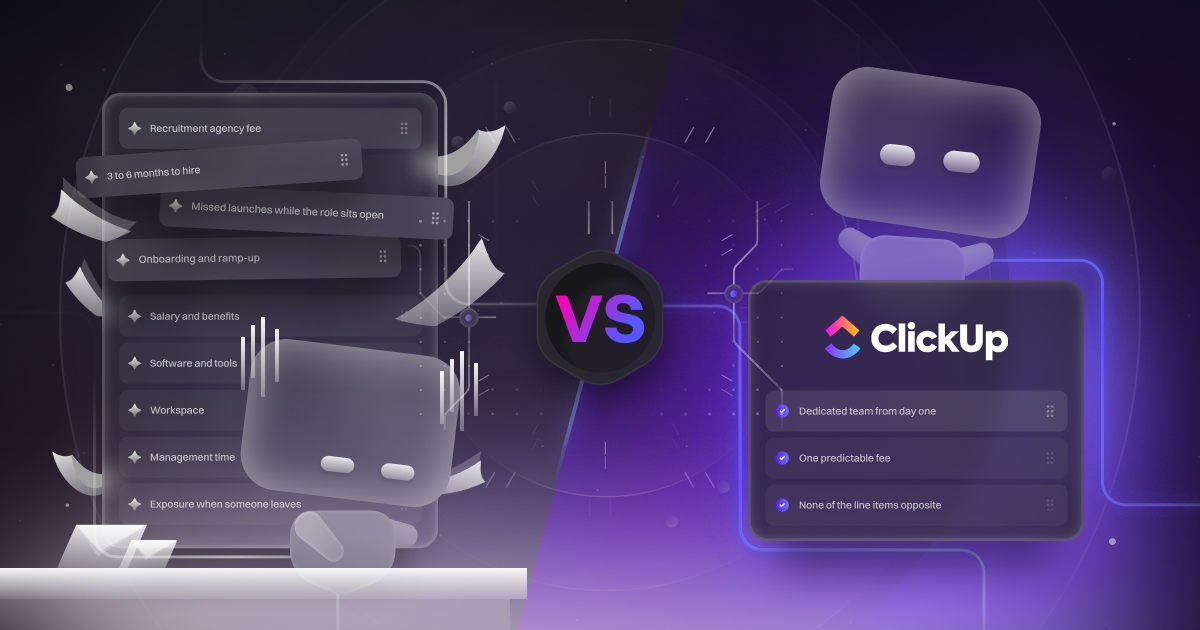
table of content
TL;DR
- ClickUp has spent the past year reshaping how it operates, while refreshing its brand and shipping a run of product launches.
- Through that period, its video and motion content kept moving, and cost £101,872 less than the same work would have project by project.
- The saving comes from how ClickUp buys creative: a long-term subscription with Motion The Agency instead of per-project pricing. Same scope, same standard, 55% less.
- A tailor made team that already knows the brand kept the queue moving through the change, meeting agreed deadlines almost without exception.
Over the past year, ClickUp has been reshaping how it operates. The productivity platform, used by millions of teams worldwide, has been open about running leaner and adapting the way its teams work.
Through that same period, ClickUp refreshed its brand, shipped a run of product launches, and kept a steady flow of video and motion content going out the door. That work included in-app tutorials, product animations, email and social assets, and campaign videos produced by our team here at Motion The Agency. In the first six months of the subscription alone, we completed more than 30 projects.
That partnership costs ClickUp £101,872 less than the same work would have cost project by project.
Of course, the saving has nothing to do with cutting corners. It actually comes down to how ClickUp chose to buy creative. Like many fast-moving software companies, it reached a point where demand for content kept rising while the team producing it had to stay focused on bigger priorities.
In this blog article, we’ll break down how ClickUp’s long-term partnership with Motion The Agency helped reduce production costs, maintain output through structural change, and create a more scalable way to produce video and motion content.
The question every scaling SaaS team is really asking
Growing tech businesses usually get overwhelmed by the amount of content they need to make. Between launch videos, feature tutorials, internal video needs, and social media posts, there is always another project waiting right after.
But the harder question that sits underneath is, how do you buy creative when you need a lot of it, regularly, and it has to stay on brand every time?
Most teams answer in one of three ways.
Building an in-house team gives you the most control, but salary is only where the cost begins. There are recruiter fees, the three to six months it can take to fill the role, and the launches that slip while the seat is empty. Then come onboarding, software, workspace, and management time. And if the person you spent half a year finding leaves, you are back to square one.
To get a deeper understanding of the benefits of our subscription plan, we have a dedicated blog article titled “Hiring Designers: Should You Go In-House or Try a Design Subscription?” for you to check out.
Freelancers can be flexible and cost-effective for a single task. But without someone understanding and holding the full brand picture, the work can lose consistency over time.
A studio hired project by project is clean for the occasional video. But at real volume, it quickly becomes the slower and more expensive option.
A growing number of enterprises have stopped choosing between the three. ClickUp is one of them.
Why ClickUp chose the long-term subscription deal
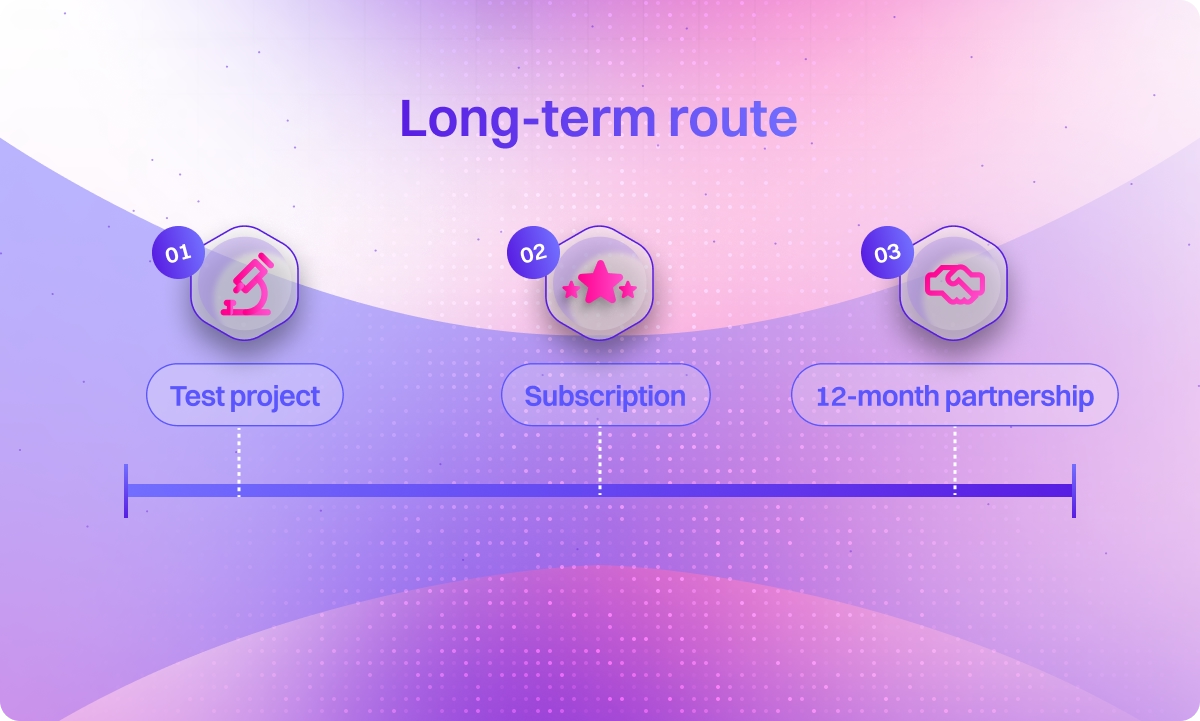
The relationship didn’t begin with a twelve-month deal. It began with a single project, which was a low-stakes test of whether the work held up which dated back to late 2024.
It wasn’t a straight line from there, either. In early 2025, a proposed monthly arrangement didn’t go ahead. The timing was wrong on ClickUp’s side, and both teams left the door open rather than forcing it. That matters because what happened next is the part worth paying attention to.
Later that year, ClickUp came back. The brand had been refreshed, and its content needs had grown from occasional to constant. Buying video one project at a time no longer added up. The company moved onto our subscription, working with us more like an extension of its internal creative team. In 2026, that became a full twelve-month partnership.
Enterprises rarely return to a vendor they merely tolerated. They come back to teams that made their lives easier and delivered actual impact. And they rarely make a twelve-month commitment for soft reasons. ClickUp runs a tightly defined brand system. What it needed wasn’t an outside strategy partner. Instead, it needed a team that already knew the rules and could produce work that felt unmistakably ClickUp without needing a fresh brief every time.
That fluency is what a long-term partnership buys, and what a string of one-off projects cannot. Early on, the back-and-forth covered dimensions, transitions, and the exact feel of each motion. Now, most of that is settled and captured in a shared style guide our team works from. Questions that used to take a week can now be closed in a day.
What a long-term partnership actually produces
The output speaks to the model. In the first six months of the subscription, we completed more than 30 projects for ClickUp.
The range was wide: in-app tutorial animations that walk users through new features the moment they open the platform, lightweight Lottie animations built for use inside the product, assets rebuilt for email so one piece of work could carry into a second channel, social content, and more recently, longer campaign videos, including customer stories and ads.
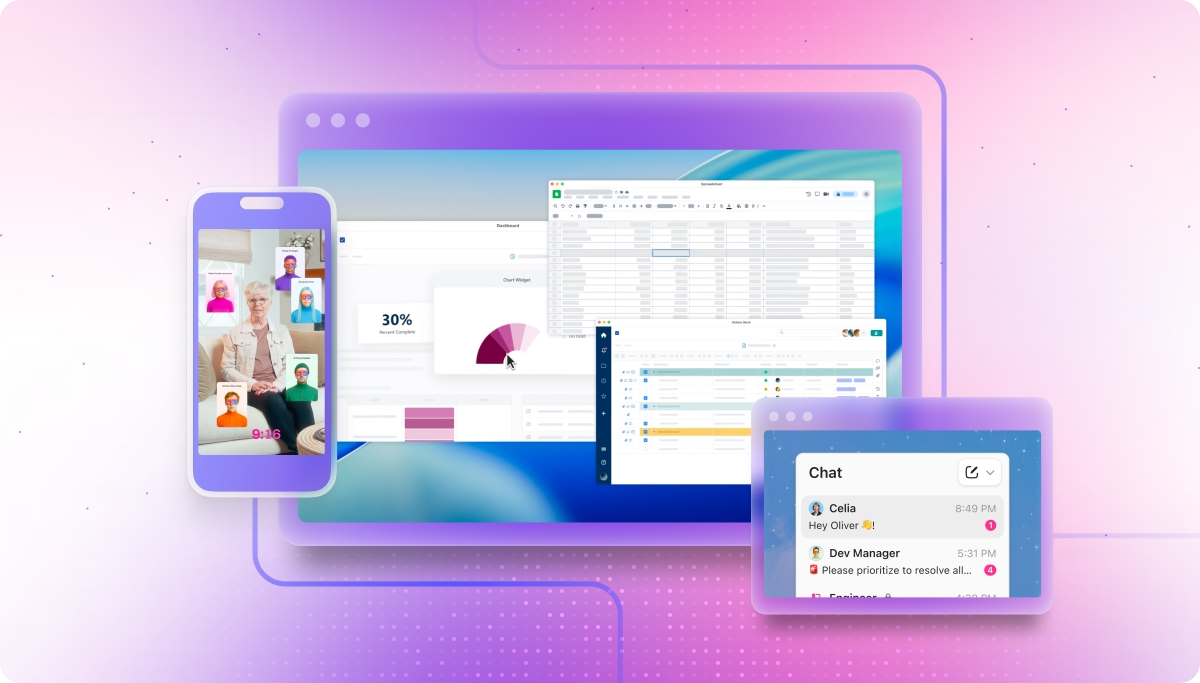
All of it comes from our dedicated team: designers, an animator, a sound designer, and a project manager who know the brand as well as the client does because the team was specifically built for the client. One which ClickUp didn’t need to add headcount to get it. There is no ramp-up when a new request lands, and no need to re-explain the brand from scratch.
The pattern also holds across a US and UK time difference because the team front-loads detail and sets expectations early. A five to eight hours gap doesn’t have to mean a five to eight hours delay.
How the subscription works day to day
The mechanics are simple, and they explain a lot of the value.
The subscription runs on a monthly allocation, used across whatever the month calls for. A feature tutorial one week. A batch of social cuts the next. A campaign video when a launch lands. The queue is prioritised the way an internal team’s backlog would be, so the most important work always moves first.
Collaboration flexes the same way. Some briefs arrive from ClickUp fully scripted, ready for our storyboarding process which later can go straight onto the animation. Others arrive as a rough idea, that will later be developed together during the brainstorming process. The point of an embedded team is that either route works, without needing a scoping call every time.
Repurposing is where the model quietly earns its keep. A tutorial made for the product becomes an email asset, a campaign video becomes social cuts, and one piece of work carries into two or three channels, which creates a very different economy from buying each deliverable as its own project.
Why long-term costs less, not more
The counterintuitive part is the money. The long term commitment didn’t come at a premium price. Instead, it cut the bill by more than half.
The same scope of work, bought through our fixed project-by-project pricing, would have cost £184,832. On the subscription, it came to £82,960. That is a 55% reduction, and £101,872 saved across the full partnership, with no change in standard or service.
A fair question is why the same studio would charge 55% less for the same work. The answer is that commitment changes our economics too. A twelve-month agreement lets us plan a dedicated pod’s capacity months ahead, instead of pricing in the idle time between projects. There is no scoping and quoting cycle for every request. And because the team keeps the brand in its head, revision rounds shrink instead of resetting.
Per-project pricing carries the cost of starting over every time. A subscription doesn’t. Same team, same standard, same deliverables. At volume, project-by-project is simply the more expensive way to buy the same work.
Why it held through structural change
Long partnerships get tested when the client's world moves, and ClickUp's has. The company has been reshaping itself toward a leaner operation, all while running a brand refresh and shipping launches.
That is usually the stretch where an in-house creative function thins out, or gets caught mid-transition, and output slows.
Ours did not slow. Because the team was already embedded and already fluent in the brand, the work carried on through the change instead of pausing for it. When the visual direction evolved, the style guide evolved with it, and the queue kept moving. Launches didn’t wait.
Part of that steadiness is structural. Every ClickUp project starts from an agreed timeline. Either we propose one and confirm it before work begins, or ClickUp sets the deadline and we allocate the team to meet it. Punctuality isn’t a promise made at the end of a project, it is planned into the start of one.
Across the partnership, that discipline has held: deliveries have landed on the agreed date almost without exception, and the rare misses were finished work shared late, not work that ran over.
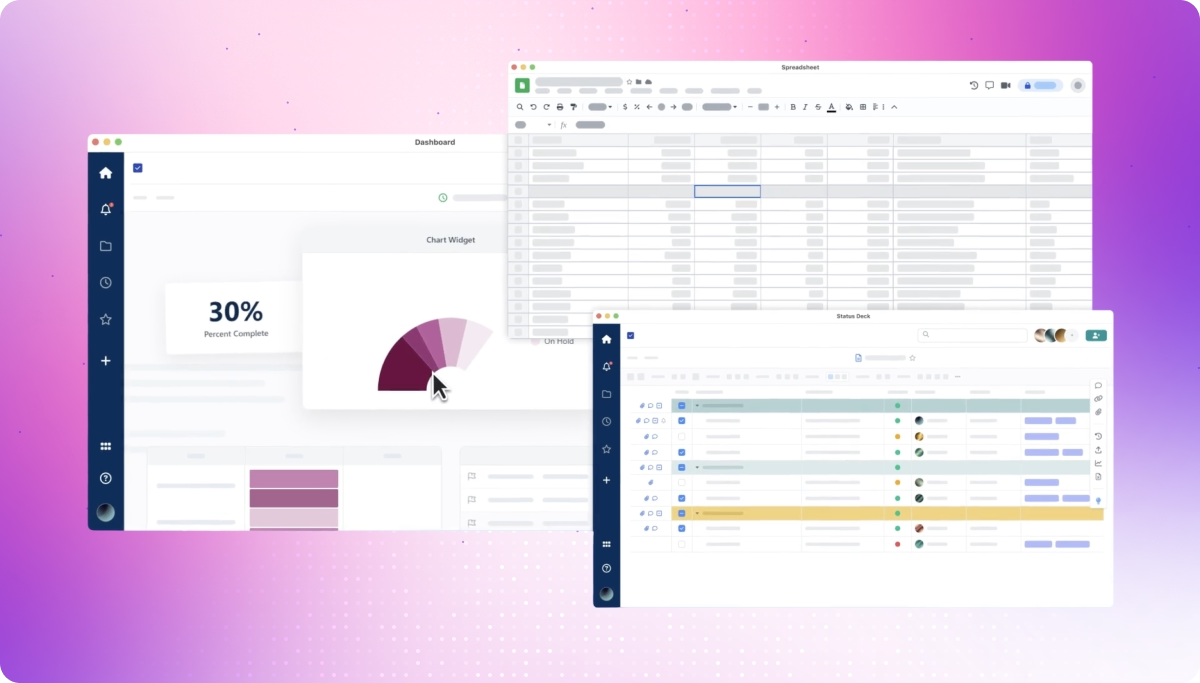
That steadiness never shows up on a price sheet. A long-term creative partner is cheaper at volume. It is also more stable at exactly the moment the business around it isn’t.
What this means for you
In essence, if you need one video a year, per-project is the right way to buy it. The subscription starts to win the moment your needs become monthly rather than occasional. That is the point where the hidden costs of every other route start to compound.
If your content demands are constant and your business keeps moving, the decision that changes the numbers may not be another hire. It may be the way you buy creative in the first place.
One project at a time, video is both the costly option and the fragile one. It drains budget at volume, and it slips the moment things get busy. A long-term subscription is how companies at ClickUp’s scale hold three things at once that usually trade off against each other: the output they need, the savings that come with commitment, and the stability to keep producing while everything else is shifting.
If the situation in this story sounds like the one your team is in, book a call with us! We would love to talk it through with you. The easiest first step is to get a free sample from us before committing to anything. If you are weighing what a longer partnership could look like, see in details how our subscription plan works.

Bramuda
Bramuda is a creative strategist at Motion The Agency, where he writes compelling blog posts that support and expand upon the agency's video projects for SaaS brands. He works alongside animation team to create cohesive content campaigns for clients including Kuberno, Primer, and Dext.

In just a few questions, get a tailored estimate for your next video project.



Contact Us
Ready to elevate your brand? Contact us for your
Free Custom Video Sample