
SaaS Video Production: What Video Do You Need?
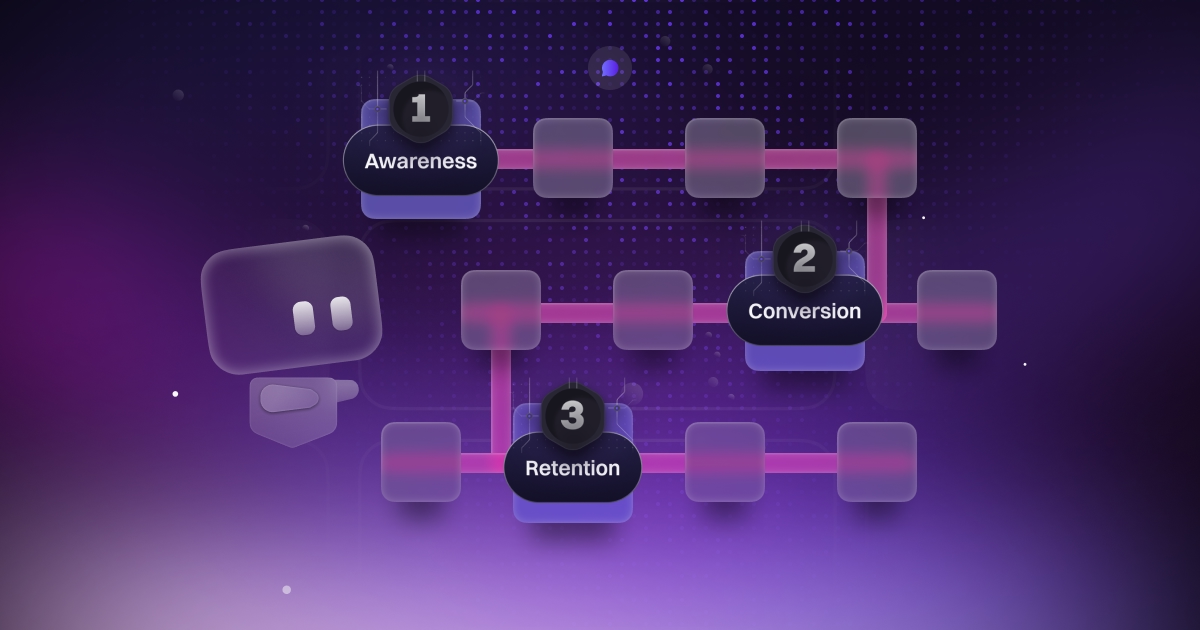
table of content
SaaS companies need video. That part is clear. When your product is complex, technical, or hard to explain through text alone, video can help people understand what it does, why it matters, and why it is worth paying attention to.
But the real question is not, “Should we use video?” The bigger question is, “What kind of video do we actually need right now?” Many SaaS companies waste budget because they create the wrong video for the wrong stage of growth. So if you’re part of a SaaS company looking for better ways to use video in your marketing, think of this blog as a friendly guide to SaaS video marketing — what videos to use, when to use them, and how they can support your growth at different stages.
We’re Motion The Agency, a video marketing agency that helps SaaS companies turn complex products into clear, engaging videos. In this blog, we’ll break down why some SaaS video strategies do not work, what video types make sense at each stage, and how a smarter SaaS video production approach can help your company create the right video for what it actually needs next.
Why your current SaaS video strategy might not be working?
That you might be using the wrong videos.
But what does that actually mean? A strong marketing video for a SaaS company should be tied to one clear goal. So instead of asking, “Should we use video marketing for our SaaS product?” the better question is:
“What stage are we in, what problem are we trying to solve, and what type of video would actually help us move forward?”
That question matters because SaaS video marketing is not just about making a polished video. It is about choosing the right video for the right stage, audience, and goal. If you cannot answer that clearly, it may be a sign that you need to narrow down the priority first. Think about what your company needs right now, who the video is for, and what action you want the audience to take after watching it.
Because when the goal is unclear, the video can easily become too broad, too generic, or disconnected from the buyer journey. And that is usually why a SaaS marketing video fails, even when the visuals look polished.
Think about it this way. If your audience has the pain point your product solves, but they still do not understand what your product does, a product highlight video may not be the best place to start. It might show how good the product is, but it does not clearly explain how the product solves their problem. So instead of thinking, “This is exactly what we need,” the viewer may walk away thinking, “This looks nice, but I’m not sure how it relates to me.”
That is why a strong SaaS video production process should start with strategy, not just visuals. Now that we have got that out of the way, let’s get a bit deeper into why these strategies fail.
Common reasons SaaS video strategies fail
- The video is made for the wrong growth stage: A startup trying to get noticed does not need the same video as a larger SaaS company trying to win enterprise buyers. If buyers barely know you yet, a deep product demo may feel too much. But if they are already comparing options, a short teaser may not build enough trust. This matters because 39% of marketers say their content is less effective when it is not tied to the customer journey. SaaS video works the same way: if it does not match the buyer’s stage, it can miss the point.
- The video type does not match the business goal: Not every video is built to do the same thing. A short ad is great for getting attention, but it may not explain a complex product clearly. A product demo is great for buyers who are already interested, but it may be too detailed for someone seeing your brand for the first time. The format needs to match the goal.
- The video is treated as a one-off asset: A single video can help, but it works better when it is part of a bigger plan. McKinsey found that B2B customers use an average of 10 interaction channels during the buying journey, so one video on one page is rarely enough. That is why one main explainer can be repurposed into social cuts, sales snippets, product page content, onboarding clips, or feature launch assets. With 61% of B2B marketers planning to increase video investment, the goal should not just be making more videos, but creating smarter video touchpoints across the buyer journey.
- The messaging is too generic: A lot of SaaS videos say similar things: save time, boost productivity, streamline workflows, improve collaboration. Those messages are not wrong, but they are not specific enough on their own. Buyers need to see what problem you solve, how your product works, and why it matters to them.
Quick do’s and don’ts before starting your SaaS video marketing journey
Of course, there are more reasons why a SaaS video strategy might not work. But from the conversations we’ve had with marketers over the years at Motion The Agency, these are the ones we see come up most often.
So to make things easier, we’ve put together a simple do’s and don’ts table to help you start your SaaS video marketing campaign with a clearer plan.
The 3 stages of SaaS growth and what video works best
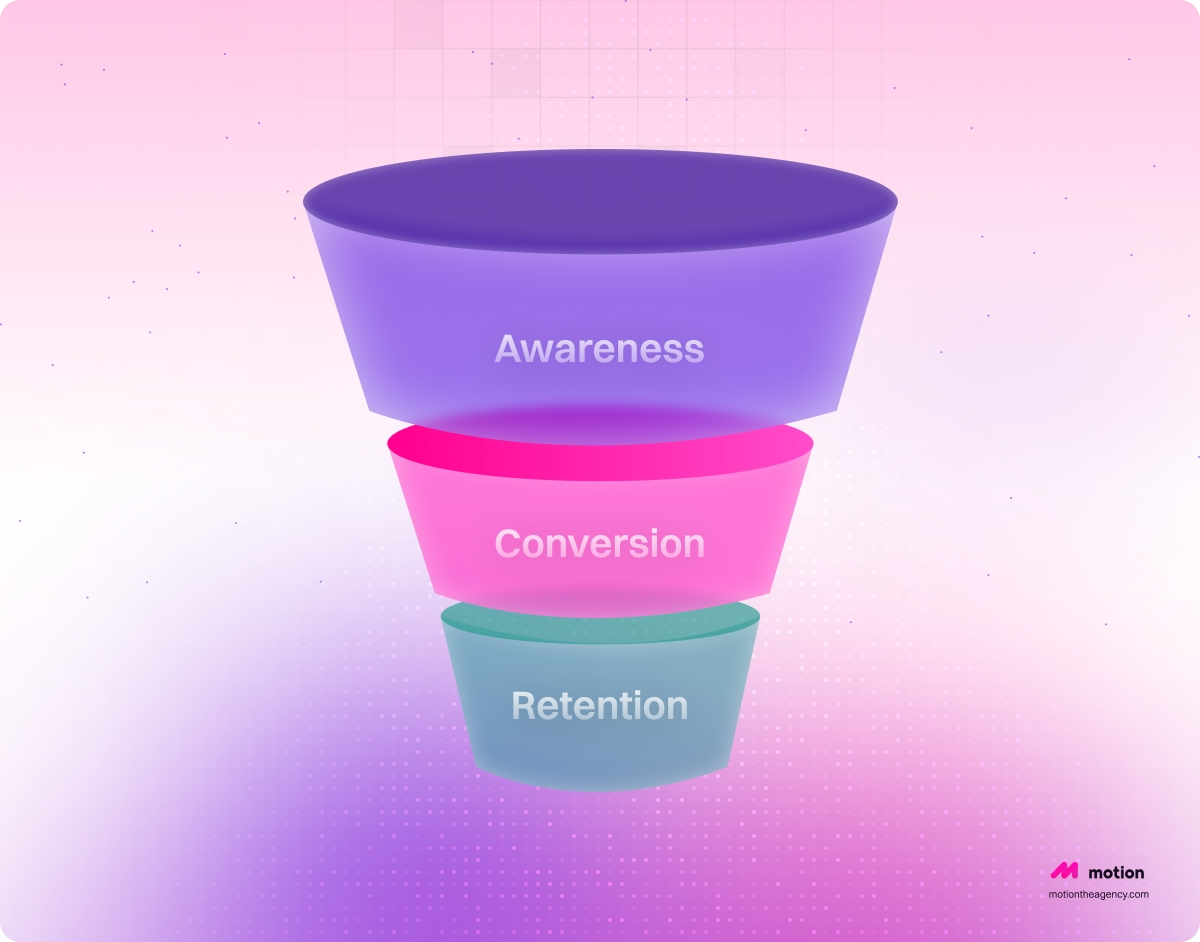
We’ve mentioned growth stages a few times already, so let’s make it easier and break down what those stages actually mean.
These stages usually align with the customer journey and different marketing touchpoints. Some teams call them TOFU, MOFU, and BOFU, while others use terms like awareness, conversion, and retention. We actually talked about this in more detail in our blog, “The SaaS Video Funnel,” where we break down how video can support different parts of the buyer journey.
Every SaaS company may define these stages slightly differently, so think of this as a helpful starting point, not a strict rulebook. And if you’re not sure where your company fits, feel free to book a call with us. We’d be happy to chat through your goals and help you figure out the right video direction for your SaaS.
Stage 1: Awareness — get noticed
At this stage, your audience might not know who you are yet, so think of it as your introduction. This is your chance to make a strong first impression, show people why your product matters, and give them a reason to remember you.
- Use video to introduce your product to people who may not know you yet.
- Keep it short, clear, and attention-grabbing.
- This is where a SaaS video ads strategy can help create visibility and first impressions.
- Suitable video type for stage 1 awareness
- Video ads — great for reaching new audiences quickly.
- Short social videos — useful for LinkedIn, YouTube Shorts, Reels, or paid social.
- Sizzle reels — good for showing energy, brand personality, and product value in a fast way.
- Launch teasers — useful when you want to build curiosity around a new product, feature, or campaign.
Stage 2: Conversion — build trust and help buyers purchase
The conversion stage is where your audience already knows who you are, but they still need to decide if your product is the right fit for them. At this point, the goal is not just to get their attention anymore. It is about helping them understand how your product solves their problem, why it matters, and why they should trust you enough to take the next step.
- Use video to explain the product, show how it works, and make buyers feel more confident.
- This is where clarity and proof matter most.
- This is also where trust-building video and our explainer video process can help make complex products easier to believe.
- Suitable video type For stage 2 conversion:
- Explainer videos — great for simplifying complex SaaS products and showing the core value.
- Product demo videos — useful when buyers want to see how the product actually works.
- Trust-building videos — good for showing credibility, use cases, and business value.
- Customer stories — helpful when buyers need proof from real customers before making a decision.
Stage 3: Retention — help customers stay, learn, and adopt
This stage is arguably one of the most important for B2B SaaS companies, especially if the goal is to build longer-term customer relationships. At this point, video is not just about winning new buyers anymore. It is about showing existing customers that you are still helping them grow, supporting their needs, and continuing to improve the product around them.
- Use video to help existing customers understand the product better and get more value from it.
- The goal is to support adoption, education, and long-term usage.
- This is where customer enablement through video becomes important.
- Suitable video type for stage 3 retention:
- Onboarding videos — useful for helping new customers get started quickly.
- In-app tutorials — great for guiding users while they are inside the product.
- Enablement videos — helpful for teaching customers how to get more value from the platform.
- Feature walkthroughs — useful when launching new features or helping users understand updates.
How real SaaS companies matched video to their growth stage
Now that we’ve talked about the different stages, let’s look at how some of our past SaaS clients used video based on what they needed at the time.
Just a quick note before we get into it: these examples are based on the projects we worked on with them and the goals we discussed during the partnership. We might not know every single place the videos were used after delivery, but they still give a good idea of how different video types can support different stages.
So think of this section as a more practical way to look at it: if your SaaS company is trying to get noticed, build trust, or support existing customers, what kind of video actually makes sense? And if you’d like to see more examples beyond the ones we mention here, you can also visit Our Work page to explore more of the projects we’ve created.
Early-stage: Adaptify and Dealpath
Early-stage SaaS video is usually about building expectation, understanding how the audience responds, and introducing the company in a simple, memorable way. The goal is not to explain every feature yet. It is to give people enough context to understand what the product is, why it matters, and why they should keep paying attention. That is exactly what Dealpath and Adaptify did with us. Their videos worked more like early awareness assets, helping introduce the product to a wider audience while building curiosity around what was coming next.
At this stage, the goal is not to explain every feature in detail. It is more about getting attention quickly, making the positioning clear, and helping people remember what the product does. Both videos work well as pre-release teasers because they help build anticipation while slowly introducing the product to the audience. The language is also more general and easy to understand, rather than too niche or technical, which makes sense for early-stage marketing. At this point, the priority is not to give viewers everything. It is to make them curious enough to pay attention and want to learn more.
Growth-stage: Mirakl
This is the stage where people may already know who you are, but they are still questioning the value of your product. They need to understand how it works, how it solves their pain points, and why it is worth bringing into their business. We believe Mirakl did this really well in one of the projects we worked on together. The video starts by addressing the audience’s problem, then clearly shows how Mirakl’s product can help solve it, making the value easier to understand and trust.
At this stage, buyers may already know the product exists, but they still need to understand how it works and why it matters to their business. This is where explainers, product demos, and product videos become useful. For Mirakl, the video builds trust from the first moment by addressing the audience’s pain points first, then showing how the product helps solve them. Instead of jumping straight into features, it gives buyers a clearer reason to care, understand the value, and believe in the solution.
Established stage: Planful
Planful is a good example of a mature SaaS company using video beyond acquisition. At this stage, video is not just about attracting new buyers. It also supports onboarding, customer enablement, education, retention, and long-term product adoption. Their video also helps showcase the trust they have built with their audience. It does not only tell customers what updates are coming, but also signals that Planful is listening to what their audience needs and continuing to improve the product around them. This is where video becomes part of the customer experience, not just a marketing asset.
How to audit your current SaaS video strategy?
The best way to answer this is by looking at your company’s current priority. Are you trying to build awareness? Create trust? Drive conversions? Improve retention? Each goal needs a different type of video, so the clearer you are on the priority, the easier it is to choose the right direction.
If that priority is still unclear, it might be worth taking a step back before starting a SaaS video marketing campaign. Not because video will not help, but because a stronger plan will make the video work much harder for your business.
To make that easier, here are a few questions we think every SaaS company should be able to answer before starting a video marketing campaign:
- What stage are we in right now? Awareness, conversion, or retention?
- What is the main problem we are trying to solve with video? Visibility, trust, sales, onboarding, or retention?
- Who is the video for? A new audience, active buyers, existing customers, or internal stakeholders?
- What video assets do we already have?
- Are those videos supporting the right metric?
- What is missing from our current video strategy?
- Are we creating video as a one-off asset, or as part of a wider B2B video strategy?
The goal is to stop making video just because it looks good, and start building a B2B video strategy around what your SaaS company actually needs next.
Conclusion
SaaS companies need video, but not every SaaS company needs the same video. A startup trying to get noticed, a growing company trying to build trust, and a mature SaaS company trying to support customers will all need different types of video content.
That is why the best SaaS video marketing strategy starts with one simple question: what are we trying to achieve right now? If the goal is awareness, you may need ads, social videos, or sizzle reels. If the goal is conversion, explainers, demos, and trust-building videos may work better. If the goal is retention, onboarding and customer enablement videos can help users get more value from the product.
The important thing is to stop treating video as a one-off asset and start thinking of it as part of the full buyer journey. When the right video is used at the right stage, it becomes easier for people to understand your product, trust your value, and take the next step.
If you are not sure what kind of video your SaaS company needs next, we can help you figure it out. Book a call with Motion The Agency, request a free video sample, or check out our work to see how we have helped other SaaS companies turn complex products into clear, engaging videos.

Syarafina Kuswahyuni
Syarafina Kuswahyuni is a content marketer at Motion The Agency, where she covers explainer video production, motion design trends, and video marketing strategy for SaaS brands. She has worked alongside Motion's animation team on projects for clients including ClickUp, Apollo.io, and HackerRank


In just a few questions, get a tailored estimate for your next video project.





Contact Us
Ready to elevate your brand? Contact us for your
Free Custom Video Sample