15 B2B Essential Types of Marketing Videos That Drive Results in 2026
.avif)
table of content
Key takeaways
- Video marketing continues to rise, with 91 percent of businesses now using video and video projected to account for over 82 percent of all online traffic by 2026.
- Businesses can choose from multiple video formats explainer videos, product demos, live videos, social media videos, and more each playing a different role in the marketing funnel.
- To get real results, brands must align their video content with marketing goals, audience preferences, available resources, and the right success metrics.
- Effective pre-production planning, strong quality control, and multi-channel distribution are key to maximizing engagement and reach.
- Repurposing content, adding captions for accessibility, and avoiding common video marketing pitfalls help extend the lifespan and impact of every video.
- A few types of B2B video marketing:
- Explainer video
- Product demo
- Brand story
- Customer testimonial
- BTS video
- Educational content
- Social media
15 types of B2B marketing video
Video marketing has seen a significant rise in popularity in recent years. Businesses have increasingly recognized the power of video to engage consumers, with 91% of businesses now using video as part of their marketing strategy. This shift highlights a move towards more dynamic content. As digital trends change, video becomes vital for brands. It helps them connect with audiences. In 2026, online videos are expected to make up more than 82% of all consumer internet traffic, underscoring the importance of video marketing.
The diversity in video types allows marketers to tailor their content to meet specific audience needs effectively. Some popular video formats include:
- Explainer Videos: 91% of consumers watch explainer videos when considering purchases, emphasizing their importance in educating customers about products.
- Product Demos: Nearly 69% of consumers believe product demos play an essential role in their purchasing decisions.
- Live Videos: These have seen a surge in popularity, with 161.4 million people viewing live content in 2023, reflecting their interactive nature and ability to convert views into sales.
Each format serves a distinct purpose within the marketing funnel, whether it's driving engagement, educating prospects, or facilitating conversions. By understanding which types of videos resonate best with their target audiences, businesses can strategically enhance their marketing effectiveness.
Why Video Marketing Matters in 2026
Modern consumers prefer video. This makes video a crucial part of marketing strategies. 93% of businesses say video is important for their marketing. Audiences watch more video than ever. They spend an average of 100 minutes per day on video platforms.
Consumers now focus on "video-first" content. They turn to TikTok, Instagram, and YouTube to find and interact with brands. Video is a powerful way to drive engagement and sales. Nearly 70% of sellers say video converts better than other content.
Businesses use video on their websites, email, and social media. This helps them reach and engage their target audiences. The popularity of vertical video and short-form content on TikTok shows video marketing's critical role. This will continue in 2026 and beyond.
What B2B Brands Need to Focus on in 2026
We’ve previously broken down the impact of video length in detail in our guide on “How Long Your 2D Animation Video Should Be.” But in B2B video marketing, length alone isn’t enough. There are other factors that determine whether a video is truly effective and efficient.
For marketing leaders, the question is no longer whether to use video, but how to produce it efficiently and align it directly with pipeline goals. AI is not being adopted simply because it looks innovative. It’s being adopted because it compresses production timelines from weeks to days while maintaining professional quality. That allows teams to test faster, iterate campaigns, and scale content across multiple channels without increasing overhead.
At the same time, we’re seeing a shift away from generic, template-style content. B2B buyers expect clarity and differentiation. Hybrid formats that combine live action, 3D animation, AI-assisted environments, and motion graphics are becoming more common because they are flexible, easier to update, and more cost-effective than traditional production models.
And as we highlighted in our breakdown of optimal video length, the first 10-30 seconds still determine whether viewers continue watching. In B2B, attention is limited and buying cycles are complex. Videos must communicate value immediately and guide viewers toward a clear next step. Shorter, sharper messaging with direct CTAs will consistently outperform long, unfocused content.
What corporate video formats convert best for B2B sales pipeline in 2026?
1. Explainer Videos
Explainer Videos
Explainer videos help new audiences quickly understand what your company does and why it matters. A strong explainer clearly presents the problem, defines the target audience, demonstrates how your solution works, and guides viewers toward the next step. Feel free to visit our explainer video service page!
Best funnel stage:
Awareness and early consideration
Best channels:
Homepage hero, landing pages, LinkedIn organic, sales follow-up emails
Ideal length:
60–120 seconds, depending on complexity
Proof element:
Clear problem–solution structure, simple messaging, and professional production quality
CTA alignment:
Learn more, Book a demo, Explore the solution
Common mistake to avoid:
Overcomplicating the message or focusing too heavily on features instead of customer pain points
2. Product Demonstration Videos
.avif)
Product demonstration videos are one of the most critical marketing assets in B2B because they directly influence buying decisions. By clearly showcasing features, workflows, and real use cases, they help prospects understand how a solution works and why it matters. Choosing the right format is essential. Live demonstrations build trust through real-time interaction and human presence, while animated demonstrations simplify complex systems and abstract processes. The key is selecting the style that communicates your product most clearly to your target audience.
Best funnel stage:
Consideration and conversion
Best channels:
Landing pages, sales enablement decks, LinkedIn ads, webinars, email follow-ups
Ideal length:
60–180 seconds depending on product complexity
Proof element:
Clear feature walkthrough, real use-case scenarios, and strong value demonstration
CTA alignment:
Book a demo, Start a free trial, Speak to sales
Common mistake to avoid:
Turning the demo into a feature dump without tying functionality back to business outcomes
3. Brand Story Videos
Brand story videos communicate who your company is, what you stand for, and why you exist beyond your product. In B2B, where differentiation can be subtle, a strong brand narrative helps build trust, credibility, and long-term loyalty. By highlighting your mission, values, and vision, these videos create emotional alignment and strengthen how prospects perceive your business.
Best funnel stage:
Awareness
Best channels:
Homepage, About page, LinkedIn, investor presentations, event openings
Ideal length:
30–90 seconds
Proof element:
Authentic messaging, leadership voice, real company visuals or credible storytelling
CTA alignment:
Learn more, Explore our story, Work with us
Common mistake to avoid:
Making the video too self-focused without connecting the brand story to customer impact
4. Customer Testimonial Videos
Customer testimonial videos build trust by showcasing real client experiences and measurable outcomes. In B2B, where buying decisions involve risk and multiple stakeholders, social proof can significantly influence conversion. Unlike written reviews, video testimonials capture tone, emotion, and credibility, making the success story more convincing and memorable.
Best funnel stage:
Consideration and conversion
Best channels:
Landing pages, sales presentations, LinkedIn, email follow-ups, proposal attachments
Ideal length:
45–120 seconds
Proof element:
Specific results, quantified outcomes, and authentic client voice
CTA alignment:
Book a demo, Talk to sales, See how it works
Common mistake to avoid:
Keeping the testimonial too generic without highlighting clear business impact or measurable results
5. Behind-the-Scenes Videos
Behind-the-scenes videos offer a transparent look into how your company operates, from internal culture to production processes. In B2B, this format helps humanize the brand, build credibility, and reinforce trust by showing the people and systems behind the product. It strengthens brand perception by demonstrating expertise, collaboration, and operational maturity.
Best funnel stage:
Awareness and trust-building
Best channels:
LinkedIn, social media, recruitment pages, event promotions, company updates
Ideal length:
30–180 seconds, depending on the complexity of the project or event
Proof element:
Authentic team presence, real workflows, and genuine production moments
CTA alignment:
Learn more, Follow us, Join our team
Common mistake to avoid:
Making the content feel staged or overly promotional instead of authentic
6. Educational Content Videos
Educational videos position your brand as a trusted authority by delivering valuable insights, tutorials, or industry knowledge. In B2B, this format supports long-term trust-building and demand generation by helping prospects understand challenges, trends, and solutions before they enter a buying cycle. Instead of relying solely on written content, video allows you to explain complex topics more clearly and memorably.
Best funnel stage:
Awareness and early consideration
Best channels:
LinkedIn, YouTube, blog embeds, webinars, email newsletters
Ideal length:
60–300 seconds, depending on topic depth
Proof element:
Clear structure, actionable insights, and subject-matter credibility
CTA alignment:
Learn more, Subscribe, Download the guide, Explore related resources
Common mistake to avoid:
Being too generic or surface-level without delivering real, practical value
7. Social Media Videos
.avif)
Social media videos are designed to capture attention quickly and increase brand visibility across platforms. In B2B, they support awareness, thought leadership, and engagement by adapting messaging to platform behavior. Short-form vertical videos dominate on Instagram Reels, TikTok, and YouTube Shorts, where content under 60 seconds performs best. On LinkedIn, slightly longer videos focused on insights, lessons, or industry perspectives tend to resonate more with professional audiences.
To succeed, businesses must tailor content to each platform while maintaining brand consistency. That means understanding format, tone, and audience expectations without sacrificing clarity or credibility.
Best funnel stage:
Awareness and engagement
Best channels:
LinkedIn, Instagram Reels, TikTok, YouTube Shorts
Ideal length:
15–60 seconds for short-form; up to 2–3 minutes for LinkedIn and Youtube
Proof element:
Platform-native format, strong hook in the first 3–5 seconds, and clear value delivery
CTA alignment:
Follow for more insights, Learn more, Visit website
Common mistake to avoid:
Repurposing the same video across platforms without adapting format, tone, or pacing
8. Event Videos
Event videos capture key moments, insights, and energy from conferences, roundtables, product launches, or industry gatherings. In B2B, they extend the value of live events by transforming them into reusable marketing assets. Whether through live streams, polished recaps, or highlight reels, this format amplifies reach, reinforces thought leadership, and keeps audiences engaged beyond the event itself.
Best funnel stage:
Awareness and engagement
Best channels:
LinkedIn, YouTube, event landing pages, email campaigns
Ideal length:
60–180 seconds for recaps; longer for full-session recordings
Proof element:
Real event footage, speaker credibility, and audience interaction
CTA alignment:
Register for the next event, Watch the full session, Learn more
Common mistake to avoid:
Posting raw footage without editing it into clear, structured highlights
9. Animated Explainer Videos
Animated explainer videos are ideal for simplifying complex concepts, especially in B2B industries like SaaS, fintech, healthcare, or enterprise tech. Animation allows brands to visualize abstract systems, workflows, and data in a clear and engaging way while maintaining a professional, polished look. With options such as 2D animation, 3D animation, motion graphics, or whiteboard style, businesses can choose a format that aligns with their goals, audience, and brand positioning.
Best funnel stage:
Awareness and consideration
Best channels:
Homepage, landing pages, LinkedIn, paid ads, sales presentations
Ideal length:
60–120 seconds
Proof element:
Clear visual storytelling, strong scripting, and simplified representation of complex ideas
CTA alignment:
Learn more, Book a demo, Explore the solution
Common mistake to avoid:
Choosing an animation style based on aesthetics alone rather than strategic clarity and audience needs
10. Live Videos
Live video enables real-time interaction with your audience and is increasingly used in B2B marketing. Around 46% of marketers incorporate live video into their strategy because it builds authenticity, encourages engagement, and strengthens brand credibility. In professional settings, live formats such as webinars, product launches, Q&A sessions, and virtual events allow brands to connect directly with prospects and stakeholders.
Different platforms serve different purposes. LinkedIn Live works well for thought leadership and industry discussions, YouTube Live supports webinars and event coverage, while Instagram and Facebook Live are more suited to informal or community-driven engagement.
Best funnel stage:
Awareness and consideration
Best channels:
LinkedIn Live, YouTube Live, webinars, virtual events
Ideal length:
15–60 minutes, depending on format and depth
Proof element:
Real-time interaction, expert presence, and audience participation
CTA alignment:
Register for the webinar, Book a demo, Download resources
Common mistake to avoid:
Going live without a clear agenda, structure, or defined objective
11. Product Launch Videos
Product launch videos are designed to generate anticipation, communicate value, and align stakeholders around a new offering. In B2B, they help position the product clearly in the market by highlighting key features, differentiation, and business impact. When integrated with broader campaigns across social media, email, and website updates, launch videos ensure consistent messaging before, during, and after release.
Beyond the initial announcement, launch content can evolve into follow-up assets such as feature breakdowns, tutorials, customer feedback, and behind-the-scenes insights to maintain engagement and reinforce positioning.
Best funnel stage:
Awareness and early consideration
Best channels:
Landing pages, LinkedIn, email campaigns, paid ads, webinars
Ideal length:
45–120 seconds
Proof element:
Clear positioning, strong value proposition, and differentiated feature highlights
CTA alignment:
Learn more, Request access, Book a demo
Common mistake to avoid:
Focusing only on features without clearly communicating business impact or differentiation
12. Company Culture Videos
Company culture videos communicate your organization’s values, leadership style, and workplace environment to both external and internal audiences. In B2B, they support employer branding, talent acquisition, and long-term reputation building. By showcasing real teams, initiatives, and day-to-day collaboration, these videos provide an authentic view of what it’s like to work with and within your company.
Beyond recruitment, culture videos also strengthen internal alignment and morale by reinforcing shared values and company vision.
Best funnel stage:
Awareness and trust-building
Best channels:
Careers page, LinkedIn, recruitment campaigns, investor presentations
Ideal length:
60–120 seconds
Proof element:
Real employees, leadership voice, authentic workplace moments
CTA alignment:
Join our team, Learn more, Partner with us
Common mistake to avoid:
Overproducing the video to the point where it feels scripted rather than authentic
13. Interview/Q&A Videos
Interview and Q&A videos allow your brand to directly address audience questions while showcasing expertise and credibility. In B2B, this format works well for thought leadership, industry discussions, customer insights, or executive commentary. You can collaborate with subject-matter experts, clients, partners, or internal leaders, or create solo videos responding to frequently asked questions. These sessions can be recorded or hosted live and repurposed across multiple channels.
By openly addressing real questions and sharing practical insights, interview and Q&A videos strengthen authority, increase trust, and position your company alongside respected voices in your industry.
Best funnel stage:
Awareness and consideration
Best channels:
LinkedIn, YouTube, webinars, email newsletters
Ideal length:
5–30 minutes, depending on topic depth
Proof element:
Credible speakers, practical insights, and clear, structured discussion
CTA alignment:
Learn more, Follow for insights, Register for upcoming sessions
Common mistake to avoid:
Letting the conversation drift without structure or clear value for the audience
14. Case Study Videos
Case study videos showcase how your product or service solved a real customer problem and delivered measurable results. In B2B, they are powerful conversion assets because they combine storytelling with proof. Using a clear problem–solution–result structure, these videos highlight the challenges faced, the strategy implemented, and the business impact achieved.
By presenting authentic customer narratives supported by metrics and outcomes, case study videos build credibility, reduce buyer skepticism, and help prospects visualize similar success within their own organization.
Best funnel stage:
Consideration and conversion
Best channels:
Landing pages, sales presentations, LinkedIn, email follow-ups, proposal materials
Ideal length:
60–180 seconds
Proof element:
Quantified results, customer voice, and clear business impact
CTA alignment:
Book a demo, Talk to sales, See how it works
Common mistake to avoid:
Focusing on storytelling without including specific, measurable outcomes
15. Promotional Videos
Promotional videos are designed to drive immediate action by highlighting offers, campaigns, or key product benefits. In B2B, they are often used to support limited-time initiatives, new feature announcements, seasonal campaigns, or demand-generation pushes. Unlike educational or brand-focused content, promotional videos are direct, outcome-oriented, and aligned with clear conversion goals.
These videos rely on strong visuals, concise messaging, and compelling calls to action to capture attention quickly and guide viewers toward a specific next step.
Best funnel stage:
Conversion
Best channels:
Paid ads, landing pages, LinkedIn campaigns, email marketing
Ideal length:
15–60 seconds
Proof element:
Clear offer, urgency, and strong value proposition
CTA alignment:
Sign up now, Get started, Claim the offer, Book a demo
Common mistake to avoid:
Focusing only on visuals without clearly communicating the offer or next step
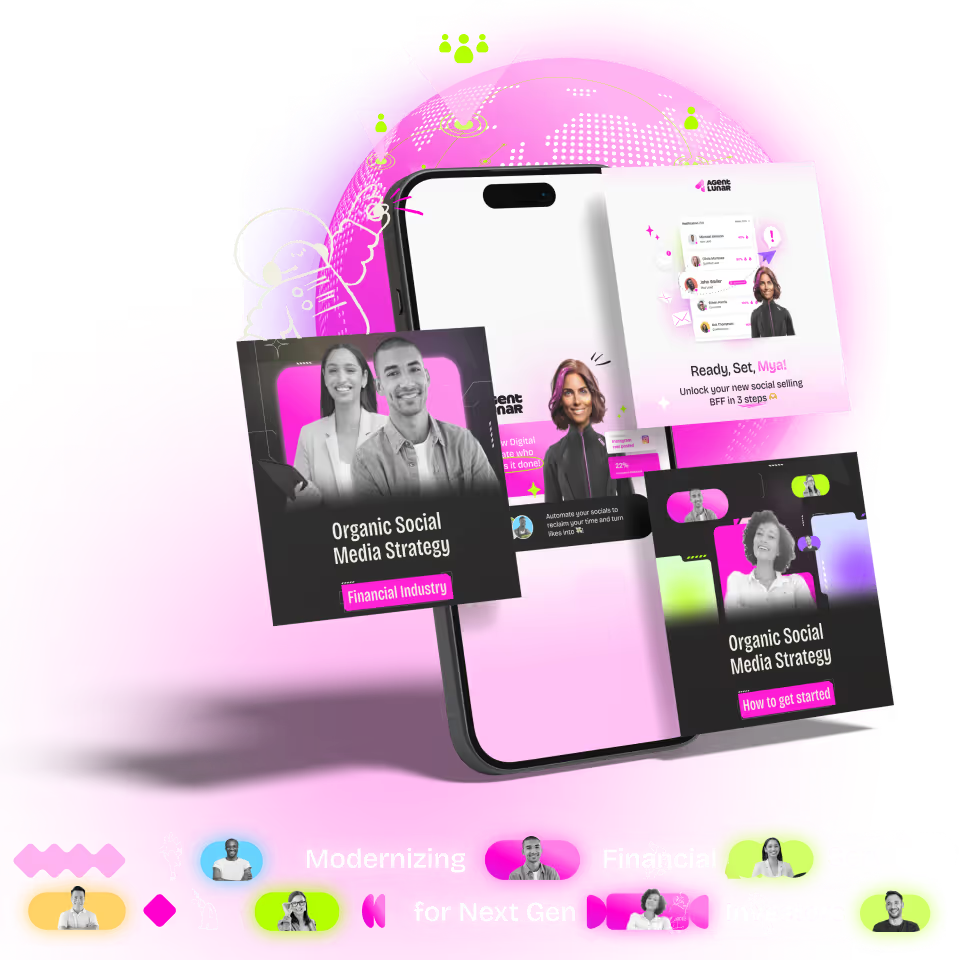
Best Video Types by Channel
Choosing the right video format also depends on where it will be distributed. Different channels require different lengths, tones, and levels of depth. Below is a quick guide to help you match video types to their strongest-performing environments.
Keep in mind that these are not the only possible placements. The ideal distribution strategy will vary depending on your product complexity, brand positioning, sales cycle, and target B2B audience. Use this as a starting framework, then adapt based on your specific marketing goals and buyer behavior.
Landing Pages
Best for clarity and conversion support.
Recommended types:
- Explainer Videos
- Product Demo Videos
- Case Study Videos
- Animated Explainers
Landing page videos should communicate value quickly and reduce friction in the decision-making process.
LinkedIn/YouTube
Best for professional engagement and thought leadership.
Recommended types:
- Educational Videos
- Interview & Q&A Videos
- Case Study Videos
- Social Media Videos (LinkedIn-native format)
- Event Recaps
LinkedIn content should be insight-driven and relevant to industry conversations.
Paid Ads
Best for direct response and demand generation.
Recommended types:
- Promotional Videos
- Product Launch Videos
- Short Explainer Videos
- Social Media Short-Form Videos
Paid campaigns require strong hooks, concise messaging, and a clear call to action. Sales Enablement
Best for late-stage decision support.
Recommended types:
- Product Demo Videos
- Case Study Videos
- Customer Testimonial Videos
- Interview Videos with subject-matter experts
These videos should address objections, demonstrate ROI, and build confidence among stakeholders.
What animation styles work best for B2B marketing in 2026?
Choosing the right video type for your marketing strategy requires careful thought. When considering factors such as marketing goals, target audience preferences, budget, distribution channels, and timeline, it's essential to select the video format that aligns best with your objectives.
Quick Shortcut: Pick by Goal
Before deciding which marketing video format is right for your business, start with these core considerations. Think of this as your foundation. It won’t give you the final answer, but it will help you narrow your options and avoid choosing based on trends alone.
There are always additional variables at play. Your industry, audience maturity, competitive landscape, and internal resources will influence the final decision. But these five factors provide a strong starting point for identifying what fits your company’s needs.
Now, begin with the most important question: What is your primary goal?
If your goal is awareness →
Brand Story, Social Media Videos, Event Videos, Company Culture Videos
If your goal is consideration →
Explainer Videos, Educational Content, Interview/Q&A Videos
If your goal is conversion →
Product Demo Videos, Case Study Videos, Customer Testimonials, Promotional Videos
If your goal is onboarding or retention →
Educational Videos, Feature Walkthroughs, How-To Tutorials
This shortcut helps you identify the right direction quickly before refining your decision based on channel, budget, and resources.
Factors to Consider
.avif)
Now that you’ve identified your primary goal, consider the additional factors that influence your decision. Choosing the right video type goes beyond objectives. You also need to evaluate your target audience, budget, distribution channels, and timeline. Each of these elements affects which format will perform best and fit realistically within your resources.
For example, if your goal is brand awareness, a shareable social media video may be effective. If you need to explain product features in detail, an explainer or tutorial video may be more appropriate. By assessing these factors alongside your goal, you can select a video format that aligns with your strategy and drives measurable results.
Decision Framework
Choosing between different marketing video types can feel overwhelming. This simple framework helps you decide with clarity:
- Match the video type to your marketing goal.
Awareness, consideration, conversion, onboarding, or retention. - Identify where your audience is most active.
Different channels require different formats and lengths. - Assess your resources.
Consider budget, timeline, and production capacity. - Define how success will be measured.
Every video type should have a clear performance objective.
By following these steps, you’ll select a format that supports both your strategy and your resources.
Production Best Practices
Effective video production requires thorough pre-production planning to ensure quality and consistency. Important points are: set clear goals, know your audience, and match content to your brand. During making the video, keep quality by following length rules and adding calls to action. Also, ensure branding is the same in all videos for a professional look.
Measuring Video Marketing Success
Assessing your video marketing is vital for informed decisions. Key indicators include views, engagement, and conversions. Also, track click-through rates and social media shares. These metrics show your content's performance across channels. Use analytics tools and calculate ROI for a full picture of your strategy's impact.
Conclusion
In summary, video marketing is now crucial for businesses. Almost 100% use it to connect with consumers. By 2024, online videos will account for over 82% of internet traffic. This trend highlights the need for video in marketing.
Choosing the right video type requires aligning it with your marketing objectives, understanding your audience's preferences, assessing your resources, and setting appropriate metrics to measure success.
If you’re ready to elevate your marketing efforts, Motion The Agency is here to help. Start your journey. Schedule a call today and we'll send you a free sample. It will show how we can create impactful, tailored marketing videos for your brand.
FAQ

Syarafina Kuswahyuni
Syarafina Kuswahyuni is a content marketer at Motion The Agency, where she covers explainer video production, motion design trends, and video marketing strategy for SaaS brands. She has worked alongside Motion's animation team on projects for clients including ClickUp, Apollo.io, and HackerRank


Widi Setyowati
Widi is a content marketing specialist with experience in video marketing, email marketing, and content creation. At Motion The Agency, she specializes in crafting engaging video campaigns, impactful email outreach, and insightful written content.

In just a few questions, get a tailored estimate for your next video project.





Contact Us
Ready to elevate your brand? Contact us for your
Free Custom Video Sample