Sound Design Definition: What It Means in Motion and Animation
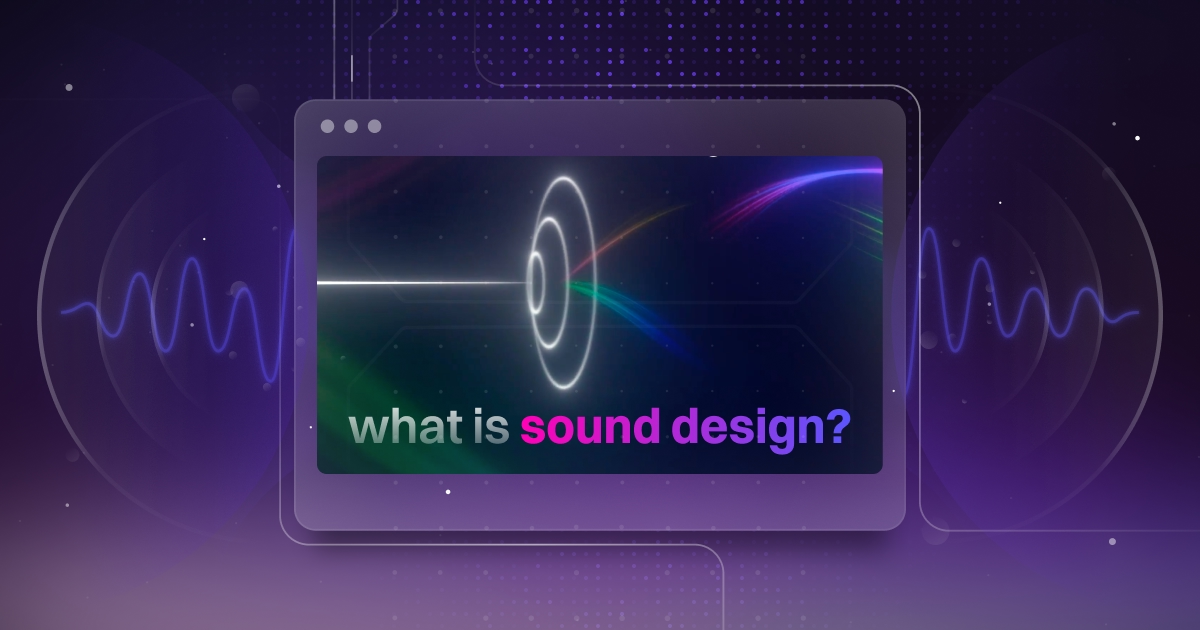
table of content
TL;DR:
- A simple sound design definition is the process of creating, choosing, editing, and arranging sounds to support a video or animation.
- In motion design, sound design includes SFX, BGM, ambience, UI clicks, whooshes, movement sounds, and other audio details.
- Good sound design helps guide attention, support emotion, and make visuals feel more alive.
- It is not just a finishing touch. It helps the whole video feel clearer, more polished, and complete.
Sound Design Definition
If you go through our website, you’ll probably notice that we have not talked much about one of the most important parts of video: sound design.
And if we are being completely transparent, it is not because we think audio is not important. We know it plays a huge role in how a video feels. The tricky part is that sound design can be hard to explain to a general audience, especially to people who have never really thought about what it is or how it works.
Even some of our own content team struggled with it at first. Unlike visuals, sound is not always easy to point at and explain. You might not notice it when it is done well, but you definitely feel it when it is missing.
So in this blog, we are going to break it down properly. We’ll look at what sound design is, starting with a simple sound design definition, why it matters, what sound designers actually do, the difference between SFX, BGM, and ambience, and how sound design can make visuals feel more alive, polished, and complete.
So, what is sound design?
In motion and animation, it covers everything you hear that helps the visuals feel more alive and intentional. This can include sound effects, dialogue, ambience, movement sounds, UI clicks, whooshes, impacts, and background music.
The goal is not just to add sound for the sake of it. Good sound design helps guide attention, support the mood, make movement feel more natural, and give the final video a more polished and complete feeling.
What about sound design in animation?
Sound designers create the soundscape for an animation. Unlike live action, where some natural sounds are captured during filming, animation starts completely silent. Every sound needs to be added intentionally, from small UI clicks and whooshes to ambience, movement sounds, and background music.
This is also why a simple sound design definition is useful: it is the process of creating, choosing, editing, and arranging sounds to support the visuals. This is especially important in animation because the visuals can sometimes be more abstract. Sound helps give those visuals meaning, guides the audience’s attention, and makes the experience easier to engage with. It helps movement feel more believable, gives scenes a stronger sense of place, and makes the final video feel less flat or unfinished.
History of sound design
The term “sound designer” became widely recognised in film in 1979, when Francis Ford Coppola gave Walter Murch the title for his work on Apocalypse Now. At the time, this was important because sound was often seen as a technical part of post-production, rather than a creative storytelling role.
Murch’s work helped show that sound could do more than clean up dialogue or add effects. In Apocalypse Now, sound helped shape the atmosphere, tension, emotion, and overall experience of the film. It was not just supporting the visuals, it was helping tell the story.
That idea still matters today, especially in motion and animation. Sound design is not just something added at the end. It helps guide attention, support movement, create emotion, and make the final video feel more complete.
So, what exactly does sound designer do?
At the simplest level, a sound designer adds audio to support what is happening on screen. But the role goes beyond placing random sounds into a video. A sound designer chooses, creates, edits, and arranges sounds to guide the viewer’s attention, support the mood, and help communicate the story or message.
These sounds can come from different places. Some are real recorded sounds, like footsteps, clicks, room noise, or object movements, which are then edited to fit the visuals. Others are created digitally using synthesis, especially when the animation is more abstract or when the sound does not exist in real life.
In motion and animation, sound designers usually work closely with animators. Sound design often happens in post-production, meaning the visuals are already created, but the audio still needs to support them properly. To do that well, the sound designer needs to understand the focus of the visuals, which movements matter most, and where the audience’s attention should go.
When sound design is not done well, the animation can still look good but feel flat, awkward, or unfinished. Movements may not land properly, transitions can feel empty, and the audience may not know where to focus. But when it works, the viewer may not notice every sound; they just feel that the video makes sense.
SFX VS BGM VS Ambiance
SFX stands for sound effects
These are sounds tied to specific actions, movements, or details on screen.
Examples include UI clicks, whooshes, pops, swipes, impacts, footsteps, button taps, or object movements. In animation, SFX helps make motion feel more real and intentional. A button click feels clearer when you hear it. A transition feels smoother when it has a subtle whoosh. A small pop can make text or icons feel more alive. SFX helps the audience understand what is happening and where their attention should go.
BGM means background music
This is the music track that supports the mood, pace, and emotion of the whole video.
Unlike SFX, BGM is not tied to one specific movement. It works across the entire video to guide how the audience feels. For example, upbeat music can make a product launch feel energetic, calm music can make a tutorial feel easier to follow, and cinematic music can make a brand film feel more premium. In animation, BGM helps keep the video flowing and gives the visuals an emotional direction.
Ambience sound
is the background sound that makes a scene feel like it exists somewhere.
It is not usually the main sound you notice, but it helps build the environment around the visuals. For example, an office scene might have soft keyboard taps, room tone, or distant chatter. A city scene might have traffic, footsteps, or crowd noise. In animation, ambience is especially important because the scene starts completely silent. Without it, the visuals can feel empty or disconnected from the world they are trying to show.
Why sound design matters and how it improves visuals
Sound design matters because it helps people understand what they are seeing, not just hear what is happening.
As one of our team members, Dano, puts it:
“Think about it this way. You might see something moving across the screen, but without sound, it is not always clear where your attention should go or what that movement is supposed to mean. Sound design helps guide you through the information on screen, so the whole video feels easier to follow.” — Dano, Sound Designer, Motion The Agency
And that is how we approach sound design. We do not see it as just something added at the end, but as an integral part of the animation.
In the Numetrix breakdown video above, you can see how the SFX and BGM support the visuals without distracting from them. The sound adds to the movement, pacing, and overall feeling of the video.
Here are a few ways sound design can improve visuals:
- It guides attention: Sound can quietly tell the audience where to look. A click, whoosh, or impact sound can highlight an important movement or moment without needing to add extra text or visuals.
- It makes motion feel more real: Animation starts completely silent, so even great movement can feel a little strange without audio. Sounds like taps, swipes, pops, or impacts help the motion feel more natural and grounded.
- It brings small actions to life: Small details matter. A UI click, button tap, object movement, or soft transition sound can make the animation feel more alive instead of flat.
- It improves pacing: Sound can help transitions feel smoother and make the video flow better from one scene to the next. It supports the rhythm of the animation without making the visuals do all the work.
- It supports emotion: A lot of the feeling in a video comes from audio. Sound can make a scene feel calm, energetic, serious, playful, premium, or cinematic, depending on what the video needs.
- It helps explainer videos feel balanced: In explainer videos, sound design can support the information, the problem, the emotional story, and even the CTA. When done well, it helps the message feel clear without making the video feel too salesy or overwhelming.
- It makes the final animation feel complete: A video can look great, but without sound design, it can still feel unfinished. Good sound design helps every movement feel like it belongs and makes the final piece feel more polished, intentional, and easier to connect with. This is especially true for product-related videos like the example above, where audio gives the animation a stronger sense of completion and helps the product feel more refined.
Conclusion
Sound design can be hard to explain because it is not always something people notice straight away. But once you start paying attention to it, it becomes clear how much it affects the way a video feels.
In animation, every sound has to be added with intention. The clicks, whooshes, ambience, music, and small movement sounds all work together to guide attention, support emotion, and make the visuals feel more alive.
That is why sound design is not just a finishing touch. It is part of the storytelling. A video can have strong visuals, smooth animation, and a clear script, but without the right sound, it can still feel flat or incomplete.
When sound design is done well, it does not fight for attention. It supports the message, makes the movement feel natural, and helps the audience connect with the video more easily. And sometimes, that is the biggest sign of good sound design: you may not notice every sound, but you can definitely feel the difference.
So, if you have a dream video in mind, we’d love to hear about it. Book a call with us, tell us what you want to create, and share how you imagine the sound design should feel. Whether it is clean and subtle, playful and energetic, or cinematic and emotional, we can help bring the visuals and audio together in a way that feels complete.

Syarafina Kuswahyuni
Syarafina Kuswahyuni is a content marketer at Motion The Agency, where she covers explainer video production, motion design trends, and video marketing strategy for SaaS brands. She has worked alongside Motion's animation team on projects for clients including ClickUp, Apollo.io, and HackerRank

In just a few questions, get a tailored estimate for your next video project.




Contact Us
Ready to elevate your brand? Contact us for your
Free Custom Video Sample